
About This Book
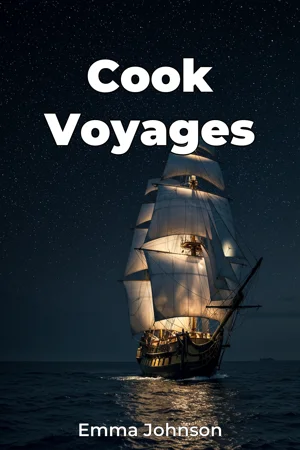
What drove a Yorkshire farm boy to become one of history's most celebrated navigators and explorers? "Cook Voyages" delves into the life and voyages of Captain James Cook, examining his profound impact on the cartography, science, and cultural understanding of the Pacific Ocean. This book argues that Cook's expeditions, while instrumental in expanding European knowledge and influence, also initiated complex and often detrimental interactions with indigenous populations, leaving a legacy that continues to be debated today. The book's significance lies in its comprehensive analysis of Cook's three major voyages to the Pacific (1768-1779), including the meticulous charting of New Zealand, the eastern coast of Australia, and numerous other island groups. Understanding these voyages is crucial to grasping the scope of 18th-century maritime exploration and its consequences for the Pacific region. The work also explores the complex relationship between European exploration, scientific discovery, and the impact on indigenous cultures. Historically, Cook's voyages occurred during a period of intense European colonial expansion and scientific curiosity. The Royal Society played a pivotal role in sponsoring these expeditions, driven by a desire to observe the transit of Venus and to seek the elusive Northwest Passage. This historical context informs the book’s analysis of Cook's motivations and the broader implications of his discoveries. "Cook Voyages" is structured to provide a holistic understanding of Cook's expeditions. Firstly, the book introduces Cook's early life, his naval career, and the scientific and political motivations behind the voyages. Secondly, it details each of Cook's voyages chronologically, focusing on his navigational techniques, interactions with indigenous peoples, and the scientific observations made by accompanying botanists, astronomers, and artists. Specific attention will be given to the botanical work of Joseph Banks and Daniel Solander, the artistic contributions of Sydney Parkinson, and the astronomical observations made to determine longitude. Thirdly, the book analyzes the long-term consequences of Cook's voyages, including their impact on European colonization, the introduction of diseases to Pacific islands, and the displacement of indigenous cultures. The final section examines Cook's legacy in exploration and the ongoing debates surrounding his role in Pacific history. The evidence presented in "Cook Voyages" is drawn from a variety of primary and secondary sources, including Cook's journals, the accounts of his crew members, historical maps, ethnographic studies of indigenous cultures, and contemporary scholarship on maritime exploration. The book will incorporate analysis of artwork and artifacts collected during the voyages to provide additional insights into the encounters between Europeans and Pacific Islanders. "Cook Voyages" connects to several interdisciplinary fields, including anthropology, environmental history, and postcolonial studies. The anthropological lens will examine the cultural exchanges and misunderstandings between Cook's crew and indigenous populations. The environmental history perspective will analyze the ecological impacts of European exploration, such as the introduction of invasive species. The postcolonial studies approach will explore the legacies of colonialism and the ongoing efforts to decolonize Pacific history. This book differentiates itself by offering a balanced perspective on Cook's voyages, acknowledging his achievements in exploration and navigation while also critically examining the detrimental effects of his expeditions on indigenous societies. It presents a nuanced portrayal of Cook as a product of his time, shaped by the prevailing scientific and colonial ideologies of the 18th century. Written in a scholarly yet accessible style, "Cook Voyages" aims to engage both academic and general audiences interested in maritime history, Pacific studies, and the history of exploration. It provides valuable insights for students, researchers, and anyone seeking a deeper understanding of Captain Cook's voyages and their enduring significance. The scope of "Cook Voyages" is limited to Cook’s three voyages and their immediate aftermath, focusing primarily on the Pacific region. While the book acknowledges the broader context of European colonialism, it does not delve into other areas of the world. The information in "Cook Voyages" has practical applications for understanding contemporary issues such as cultural heritage preservation, environmental conservation, and the ongoing dialogue between indigenous communities and Western societies. By examining the historical roots of these issues, the book provides valuable context for addressing the challenges of the 21st century. The book will address the ongoing debates surrounding Cook's legacy, including criticisms of his role in facilitating colonialism and the appropriation of indigenous lands, and also defend Cook’s scientific contributions within the historical context that shaped his worldview.
What drove a Yorkshire farm boy to become one of history's most celebrated navigators and explorers? "Cook Voyages" delves into the life and voyages of Captain James Cook, examining his profound impact on the cartography, science, and cultural understanding of the Pacific Ocean. This book argues that Cook's expeditions, while instrumental in expanding European knowledge and influence, also initiated complex and often detrimental interactions with indigenous populations, leaving a legacy that continues to be debated today. The book's significance lies in its comprehensive analysis of Cook's three major voyages to the Pacific (1768-1779), including the meticulous charting of New Zealand, the eastern coast of Australia, and numerous other island groups. Understanding these voyages is crucial to grasping the scope of 18th-century maritime exploration and its consequences for the Pacific region. The work also explores the complex relationship between European exploration, scientific discovery, and the impact on indigenous cultures. Historically, Cook's voyages occurred during a period of intense European colonial expansion and scientific curiosity. The Royal Society played a pivotal role in sponsoring these expeditions, driven by a desire to observe the transit of Venus and to seek the elusive Northwest Passage. This historical context informs the book’s analysis of Cook's motivations and the broader implications of his discoveries. "Cook Voyages" is structured to provide a holistic understanding of Cook's expeditions. Firstly, the book introduces Cook's early life, his naval career, and the scientific and political motivations behind the voyages. Secondly, it details each of Cook's voyages chronologically, focusing on his navigational techniques, interactions with indigenous peoples, and the scientific observations made by accompanying botanists, astronomers, and artists. Specific attention will be given to the botanical work of Joseph Banks and Daniel Solander, the artistic contributions of Sydney Parkinson, and the astronomical observations made to determine longitude. Thirdly, the book analyzes the long-term consequences of Cook's voyages, including their impact on European colonization, the introduction of diseases to Pacific islands, and the displacement of indigenous cultures. The final section examines Cook's legacy in exploration and the ongoing debates surrounding his role in Pacific history. The evidence presented in "Cook Voyages" is drawn from a variety of primary and secondary sources, including Cook's journals, the accounts of his crew members, historical maps, ethnographic studies of indigenous cultures, and contemporary scholarship on maritime exploration. The book will incorporate analysis of artwork and artifacts collected during the voyages to provide additional insights into the encounters between Europeans and Pacific Islanders. "Cook Voyages" connects to several interdisciplinary fields, including anthropology, environmental history, and postcolonial studies. The anthropological lens will examine the cultural exchanges and misunderstandings between Cook's crew and indigenous populations. The environmental history perspective will analyze the ecological impacts of European exploration, such as the introduction of invasive species. The postcolonial studies approach will explore the legacies of colonialism and the ongoing efforts to decolonize Pacific history. This book differentiates itself by offering a balanced perspective on Cook's voyages, acknowledging his achievements in exploration and navigation while also critically examining the detrimental effects of his expeditions on indigenous societies. It presents a nuanced portrayal of Cook as a product of his time, shaped by the prevailing scientific and colonial ideologies of the 18th century. Written in a scholarly yet accessible style, "Cook Voyages" aims to engage both academic and general audiences interested in maritime history, Pacific studies, and the history of exploration. It provides valuable insights for students, researchers, and anyone seeking a deeper understanding of Captain Cook's voyages and their enduring significance. The scope of "Cook Voyages" is limited to Cook’s three voyages and their immediate aftermath, focusing primarily on the Pacific region. While the book acknowledges the broader context of European colonialism, it does not delve into other areas of the world. The information in "Cook Voyages" has practical applications for understanding contemporary issues such as cultural heritage preservation, environmental conservation, and the ongoing dialogue between indigenous communities and Western societies. By examining the historical roots of these issues, the book provides valuable context for addressing the challenges of the 21st century. The book will address the ongoing debates surrounding Cook's legacy, including criticisms of his role in facilitating colonialism and the appropriation of indigenous lands, and also defend Cook’s scientific contributions within the historical context that shaped his worldview.
"Cook Voyages" explores the life and expeditions of Captain James Cook, a pivotal figure in 18th-century maritime history and Pacific exploration. The book examines Cook’s three major voyages, highlighting his contributions to cartography and scientific understanding of the Pacific Ocean. These voyages resulted in the meticulous charting of New Zealand and the eastern coast of Australia, significantly expanding European knowledge of the region. Intriguingly, the Royal Society played a key role in sponsoring these voyages, driven by both scientific curiosity and the desire for colonial expansion. The book delves into the complex interactions between Cook and the indigenous cultures he encountered, acknowledging both the advancements in scientific discovery and the detrimental impacts of European colonialism. "Cook Voyages" progresses chronologically through Cook's life, naval career, and each of his voyages, detailing navigational techniques, scientific observations, and encounters with indigenous peoples. It offers a balanced perspective, critically examining the long-term consequences of Cook's expeditions, including the introduction of diseases and the displacement of indigenous populations, while also recognizing his achievements in exploration.
Book Details
ISBN
9788235278029
Publisher
Publifye AS
Your Licenses
You don't own any licenses for this book
Purchase a license below to unlock this book and download the EPUB.
Purchase License
Select a tier to unlock this book
Need bulk licensing?
Contact us for enterprise agreements.