
About This Book
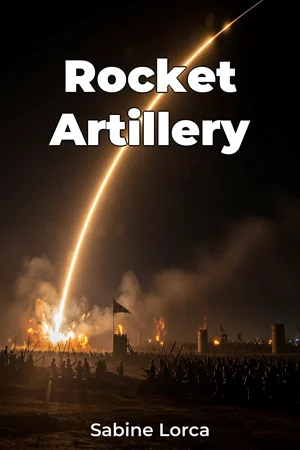
From the fiery arrows of ancient China to the sophisticated multiple launch rocket systems of today, rocket artillery has fundamentally reshaped the landscape of warfare. But how did this evolution occur, and what impact has it had on military strategy and global power dynamics? This book, *Rocket Artillery*, delves into the fascinating history and enduring significance of this often-overlooked weapon system. This book examines three primary areas: the technological evolution of rocket artillery, its impact on military tactics and strategies, and its role in shaping geopolitical outcomes. The significance of these topics lies in understanding how a seemingly simple technology has repeatedly revolutionized warfare, influenced the outcome of conflicts, and shifted the balance of power between nations. Without grasping the nuances of rocket artillery's development and deployment, one cannot fully comprehend the modern battlefield or the strategic considerations that drive military decision-making. We will explore the historical context, starting with the rudimentary rockets used in medieval warfare and tracing their development through the innovations of figures like William Congreve to the advanced precision-guided systems of the 21st century. Readers will gain an understanding of the basic principles of rocketry and how these principles were adapted for military applications. The central argument of *Rocket Artillery* is that the development and deployment of rocket artillery have consistently acted as disruptive forces in military history. Its long-range firepower and relative ease of production have often given advantages to those who adopted it effectively, challenging established military doctrines and altering the course of conflicts. This book will show the critical importance of this argument for military historians, strategists, and anyone interested in understanding the dynamics of warfare. The book is structured to provide a complete overview of the subject. It begins by introducing the fundamental concepts of rocket artillery and its early applications. The subsequent sections detail the technological advancements that led to more accurate and powerful systems, including advancements in propellants, guidance systems, and launch platforms. Key case studies will then illustrate how rocket artillery has been employed in various conflicts, demonstrating its impact on battlefield tactics and strategic outcomes. Finally, the book will address the contemporary challenges and future trends in rocket artillery development, including the proliferation of these systems and their potential role in future conflicts. The analysis presented in *Rocket Artillery* draws upon a wide range of primary and secondary sources, including military archives, technical manuals, and scholarly articles. The research methodology involves detailed analysis of historical records, comparative studies of different rocket artillery systems, and assessments of their effectiveness in various operational environments. This book connects to other fields such as engineering, political science, and economics. The engineering aspects of rocket design and manufacturing are critical to understanding the technological advancements discussed. The political science implications of rocket artillery proliferation and its impact on international relations are explored. Finally, the economic factors related to the production and deployment of these systems are considered. These interdisciplinary connections enrich the book's argument by providing a more holistic perspective on the topic. A unique perspective of this book lies in its focus on the strategic implications of rocket artillery, rather than simply its technical aspects. While the book provides necessary technical details, its primary emphasis is on how these weapons have been used to achieve specific military and political objectives. The tone and writing style are designed to be accessible to a broad audience while maintaining scholarly rigor. The goal is to present complex information in a clear and engaging manner, using real-world examples and case studies to illustrate key concepts. The target audience for this book includes military history enthusiasts, military professionals, policymakers, and anyone interested in the intersection of technology and warfare. The book will be valuable to them because it provides a comprehensive and insightful analysis of a critical but often-overlooked aspect of military history. As a work of military history, *Rocket Artillery* adheres to the genre's conventions by providing a balanced and objective account of the subject, drawing on verifiable evidence and scholarly analysis. The scope of the book is limited to the history and strategic implications of rocket artillery, with less emphasis on the ethical considerations of its use, although this is certainly a factor. The information presented in this book has several real-world applications. Military professionals can use it to gain a deeper understanding of the capabilities and limitations of rocket artillery, informing their tactical and strategic planning. Policymakers can use it to assess the risks associated with the proliferation of these systems and to develop strategies for mitigating those risks. Finally, the book will address the ongoing debates surrounding the use of rocket artillery, including questions about its proportionality, its impact on civilian populations, and the legal and ethical considerations of its deployment. *Rocket Artillery* offers a comprehensive look at a weapon that has shaped, and continues to shape, the world we live in.
From the fiery arrows of ancient China to the sophisticated multiple launch rocket systems of today, rocket artillery has fundamentally reshaped the landscape of warfare. But how did this evolution occur, and what impact has it had on military strategy and global power dynamics? This book, *Rocket Artillery*, delves into the fascinating history and enduring significance of this often-overlooked weapon system. This book examines three primary areas: the technological evolution of rocket artillery, its impact on military tactics and strategies, and its role in shaping geopolitical outcomes. The significance of these topics lies in understanding how a seemingly simple technology has repeatedly revolutionized warfare, influenced the outcome of conflicts, and shifted the balance of power between nations. Without grasping the nuances of rocket artillery's development and deployment, one cannot fully comprehend the modern battlefield or the strategic considerations that drive military decision-making. We will explore the historical context, starting with the rudimentary rockets used in medieval warfare and tracing their development through the innovations of figures like William Congreve to the advanced precision-guided systems of the 21st century. Readers will gain an understanding of the basic principles of rocketry and how these principles were adapted for military applications. The central argument of *Rocket Artillery* is that the development and deployment of rocket artillery have consistently acted as disruptive forces in military history. Its long-range firepower and relative ease of production have often given advantages to those who adopted it effectively, challenging established military doctrines and altering the course of conflicts. This book will show the critical importance of this argument for military historians, strategists, and anyone interested in understanding the dynamics of warfare. The book is structured to provide a complete overview of the subject. It begins by introducing the fundamental concepts of rocket artillery and its early applications. The subsequent sections detail the technological advancements that led to more accurate and powerful systems, including advancements in propellants, guidance systems, and launch platforms. Key case studies will then illustrate how rocket artillery has been employed in various conflicts, demonstrating its impact on battlefield tactics and strategic outcomes. Finally, the book will address the contemporary challenges and future trends in rocket artillery development, including the proliferation of these systems and their potential role in future conflicts. The analysis presented in *Rocket Artillery* draws upon a wide range of primary and secondary sources, including military archives, technical manuals, and scholarly articles. The research methodology involves detailed analysis of historical records, comparative studies of different rocket artillery systems, and assessments of their effectiveness in various operational environments. This book connects to other fields such as engineering, political science, and economics. The engineering aspects of rocket design and manufacturing are critical to understanding the technological advancements discussed. The political science implications of rocket artillery proliferation and its impact on international relations are explored. Finally, the economic factors related to the production and deployment of these systems are considered. These interdisciplinary connections enrich the book's argument by providing a more holistic perspective on the topic. A unique perspective of this book lies in its focus on the strategic implications of rocket artillery, rather than simply its technical aspects. While the book provides necessary technical details, its primary emphasis is on how these weapons have been used to achieve specific military and political objectives. The tone and writing style are designed to be accessible to a broad audience while maintaining scholarly rigor. The goal is to present complex information in a clear and engaging manner, using real-world examples and case studies to illustrate key concepts. The target audience for this book includes military history enthusiasts, military professionals, policymakers, and anyone interested in the intersection of technology and warfare. The book will be valuable to them because it provides a comprehensive and insightful analysis of a critical but often-overlooked aspect of military history. As a work of military history, *Rocket Artillery* adheres to the genre's conventions by providing a balanced and objective account of the subject, drawing on verifiable evidence and scholarly analysis. The scope of the book is limited to the history and strategic implications of rocket artillery, with less emphasis on the ethical considerations of its use, although this is certainly a factor. The information presented in this book has several real-world applications. Military professionals can use it to gain a deeper understanding of the capabilities and limitations of rocket artillery, informing their tactical and strategic planning. Policymakers can use it to assess the risks associated with the proliferation of these systems and to develop strategies for mitigating those risks. Finally, the book will address the ongoing debates surrounding the use of rocket artillery, including questions about its proportionality, its impact on civilian populations, and the legal and ethical considerations of its deployment. *Rocket Artillery* offers a comprehensive look at a weapon that has shaped, and continues to shape, the world we live in.
"Rocket Artillery" explores the historical impact of rocket artillery, from its ancient origins to modern applications in military strategy. This book provides a comprehensive overview of how rocket technology has evolved and reshaped warfare, influencing geopolitical outcomes and military tactics. It examines how the disruptive nature of rocket artillery, characterized by its long-range firepower and relative ease of production, has often challenged established military doctrines. The book traces the technological advancements in rocket artillery, starting with rudimentary rockets and progressing to precision-guided systems. Readers will learn about key innovations, such as advancements in propellants and guidance systems. Through detailed case studies, the book illustrates how rocket artillery has been employed in various conflicts, demonstrating its profound impact on battlefield tactics. It also addresses contemporary challenges and future trends, including proliferation concerns. Structured to provide a complete overview, "Rocket Artillery" begins by introducing fundamental concepts and early applications, then details technological advancements and key case studies. The book uniquely emphasizes the strategic implications of rocket artillery, focusing on how these weapon systems have been used to achieve specific military and political objectives, making it valuable for military historians, strategists, and anyone interested in the dynamics of warfare.
Book Details
ISBN
9788235277978
Publisher
Publifye AS
Your Licenses
You don't own any licenses for this book
Purchase a license below to unlock this book and download the EPUB.
Purchase License
Select a tier to unlock this book
Need bulk licensing?
Contact us for enterprise agreements.