
About This Book
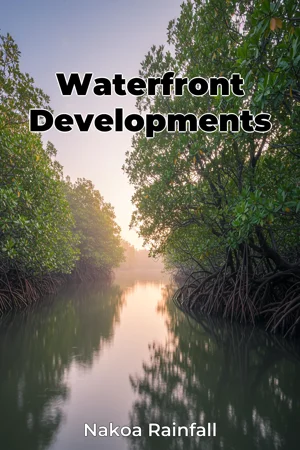
Can we responsibly develop our shorelines without jeopardizing the delicate balance of our aquatic ecosystems and coastal communities? "Waterfront Developments" delves into the multifaceted challenges and burgeoning opportunities inherent in building along rivers, lakes, and oceans, areas simultaneously coveted for their beauty and vulnerable to environmental degradation. This book examines the nexus of architecture, environmental science, and socio-economic factors that shape waterfront development, providing a framework for sustainable and resilient design. Central to the book's exploration are three key concepts: ecological sensitivity, adaptive design, and community engagement. Ecological sensitivity underscores the need to minimize environmental impact through careful site selection, construction practices, and long-term management strategies. Adaptive design focuses on creating structures and infrastructure that can withstand the increasing threats of climate change, including rising sea levels, extreme weather events, and coastal erosion. Community engagement highlights the vital role of local residents, stakeholders, and indigenous populations in shaping development plans that reflect their needs and values. These themes are important because they offer a roadmap for navigating the complex trade-offs between economic growth, environmental protection, and social equity in waterfront areas. The book provides historical context by examining past waterfront development projects, highlighting both successes and failures. It also discusses the evolving legal and regulatory frameworks governing coastal and freshwater construction. Readers should have a basic understanding of architectural principles and environmental science to fully appreciate the content, but complex concepts are clearly defined. The central argument of "Waterfront Developments" is that sustainable and resilient waterfront development is not merely an aspiration but an imperative for the 21st century. This argument is critical because poorly planned development can lead to habitat loss, water pollution, displacement of communities, and increased vulnerability to natural disasters. The book offers practical solutions and best practices for mitigating these risks and creating waterfronts that are both vibrant and ecologically sound. The book begins by introducing the fundamental principles of sustainable waterfront development. Subsequent chapters delve into specific topics, including: (1) site assessment and environmental impact analysis; (2) innovative building materials and construction techniques; (3) strategies for managing stormwater runoff and wastewater treatment; (4) the design of public spaces and recreational amenities; and (5) the integration of renewable energy systems. The book culminates with case studies of successful waterfront developments from around the world, showcasing innovative approaches to design, construction, and community engagement. Practical applications are presented in each chapter, offering actionable guidance for architects, developers, policymakers, and community members. The book draws upon a wide range of evidence and research, including scientific studies, engineering reports, policy documents, and case studies. Unique data sources include proprietary datasets on coastal erosion rates, water quality monitoring, and the environmental impact of various construction materials. Methodologies employed include environmental impact assessments, life cycle analyses, and cost-benefit analyses. "Waterfront Developments" connects to multiple fields of study, including urban planning, coastal engineering, and environmental policy. These interdisciplinary connections enhance the book's argument by providing a holistic perspective on the challenges and opportunities of waterfront development. The book takes an innovative approach by integrating ecological principles into the foundational stages of architectural design, advocating for a symbiotic relationship between the built and natural environments. The tone is professional and informative, presenting complex information in a clear and accessible manner. The writing style blends technical details with practical guidance, making the book useful for both academics and practitioners. The target audience includes architects, landscape architects, urban planners, developers, policymakers, environmental scientists, and community advocates. This book would be valuable to anyone involved in the planning, design, construction, or management of waterfront properties. As a non-fiction work in the fields of architecture and environment, the book adheres to conventions of presenting evidence-based arguments, citing credible sources, and providing practical recommendations. The scope of the book encompasses a broad range of waterfront development issues, from small-scale residential projects to large-scale urban redevelopments. It focuses on the ecological, social, and economic aspects of these projects, avoiding highly technical engineering details. The real-world applications described allow readers to apply the information to both current and future projects. The book addresses ongoing debates surrounding coastal development, including the balance between private property rights and environmental protection, the role of government regulation, and the equitable distribution of the benefits and burdens of waterfront development.
Can we responsibly develop our shorelines without jeopardizing the delicate balance of our aquatic ecosystems and coastal communities? "Waterfront Developments" delves into the multifaceted challenges and burgeoning opportunities inherent in building along rivers, lakes, and oceans, areas simultaneously coveted for their beauty and vulnerable to environmental degradation. This book examines the nexus of architecture, environmental science, and socio-economic factors that shape waterfront development, providing a framework for sustainable and resilient design. Central to the book's exploration are three key concepts: ecological sensitivity, adaptive design, and community engagement. Ecological sensitivity underscores the need to minimize environmental impact through careful site selection, construction practices, and long-term management strategies. Adaptive design focuses on creating structures and infrastructure that can withstand the increasing threats of climate change, including rising sea levels, extreme weather events, and coastal erosion. Community engagement highlights the vital role of local residents, stakeholders, and indigenous populations in shaping development plans that reflect their needs and values. These themes are important because they offer a roadmap for navigating the complex trade-offs between economic growth, environmental protection, and social equity in waterfront areas. The book provides historical context by examining past waterfront development projects, highlighting both successes and failures. It also discusses the evolving legal and regulatory frameworks governing coastal and freshwater construction. Readers should have a basic understanding of architectural principles and environmental science to fully appreciate the content, but complex concepts are clearly defined. The central argument of "Waterfront Developments" is that sustainable and resilient waterfront development is not merely an aspiration but an imperative for the 21st century. This argument is critical because poorly planned development can lead to habitat loss, water pollution, displacement of communities, and increased vulnerability to natural disasters. The book offers practical solutions and best practices for mitigating these risks and creating waterfronts that are both vibrant and ecologically sound. The book begins by introducing the fundamental principles of sustainable waterfront development. Subsequent chapters delve into specific topics, including: (1) site assessment and environmental impact analysis; (2) innovative building materials and construction techniques; (3) strategies for managing stormwater runoff and wastewater treatment; (4) the design of public spaces and recreational amenities; and (5) the integration of renewable energy systems. The book culminates with case studies of successful waterfront developments from around the world, showcasing innovative approaches to design, construction, and community engagement. Practical applications are presented in each chapter, offering actionable guidance for architects, developers, policymakers, and community members. The book draws upon a wide range of evidence and research, including scientific studies, engineering reports, policy documents, and case studies. Unique data sources include proprietary datasets on coastal erosion rates, water quality monitoring, and the environmental impact of various construction materials. Methodologies employed include environmental impact assessments, life cycle analyses, and cost-benefit analyses. "Waterfront Developments" connects to multiple fields of study, including urban planning, coastal engineering, and environmental policy. These interdisciplinary connections enhance the book's argument by providing a holistic perspective on the challenges and opportunities of waterfront development. The book takes an innovative approach by integrating ecological principles into the foundational stages of architectural design, advocating for a symbiotic relationship between the built and natural environments. The tone is professional and informative, presenting complex information in a clear and accessible manner. The writing style blends technical details with practical guidance, making the book useful for both academics and practitioners. The target audience includes architects, landscape architects, urban planners, developers, policymakers, environmental scientists, and community advocates. This book would be valuable to anyone involved in the planning, design, construction, or management of waterfront properties. As a non-fiction work in the fields of architecture and environment, the book adheres to conventions of presenting evidence-based arguments, citing credible sources, and providing practical recommendations. The scope of the book encompasses a broad range of waterfront development issues, from small-scale residential projects to large-scale urban redevelopments. It focuses on the ecological, social, and economic aspects of these projects, avoiding highly technical engineering details. The real-world applications described allow readers to apply the information to both current and future projects. The book addresses ongoing debates surrounding coastal development, including the balance between private property rights and environmental protection, the role of government regulation, and the equitable distribution of the benefits and burdens of waterfront development.
"Waterfront Developments" explores the complex challenges and opportunities of building along shorelines while maintaining ecological balance and resilient design. It emphasizes the importance of ecological sensitivity, adaptive design, and community engagement in creating sustainable waterfront properties. One striking fact is that poorly planned waterfront development can lead to significant habitat loss and increased vulnerability to natural disasters. Another insight is that thoughtful integration of renewable energy systems can greatly enhance a project's sustainability profile. The book uniquely integrates ecological principles into architectural design from the outset, advocating for a harmonious relationship between the built and natural environments. It begins by establishing the core principles of sustainable waterfront development and then progressively delves into specific areas such as site assessment, innovative building materials, stormwater management, and public space design. Case studies from around the world illustrate successful, innovative approaches.
Book Details
ISBN
9788235277923
Publisher
Publifye AS
Your Licenses
You don't own any licenses for this book
Purchase a license below to unlock this book and download the EPUB.
Purchase License
Select a tier to unlock this book
Need bulk licensing?
Contact us for enterprise agreements.