
About This Book
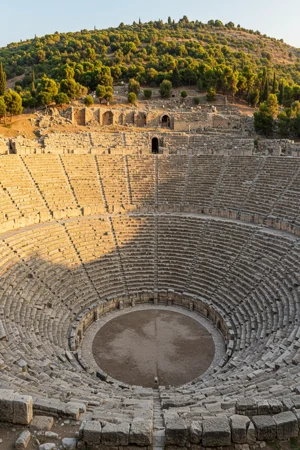
How did a society without modern technology create a theatrical tradition that continues to resonate millennia later? "Greek Civic Theatre" explores the multifaceted world of ancient Greek theatre, examining its integral role within the civic, religious, and educational life of the polis. This book illuminates how theatre was not merely entertainment, but a cornerstone of Athenian democracy and broader Hellenic culture. The study focuses on three key areas: the architectural marvels of the theatres themselves, the complex financial structures that supported theatrical productions, and the established performance norms that governed every aspect of a dramatic presentation. Understanding these elements provides a comprehensive view of theatre's significance in ancient Greece. The design and construction of theatres, often built into hillsides to accommodate vast audiences, reflects the importance placed on communal gatherings. Investigating the funding mechanisms, including the system of choregoi (wealthy citizens who sponsored productions), reveals the civic responsibility associated with theatrical patronage. Examining performance norms, from the use of masks and chorus to the conventions of tragedy and comedy, uncovers the deeply ingrained cultural values expressed through dramatic storytelling. "Greek Civic Theatre" argues that the theatre served as a crucial institution for shaping Athenian identity and transmitting societal values. By exploring the design, funding, and performance aspects, we demonstrate how theatrical productions were integral to civic life and religious practice. The book begins by establishing the historical and social context of ancient Greece, highlighting the rise of democracy and the importance of public discourse. It then analyzes the physical structure of Greek theatres, detailing the evolution of their design and acoustics. Subsequent chapters delve into the economic underpinnings of theatrical production, examining the roles of the state, wealthy citizens, and the actors themselves. The book culminates with an exploration of the performance conventions that shaped Greek drama, including the use of masks, the role of the chorus, and the distinctive features of both tragedy and comedy. The evidence presented is drawn from a variety of sources, including archaeological remains, surviving dramatic texts, inscriptions, and ancient accounts. The book synthesizes established research with fresh perspectives, offering new insights into the function and significance of Greek theatre. This study also connects to other relevant disciplines, such as political science, religious studies, and architectural history. By analyzing the intersections between theatre and these fields, we gain a fuller appreciation of its cultural importance. The book provides unique insights into the intersection of art, religion, politics, and society in the ancient world. Written in an accessible yet scholarly style, "Greek Civic Theatre" is intended for students, academics, and anyone interested in ancient history, theatre, and classical studies. It offers a comprehensive and engaging introduction to a vital aspect of ancient Greek civilization. The scope of the book is limited to the classical and Hellenistic periods, focusing primarily on Athenian theatre. While briefly touching on regional variations, the emphasis remains on the dominant theatrical traditions of Athens. The insights gained from this book have real-world applications for understanding the role of the arts in contemporary society. By examining how theatre served as a forum for public discourse and social commentary in ancient Greece, we can better appreciate its potential to foster civic engagement and cultural understanding today. The book also touches upon the ongoing debates surrounding the interpretation of Greek drama and its relevance to modern audiences.
How did a society without modern technology create a theatrical tradition that continues to resonate millennia later? "Greek Civic Theatre" explores the multifaceted world of ancient Greek theatre, examining its integral role within the civic, religious, and educational life of the polis. This book illuminates how theatre was not merely entertainment, but a cornerstone of Athenian democracy and broader Hellenic culture. The study focuses on three key areas: the architectural marvels of the theatres themselves, the complex financial structures that supported theatrical productions, and the established performance norms that governed every aspect of a dramatic presentation. Understanding these elements provides a comprehensive view of theatre's significance in ancient Greece. The design and construction of theatres, often built into hillsides to accommodate vast audiences, reflects the importance placed on communal gatherings. Investigating the funding mechanisms, including the system of choregoi (wealthy citizens who sponsored productions), reveals the civic responsibility associated with theatrical patronage. Examining performance norms, from the use of masks and chorus to the conventions of tragedy and comedy, uncovers the deeply ingrained cultural values expressed through dramatic storytelling. "Greek Civic Theatre" argues that the theatre served as a crucial institution for shaping Athenian identity and transmitting societal values. By exploring the design, funding, and performance aspects, we demonstrate how theatrical productions were integral to civic life and religious practice. The book begins by establishing the historical and social context of ancient Greece, highlighting the rise of democracy and the importance of public discourse. It then analyzes the physical structure of Greek theatres, detailing the evolution of their design and acoustics. Subsequent chapters delve into the economic underpinnings of theatrical production, examining the roles of the state, wealthy citizens, and the actors themselves. The book culminates with an exploration of the performance conventions that shaped Greek drama, including the use of masks, the role of the chorus, and the distinctive features of both tragedy and comedy. The evidence presented is drawn from a variety of sources, including archaeological remains, surviving dramatic texts, inscriptions, and ancient accounts. The book synthesizes established research with fresh perspectives, offering new insights into the function and significance of Greek theatre. This study also connects to other relevant disciplines, such as political science, religious studies, and architectural history. By analyzing the intersections between theatre and these fields, we gain a fuller appreciation of its cultural importance. The book provides unique insights into the intersection of art, religion, politics, and society in the ancient world. Written in an accessible yet scholarly style, "Greek Civic Theatre" is intended for students, academics, and anyone interested in ancient history, theatre, and classical studies. It offers a comprehensive and engaging introduction to a vital aspect of ancient Greek civilization. The scope of the book is limited to the classical and Hellenistic periods, focusing primarily on Athenian theatre. While briefly touching on regional variations, the emphasis remains on the dominant theatrical traditions of Athens. The insights gained from this book have real-world applications for understanding the role of the arts in contemporary society. By examining how theatre served as a forum for public discourse and social commentary in ancient Greece, we can better appreciate its potential to foster civic engagement and cultural understanding today. The book also touches upon the ongoing debates surrounding the interpretation of Greek drama and its relevance to modern audiences.
"Greek Civic Theatre" explores the central role of theatre in ancient Greece, revealing it as far more than mere entertainment. The book argues that theatrical productions were integral to both civic life and religious practice, shaping Athenian identity and transmitting societal values. The study highlights the architectural ingenuity of Greek theatres, often built into hillsides to accommodate vast audiences, underscoring the importance of communal gatherings. Similarly, it examines the choregoi system, where wealthy citizens sponsored productions, illustrating the civic responsibility associated with theatrical patronage. The book details how theatre served as a vital institution for shaping Athenian identity and transmitting societal values. Beginning with the historical and social context of ancient Greece, the book progresses through the design of theatres, the economics of production, and the conventions of Greek drama, including the use of masks and the chorus. By exploring these interwoven elements, the book emphasizes the intersection of art, religion, and politics in the ancient world, and how understanding Greek drama can provide insights into contemporary society.
Book Details
ISBN
9788235277831
Publisher
Publifye AS
Your Licenses
You don't own any licenses for this book
Purchase a license below to unlock this book and download the EPUB.
Purchase License
Select a tier to unlock this book
Need bulk licensing?
Contact us for enterprise agreements.