
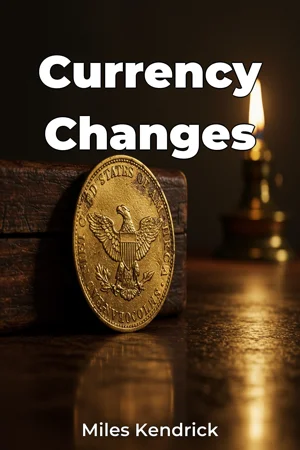
About This Book
How has the very nature of American money shaped the nation's trajectory, from its fledgling beginnings to its current global dominance? "Currency Changes" delves into the intricate history of U.S. currency systems and monetary policy, scrutinizing the critical shifts that have impacted the nation's economic and social landscape. This book addresses two main concepts: the evolution of U.S. currency standards, focusing prominently on the gold standard era, and the dynamic interplay between monetary policy decisions and their consequential effects on economic stability and growth. These topics are vital because understanding them offers crucial insights into the cyclical nature of economic booms and busts, the role of government intervention, and the inherent challenges of managing a national currency in an increasingly interconnected world. The narrative begins with the adoption of the gold standard and its impact on the U.S. economy. A detailed examination covers the debates surrounding bimetallism in the late 19th century, the establishment of the Federal Reserve System in 1913, and the eventual abandonment of the gold standard. The book explores the motivations behind these key decisions, the political and economic forces at play, and their immediate and long-term consequences. Understanding the historical context is crucial for grasping the complexities of modern monetary policy and the ongoing debates about the future of the dollar. At its core, "Currency Changes" argues that U.S. monetary policy has been a series of reactive measures, each attempting to address the perceived shortcomings of the preceding system. The book posits that a deeper understanding of the historical patterns and consequences of these policies is essential for informed decision-making in the future. The book is structured chronologically, starting with an overview of early monetary systems in the U.S. before the formal adoption of the gold standard. It then examines the rise and fall of the gold standard era, dissecting its impacts on inflation, employment, and economic growth. Moving forward, it analyzes the development of the Federal Reserve and its early attempts to manage the money supply. The abandonment of the gold standard is presented as a pivotal moment, leading into an analysis of modern monetary policy tools, such as interest rate manipulation and quantitative easing. Finally, it culminates with a discussion of the challenges and opportunities facing the U.S. dollar in the 21st century, including the rise of digital currencies and the increasing national debt. The arguments presented are supported by a range of evidence, including primary source documents from the National Archives, economic data from the Bureau of Economic Analysis and the Federal Reserve, and scholarly research in economics and finance. Statistical analysis of key economic indicators will illustrate the impacts of specific policy changes, while case studies from different historical periods will provide context and depth. "Currency Changes" connects to several other fields, including political science (examining the influence of political ideologies on monetary policy), sociology (analyzing the social impacts of economic inequality driven by currency fluctuations), and international relations (assessing the dollar's role in global trade and finance). This book stands out by taking a long-term historical perspective, emphasizing the cyclical nature of currency systems and policy responses. Rather than advocating for a particular monetary policy, it aims to provide a comprehensive and objective analysis of the historical record, allowing readers to draw their own informed conclusions. The tone is academic, but accessible, with complex economic concepts explained in a clear and concise manner. Charts, graphs, and historical photographs will be used to enhance the reader’s understanding. The target audience includes students of economics and history, financial professionals, policymakers, and anyone interested in understanding the forces that shape the U.S. economy. The book will be valuable to them by providing a nuanced and comprehensive understanding of U.S. monetary history, equipping them with the knowledge to make informed decisions and participate in informed debates about the future of the dollar. As a work of historical economics, the book adheres to the genre’s emphasis on factual accuracy, rigorous analysis, and clear presentation of evidence. It embraces the conventions of academic citations, footnotes, and a comprehensive bibliography to ensure transparency and credibility. The scope is limited to U.S. currency systems and monetary policy, with a focus on the period from the late 19th century to the present day. While international comparisons are made where relevant, the primary focus remains on the domestic context. The information in the book can be applied to a range of practical contexts, from understanding the implications of Federal Reserve policy decisions to making informed investment decisions in a volatile economic environment. The book addresses ongoing debates about the optimal level of government intervention in the economy, the role of the dollar as the world's reserve currency, and the potential impacts of new technologies, such as blockchain and cryptocurrency, on the future of money. By presenting a balanced and informed perspective on these issues, "Currency Changes" aims to contribute to a more productive and nuanced public discourse.
How has the very nature of American money shaped the nation's trajectory, from its fledgling beginnings to its current global dominance? "Currency Changes" delves into the intricate history of U.S. currency systems and monetary policy, scrutinizing the critical shifts that have impacted the nation's economic and social landscape. This book addresses two main concepts: the evolution of U.S. currency standards, focusing prominently on the gold standard era, and the dynamic interplay between monetary policy decisions and their consequential effects on economic stability and growth. These topics are vital because understanding them offers crucial insights into the cyclical nature of economic booms and busts, the role of government intervention, and the inherent challenges of managing a national currency in an increasingly interconnected world. The narrative begins with the adoption of the gold standard and its impact on the U.S. economy. A detailed examination covers the debates surrounding bimetallism in the late 19th century, the establishment of the Federal Reserve System in 1913, and the eventual abandonment of the gold standard. The book explores the motivations behind these key decisions, the political and economic forces at play, and their immediate and long-term consequences. Understanding the historical context is crucial for grasping the complexities of modern monetary policy and the ongoing debates about the future of the dollar. At its core, "Currency Changes" argues that U.S. monetary policy has been a series of reactive measures, each attempting to address the perceived shortcomings of the preceding system. The book posits that a deeper understanding of the historical patterns and consequences of these policies is essential for informed decision-making in the future. The book is structured chronologically, starting with an overview of early monetary systems in the U.S. before the formal adoption of the gold standard. It then examines the rise and fall of the gold standard era, dissecting its impacts on inflation, employment, and economic growth. Moving forward, it analyzes the development of the Federal Reserve and its early attempts to manage the money supply. The abandonment of the gold standard is presented as a pivotal moment, leading into an analysis of modern monetary policy tools, such as interest rate manipulation and quantitative easing. Finally, it culminates with a discussion of the challenges and opportunities facing the U.S. dollar in the 21st century, including the rise of digital currencies and the increasing national debt. The arguments presented are supported by a range of evidence, including primary source documents from the National Archives, economic data from the Bureau of Economic Analysis and the Federal Reserve, and scholarly research in economics and finance. Statistical analysis of key economic indicators will illustrate the impacts of specific policy changes, while case studies from different historical periods will provide context and depth. "Currency Changes" connects to several other fields, including political science (examining the influence of political ideologies on monetary policy), sociology (analyzing the social impacts of economic inequality driven by currency fluctuations), and international relations (assessing the dollar's role in global trade and finance). This book stands out by taking a long-term historical perspective, emphasizing the cyclical nature of currency systems and policy responses. Rather than advocating for a particular monetary policy, it aims to provide a comprehensive and objective analysis of the historical record, allowing readers to draw their own informed conclusions. The tone is academic, but accessible, with complex economic concepts explained in a clear and concise manner. Charts, graphs, and historical photographs will be used to enhance the reader’s understanding. The target audience includes students of economics and history, financial professionals, policymakers, and anyone interested in understanding the forces that shape the U.S. economy. The book will be valuable to them by providing a nuanced and comprehensive understanding of U.S. monetary history, equipping them with the knowledge to make informed decisions and participate in informed debates about the future of the dollar. As a work of historical economics, the book adheres to the genre’s emphasis on factual accuracy, rigorous analysis, and clear presentation of evidence. It embraces the conventions of academic citations, footnotes, and a comprehensive bibliography to ensure transparency and credibility. The scope is limited to U.S. currency systems and monetary policy, with a focus on the period from the late 19th century to the present day. While international comparisons are made where relevant, the primary focus remains on the domestic context. The information in the book can be applied to a range of practical contexts, from understanding the implications of Federal Reserve policy decisions to making informed investment decisions in a volatile economic environment. The book addresses ongoing debates about the optimal level of government intervention in the economy, the role of the dollar as the world's reserve currency, and the potential impacts of new technologies, such as blockchain and cryptocurrency, on the future of money. By presenting a balanced and informed perspective on these issues, "Currency Changes" aims to contribute to a more productive and nuanced public discourse.
"Currency Changes" explores the evolution of American money and monetary policy, revealing how decisions about currency standards have shaped the nation's economic trajectory. It examines the gold standard era, the establishment of the Federal Reserve System, and the eventual move away from gold, highlighting the motivations and consequences of these shifts. The book emphasizes how these policies have influenced economic stability and growth, providing crucial insights into the cyclical nature of economic booms and busts. The book presents a chronological analysis, starting with early monetary systems and progressing through the rise and fall of the gold standard. It dissects the impacts of these systems on inflation, employment, and economic growth, offering a balanced analysis rather than advocating for any particular policy. By examining historical patterns and consequences, "Currency Changes" aims to equip readers with the knowledge to understand current debates about economic inequality, government intervention, and the future of the dollar. Supported by primary source documents and economic data, this accessible work of economic history takes a long-term perspective, emphasizing the reactive nature of U.S. monetary policy. It connects to political science, sociology, and international relations, providing a comprehensive understanding of the forces shaping the U.S. economy. Ultimately, it seeks to inform readers and encourage well-reasoned conclusions about the future of American money.
Book Details
ISBN
9788235277510
Publisher
Publifye AS
Your Licenses
You don't own any licenses for this book
Purchase a license below to unlock this book and download the EPUB.
Purchase License
Select a tier to unlock this book
Need bulk licensing?
Contact us for enterprise agreements.