
About This Book
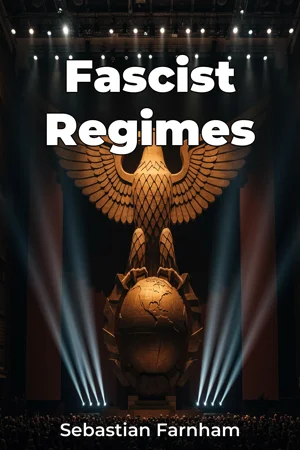
How could seemingly rational societies embrace ideologies that led to global conflict and immense suffering? "Fascist Regimes" delves into this critical question, offering a comprehensive analysis of the rise and fall of fascist governments in the 20th century. This book examines the core tenets of fascist ideology, dissects the potent propaganda techniques used to manipulate public opinion, and explores the devastating global conflicts fueled by these regimes. Understanding these historical events and their underlying causes remains vital in a world grappling with resurgent nationalism and political extremism. This book focuses on three significant elements: the anatomy of fascist ideology, the mechanics of fascist propaganda, and the geopolitical consequences of fascist expansionism. The study of fascist ideology reveals its reliance on ultranationalism, authoritarianism, and often, racial supremacy. Analyzing fascist propaganda unveils its manipulative power through sophisticated techniques of mass communication, designed to cultivate unwavering loyalty and demonize opposition. Examining the geopolitical impact highlights the aggressive foreign policies pursued by fascist states, which invariably led to international crises and devastating wars. “Fascist Regimes” begins by establishing the historical and social conditions that enabled the rise of fascism in post-World War I Europe, exploring the widespread disillusionment, economic instability, and social unrest that created fertile ground for extremist movements. The work then transitions into detailed case studies of prominent fascist regimes, including those in Italy, Germany, and Japan. Each case study examines the specific historical context, the key figures involved, and the unique characteristics of the regime. The book analyzes the institutional structures of these regimes, including the role of the state, the military, and the party apparatus. Detailed attention is paid to the methods of control employed by these regimes, including censorship, surveillance, and political repression. The book demonstrates how the cult of personality, promoted through unrelenting propaganda, served to consolidate power and suppress dissent. The central argument of “Fascist Regimes” is that while specific manifestations of fascism varied across national contexts, they shared a common core of ideological principles and utilized similar strategies for gaining and maintaining power. Moreover, it argues that understanding these commonalities is essential for recognizing and countering contemporary forms of political extremism. The arguments presented are supported by a wide range of primary and secondary sources, including government documents, propaganda materials, personal memoirs, and scholarly analyses. The book incorporates quantitative data on economic performance, military expenditures, and electoral results to provide a nuanced assessment of the successes and failures of fascist regimes. This book draws connections to political science, sociology, and media studies. By analyzing the techniques of fascist propaganda, it contributes to our understanding of the power of mass communication and its potential for manipulation. By examining the social and economic conditions that facilitated the rise of fascism, it informs sociological theories of social movements and political extremism. By exploring the institutional structures of fascist regimes, it contributes to political science theories of authoritarianism and state power. "Fascist Regimes" differentiates itself by offering a comparative analysis of diverse fascist movements, highlighting both their shared characteristics and their unique adaptations to specific national contexts. This avoids a simplistic or monolithic understanding of fascism, promoting a nuanced and contextualized interpretation. The tone is academic but accessible, aiming to make complex historical material understandable to a broad audience. The target audience includes students of history, political science, and international relations, as well as general readers interested in understanding the history of the 20th century and the dangers of political extremism. This book is particularly relevant in the current political climate, marked by the resurgence of nationalist and populist movements. “Fascist Regimes” adheres to the conventions of historical non-fiction, providing a balanced and objective account of the subject matter, supported by rigorous research and analysis. While the book aims to provide a comprehensive overview of fascism, it acknowledges the limitations of any single study and encourages readers to explore other perspectives and interpretations. Ultimately, "Fascist Regimes" seeks to provide readers with a deeper understanding of a dark chapter in human history, one that carries important lessons for the present and future. By analyzing the rise and fall of fascist governments, their ideologies, propaganda tactics, and the global conflicts they fueled, this book aims to equip readers with the knowledge and critical thinking skills to recognize and resist the allure of extremism in all its forms. The lessons within this book can be applied to understanding contemporary political movements and evaluating the rhetoric employed by political leaders. While the book examines the significant regimes of the 20th century, it acknowledges the ongoing debates among historians and political scientists regarding the definition and interpretation of fascism, engaging with the multiple perspectives related to this complex subject.
How could seemingly rational societies embrace ideologies that led to global conflict and immense suffering? "Fascist Regimes" delves into this critical question, offering a comprehensive analysis of the rise and fall of fascist governments in the 20th century. This book examines the core tenets of fascist ideology, dissects the potent propaganda techniques used to manipulate public opinion, and explores the devastating global conflicts fueled by these regimes. Understanding these historical events and their underlying causes remains vital in a world grappling with resurgent nationalism and political extremism. This book focuses on three significant elements: the anatomy of fascist ideology, the mechanics of fascist propaganda, and the geopolitical consequences of fascist expansionism. The study of fascist ideology reveals its reliance on ultranationalism, authoritarianism, and often, racial supremacy. Analyzing fascist propaganda unveils its manipulative power through sophisticated techniques of mass communication, designed to cultivate unwavering loyalty and demonize opposition. Examining the geopolitical impact highlights the aggressive foreign policies pursued by fascist states, which invariably led to international crises and devastating wars. “Fascist Regimes” begins by establishing the historical and social conditions that enabled the rise of fascism in post-World War I Europe, exploring the widespread disillusionment, economic instability, and social unrest that created fertile ground for extremist movements. The work then transitions into detailed case studies of prominent fascist regimes, including those in Italy, Germany, and Japan. Each case study examines the specific historical context, the key figures involved, and the unique characteristics of the regime. The book analyzes the institutional structures of these regimes, including the role of the state, the military, and the party apparatus. Detailed attention is paid to the methods of control employed by these regimes, including censorship, surveillance, and political repression. The book demonstrates how the cult of personality, promoted through unrelenting propaganda, served to consolidate power and suppress dissent. The central argument of “Fascist Regimes” is that while specific manifestations of fascism varied across national contexts, they shared a common core of ideological principles and utilized similar strategies for gaining and maintaining power. Moreover, it argues that understanding these commonalities is essential for recognizing and countering contemporary forms of political extremism. The arguments presented are supported by a wide range of primary and secondary sources, including government documents, propaganda materials, personal memoirs, and scholarly analyses. The book incorporates quantitative data on economic performance, military expenditures, and electoral results to provide a nuanced assessment of the successes and failures of fascist regimes. This book draws connections to political science, sociology, and media studies. By analyzing the techniques of fascist propaganda, it contributes to our understanding of the power of mass communication and its potential for manipulation. By examining the social and economic conditions that facilitated the rise of fascism, it informs sociological theories of social movements and political extremism. By exploring the institutional structures of fascist regimes, it contributes to political science theories of authoritarianism and state power. "Fascist Regimes" differentiates itself by offering a comparative analysis of diverse fascist movements, highlighting both their shared characteristics and their unique adaptations to specific national contexts. This avoids a simplistic or monolithic understanding of fascism, promoting a nuanced and contextualized interpretation. The tone is academic but accessible, aiming to make complex historical material understandable to a broad audience. The target audience includes students of history, political science, and international relations, as well as general readers interested in understanding the history of the 20th century and the dangers of political extremism. This book is particularly relevant in the current political climate, marked by the resurgence of nationalist and populist movements. “Fascist Regimes” adheres to the conventions of historical non-fiction, providing a balanced and objective account of the subject matter, supported by rigorous research and analysis. While the book aims to provide a comprehensive overview of fascism, it acknowledges the limitations of any single study and encourages readers to explore other perspectives and interpretations. Ultimately, "Fascist Regimes" seeks to provide readers with a deeper understanding of a dark chapter in human history, one that carries important lessons for the present and future. By analyzing the rise and fall of fascist governments, their ideologies, propaganda tactics, and the global conflicts they fueled, this book aims to equip readers with the knowledge and critical thinking skills to recognize and resist the allure of extremism in all its forms. The lessons within this book can be applied to understanding contemporary political movements and evaluating the rhetoric employed by political leaders. While the book examines the significant regimes of the 20th century, it acknowledges the ongoing debates among historians and political scientists regarding the definition and interpretation of fascism, engaging with the multiple perspectives related to this complex subject.
"Fascist Regimes" offers a comprehensive exploration into the rise and fall of fascist governments during the 20th century. It examines how ultranationalism, authoritarianism, and propaganda were used to garner support and consolidate power. The book uniquely dissects the anatomy of fascist ideology, the mechanics of propaganda, and the geopolitical consequences of expansionism, providing a framework for understanding political extremism. For example, the book highlights how sophisticated propaganda techniques were employed to manipulate public opinion, fostering unwavering loyalty while demonizing opposition. The book begins by investigating the post-World War I conditions that enabled the rise of fascism, such as economic instability and social unrest. It then transitions into detailed case studies of regimes in Italy, Germany, and Japan, analyzing their institutional structures, methods of control, and the cult of personality promoted through relentless propaganda. The book draws connections to political science, sociology, and media studies by examining propaganda techniques and the social and economic conditions that facilitated the rise of fascism. Ultimately, "Fascist Regimes" provides readers with vital insights into a dark period of history, equipping them with the knowledge to recognize and resist extremism. Its comparative analysis of diverse fascist movements, highlighting both shared characteristics and unique adaptations, offers a nuanced perspective relevant in today's world.
Book Details
ISBN
9788235277480
Publisher
Publifye AS
Your Licenses
You don't own any licenses for this book
Purchase a license below to unlock this book and download the EPUB.
Purchase License
Select a tier to unlock this book
Need bulk licensing?
Contact us for enterprise agreements.