
About This Book
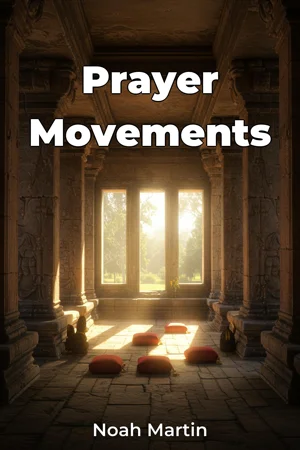
Have you ever considered the profound significance of physical movements in prayer and worship across diverse religious traditions? "Prayer Movements" delves into the rich tapestry of embodied spirituality, exploring how gestures like bowing, kneeling, prostrating, and other ritualistic actions serve as powerful expressions of faith, devotion, and connection with the divine. This book examines the historical, cultural, and theological underpinnings of these practices, revealing their enduring importance in shaping religious experience. Two key topics explored are the cross-cultural universality of physical postures in prayer and the theological interpretations assigned to these movements within different faith traditions. Why are these topics important? Because understanding them provides insight into the shared human impulse to express spirituality through the body and the diverse ways religions channel this impulse. The book further examines how specific movements have evolved over time and the impact of cultural exchange on these practices, offering a nuanced perspective on the dynamic relationship between body, belief, and ritual. "Prayer Movements" argues that these physical expressions are not merely symbolic; they are active engagements with the sacred, shaping both individual and communal religious identity. This argument is crucial because it challenges the often-overlooked significance of the body in spiritual practice, advocating for a more holistic understanding of religious experience. The book is structured to provide a comprehensive exploration of the subject. Beginning with an introduction to the core concepts of embodied prayer and worship, it moves through a detailed analysis of specific movements, providing historical context, theological interpretations, and examples across different traditions – Christianity, Islam, Buddhism, Hinduism, and Judaism among others. Major sections explore the use of bowing as a sign of respect and submission, kneeling as a gesture of humility and supplication, and prostration as an act of complete surrender. The analysis then culminates in a discussion of the contemporary relevance of these practices, examining their role in modern worship and potential for interfaith dialogue. The exploration is supported by evidence drawn from religious texts, historical accounts, anthropological studies, and ethnographic research. Where possible, primary source material is analyzed to provide authentic insights into the meanings and experiences associated with specific prayer movements. Interdisciplinary connections are drawn with anthropology, sociology, and religious studies. These connections enhance the book's argument by providing diverse perspectives on the social, cultural, and individual dimensions of embodied spirituality. A unique aspect of this book is its comparative approach, analyzing seemingly disparate practices across different religions to highlight underlying similarities and differences. This approach moves beyond a purely descriptive account to offer a deeper understanding of the human quest for spiritual connection. The tone is scholarly yet accessible, aiming to engage both academic and general readers interested in religion, spirituality, and cultural studies. The writing style emphasizes clarity and precision, ensuring that complex concepts are explained in a way that is easy to understand. The target audience includes students of religion, clergy members, spiritual seekers, and anyone interested in the intersection of body and belief. The book will be valuable to them by offering a deeper understanding of the role of physical movement in shaping religious experience and fostering interfaith dialogue. As a work of non-fiction within the genres of spirituality and religion, "Prayer Movements" adheres to the conventions of academic rigor, providing well-researched information, clear analysis, and balanced perspectives. The scope of the book is intentionally broad, encompassing a wide range of religious traditions and practices, but it does not delve into the psychological or neurological aspects of prayer. The insights from "Prayer Movements" can be applied in various real-world settings, such as informing liturgical practices, enriching personal prayer routines, and promoting greater understanding and respect between different religious communities. While the use of physical movements in prayer is generally accepted within most religious traditions, there are debates surrounding the specific forms and meanings of these practices. The book acknowledges these differing viewpoints and offers a nuanced discussion of the complexities involved.
Have you ever considered the profound significance of physical movements in prayer and worship across diverse religious traditions? "Prayer Movements" delves into the rich tapestry of embodied spirituality, exploring how gestures like bowing, kneeling, prostrating, and other ritualistic actions serve as powerful expressions of faith, devotion, and connection with the divine. This book examines the historical, cultural, and theological underpinnings of these practices, revealing their enduring importance in shaping religious experience. Two key topics explored are the cross-cultural universality of physical postures in prayer and the theological interpretations assigned to these movements within different faith traditions. Why are these topics important? Because understanding them provides insight into the shared human impulse to express spirituality through the body and the diverse ways religions channel this impulse. The book further examines how specific movements have evolved over time and the impact of cultural exchange on these practices, offering a nuanced perspective on the dynamic relationship between body, belief, and ritual. "Prayer Movements" argues that these physical expressions are not merely symbolic; they are active engagements with the sacred, shaping both individual and communal religious identity. This argument is crucial because it challenges the often-overlooked significance of the body in spiritual practice, advocating for a more holistic understanding of religious experience. The book is structured to provide a comprehensive exploration of the subject. Beginning with an introduction to the core concepts of embodied prayer and worship, it moves through a detailed analysis of specific movements, providing historical context, theological interpretations, and examples across different traditions – Christianity, Islam, Buddhism, Hinduism, and Judaism among others. Major sections explore the use of bowing as a sign of respect and submission, kneeling as a gesture of humility and supplication, and prostration as an act of complete surrender. The analysis then culminates in a discussion of the contemporary relevance of these practices, examining their role in modern worship and potential for interfaith dialogue. The exploration is supported by evidence drawn from religious texts, historical accounts, anthropological studies, and ethnographic research. Where possible, primary source material is analyzed to provide authentic insights into the meanings and experiences associated with specific prayer movements. Interdisciplinary connections are drawn with anthropology, sociology, and religious studies. These connections enhance the book's argument by providing diverse perspectives on the social, cultural, and individual dimensions of embodied spirituality. A unique aspect of this book is its comparative approach, analyzing seemingly disparate practices across different religions to highlight underlying similarities and differences. This approach moves beyond a purely descriptive account to offer a deeper understanding of the human quest for spiritual connection. The tone is scholarly yet accessible, aiming to engage both academic and general readers interested in religion, spirituality, and cultural studies. The writing style emphasizes clarity and precision, ensuring that complex concepts are explained in a way that is easy to understand. The target audience includes students of religion, clergy members, spiritual seekers, and anyone interested in the intersection of body and belief. The book will be valuable to them by offering a deeper understanding of the role of physical movement in shaping religious experience and fostering interfaith dialogue. As a work of non-fiction within the genres of spirituality and religion, "Prayer Movements" adheres to the conventions of academic rigor, providing well-researched information, clear analysis, and balanced perspectives. The scope of the book is intentionally broad, encompassing a wide range of religious traditions and practices, but it does not delve into the psychological or neurological aspects of prayer. The insights from "Prayer Movements" can be applied in various real-world settings, such as informing liturgical practices, enriching personal prayer routines, and promoting greater understanding and respect between different religious communities. While the use of physical movements in prayer is generally accepted within most religious traditions, there are debates surrounding the specific forms and meanings of these practices. The book acknowledges these differing viewpoints and offers a nuanced discussion of the complexities involved.
"Prayer Movements" explores the profound role of embodied spirituality across diverse faith traditions. It examines how physical gestures such as bowing, kneeling, and prostration serve as expressions of faith and connection to the divine. The book reveals the historical and theological foundations of these practices, highlighting their importance in shaping religious experience. One intriguing fact is the cross-cultural universality of physical postures in prayer, indicating a shared human impulse to express spirituality through the body. The book argues that these physical expressions are active engagements with the sacred, shaping both individual and communal religious identity. It provides a comprehensive analysis of specific movements across Christianity, Islam, Buddhism, Hinduism, and Judaism. Beginning with an introduction to embodied prayer, it progresses through detailed analyses, offering historical context and theological interpretations. This comparative approach highlights both similarities and differences in how various religions utilize physical movements in their rituals, making it a valuable resource for understanding religious traditions and fostering interfaith dialogue.
Book Details
ISBN
9788235277213
Publisher
Publifye AS
Your Licenses
You don't own any licenses for this book
Purchase a license below to unlock this book and download the EPUB.
Purchase License
Select a tier to unlock this book
Need bulk licensing?
Contact us for enterprise agreements.