
About This Book
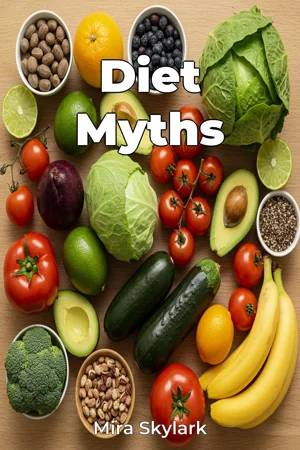
Tired of conflicting diet advice that leaves you more confused than ever? Are you ready to finally understand the truth about food and weight loss? "Diet Myths" cuts through the noise and exposes the pervasive misconceptions that sabotage healthy eating habits. This book empowers you with the knowledge to make informed food choices based on science, not fleeting trends. This book tackles three critical areas: carbohydrates, fats, and calories. These are often misunderstood and misrepresented in popular diet culture. Understanding these core components of nutrition is fundamental to achieving sustainable health and well-being. Without this clarity, individuals remain vulnerable to fad diets and unrealistic expectations. Throughout history, dietary advice has been shaped by cultural beliefs, marketing strategies, and flawed scientific understanding. The vilification of fat in the latter half of the 20th century, for instance, led to an over-reliance on processed carbohydrates. This change contributed to the rise of obesity and related health problems. No prior knowledge is needed to understand the concepts discussed. The central argument of "Diet Myths" is that a balanced, evidence-based approach to nutrition is far more effective and sustainable than restrictive dieting. By debunking common myths surrounding carbs, fats, and calories, the book aims to empower readers to develop a healthier relationship with food. This approach promotes long-term wellness rather than short-term weight loss. The book is structured to provide a comprehensive understanding of nutrition. First, the introduction lays the groundwork by identifying the widespread prevalence of diet myths and their negative impact. The first major section examines carbohydrate misconceptions, clarifying the differences between simple and complex carbs and their roles in energy production. The second section dives into the truths about dietary fats, explaining the distinctions between saturated, unsaturated, and trans fats, and their effects on cardiovascular health. Next, the book clarifies the role of calories. It reveals how calorie counting alone is an insufficient method for weight management. The book culminates in a practical guide to making informed food choices. It offers concrete strategies for creating balanced meals and adopting sustainable eating habits. To support its arguments, "Diet Myths" draws upon a wide range of scientific studies, meta-analyses, and expert opinions from the fields of nutrition and medicine. The book references data from reputable sources like the National Institutes of Health and the World Health Organization. It also presents findings from clinical trials that explore the effects of different macronutrient ratios on weight loss and overall health. "Diet Myths" also connects to other fields, such as psychology, by exploring the emotional and behavioral aspects of eating. It addresses the societal impact of marketing and advertising on food choices, linking it to business and economics. The book then touches on public health by analyzing how dietary guidelines and policies influence population health outcomes. This book stands out by providing a balanced and unbiased perspective on nutrition. It avoids promoting any specific diet or ideology. The writing style is accessible and conversational. It presents complex scientific information in a clear and engaging manner, making it easy for readers to grasp key concepts. The target audience for "Diet Myths" includes anyone seeking to improve their understanding of nutrition. This book will benefit those who are tired of fad diets and want to make lasting lifestyle changes. It is particularly relevant for individuals struggling with weight management, chronic diseases, or simply seeking to optimize their health. This book aligns with the self-help and health & fitness genres. It offers practical advice and evidence-based strategies for improving one's well-being. The book's scope encompasses the fundamental principles of nutrition. It focuses primarily on debunking diet myths related to macronutrients and calories. While the book addresses various aspects of healthy eating, it does not delve into specific medical conditions or specialized dietary needs. The information in "Diet Myths" can be applied practically by readers to improve their eating habits, make healthier food choices, and achieve sustainable weight management. The book offers actionable strategies for mindful eating, meal planning, and navigating the complexities of the modern food environment. This book addresses ongoing debates in the field of nutrition. It explores controversies surrounding low-carb diets, intermittent fasting, and the role of processed foods in promoting obesity. It presents different perspectives on these topics and encourages readers to critically evaluate the evidence.
Tired of conflicting diet advice that leaves you more confused than ever? Are you ready to finally understand the truth about food and weight loss? "Diet Myths" cuts through the noise and exposes the pervasive misconceptions that sabotage healthy eating habits. This book empowers you with the knowledge to make informed food choices based on science, not fleeting trends. This book tackles three critical areas: carbohydrates, fats, and calories. These are often misunderstood and misrepresented in popular diet culture. Understanding these core components of nutrition is fundamental to achieving sustainable health and well-being. Without this clarity, individuals remain vulnerable to fad diets and unrealistic expectations. Throughout history, dietary advice has been shaped by cultural beliefs, marketing strategies, and flawed scientific understanding. The vilification of fat in the latter half of the 20th century, for instance, led to an over-reliance on processed carbohydrates. This change contributed to the rise of obesity and related health problems. No prior knowledge is needed to understand the concepts discussed. The central argument of "Diet Myths" is that a balanced, evidence-based approach to nutrition is far more effective and sustainable than restrictive dieting. By debunking common myths surrounding carbs, fats, and calories, the book aims to empower readers to develop a healthier relationship with food. This approach promotes long-term wellness rather than short-term weight loss. The book is structured to provide a comprehensive understanding of nutrition. First, the introduction lays the groundwork by identifying the widespread prevalence of diet myths and their negative impact. The first major section examines carbohydrate misconceptions, clarifying the differences between simple and complex carbs and their roles in energy production. The second section dives into the truths about dietary fats, explaining the distinctions between saturated, unsaturated, and trans fats, and their effects on cardiovascular health. Next, the book clarifies the role of calories. It reveals how calorie counting alone is an insufficient method for weight management. The book culminates in a practical guide to making informed food choices. It offers concrete strategies for creating balanced meals and adopting sustainable eating habits. To support its arguments, "Diet Myths" draws upon a wide range of scientific studies, meta-analyses, and expert opinions from the fields of nutrition and medicine. The book references data from reputable sources like the National Institutes of Health and the World Health Organization. It also presents findings from clinical trials that explore the effects of different macronutrient ratios on weight loss and overall health. "Diet Myths" also connects to other fields, such as psychology, by exploring the emotional and behavioral aspects of eating. It addresses the societal impact of marketing and advertising on food choices, linking it to business and economics. The book then touches on public health by analyzing how dietary guidelines and policies influence population health outcomes. This book stands out by providing a balanced and unbiased perspective on nutrition. It avoids promoting any specific diet or ideology. The writing style is accessible and conversational. It presents complex scientific information in a clear and engaging manner, making it easy for readers to grasp key concepts. The target audience for "Diet Myths" includes anyone seeking to improve their understanding of nutrition. This book will benefit those who are tired of fad diets and want to make lasting lifestyle changes. It is particularly relevant for individuals struggling with weight management, chronic diseases, or simply seeking to optimize their health. This book aligns with the self-help and health & fitness genres. It offers practical advice and evidence-based strategies for improving one's well-being. The book's scope encompasses the fundamental principles of nutrition. It focuses primarily on debunking diet myths related to macronutrients and calories. While the book addresses various aspects of healthy eating, it does not delve into specific medical conditions or specialized dietary needs. The information in "Diet Myths" can be applied practically by readers to improve their eating habits, make healthier food choices, and achieve sustainable weight management. The book offers actionable strategies for mindful eating, meal planning, and navigating the complexities of the modern food environment. This book addresses ongoing debates in the field of nutrition. It explores controversies surrounding low-carb diets, intermittent fasting, and the role of processed foods in promoting obesity. It presents different perspectives on these topics and encourages readers to critically evaluate the evidence.
"Diet Myths" tackles the confusing world of nutrition by debunking common misconceptions about carbohydrates, fats, and calories. Many people believe that all fats are bad, but the book clarifies the distinctions between saturated, unsaturated, and trans fats, and their varying effects on our health. It highlights how the vilification of fats led to increased consumption of processed carbohydrates, contributing to obesity. The book uses scientific studies and expert opinions to empower readers to make informed food choices. The book progresses from an introduction to the prevalence of diet myths into sections focused on carbs, fats, and calories, culminating in a practical guide to balanced meals. It emphasizes that a balanced, evidence-based approach to nutrition is more sustainable than restrictive dieting. By cutting through the noise of fad diets and conflicting information, "Diet Myths" aims to help readers develop a healthier relationship with food and achieve sustainable health and fitness.
Book Details
ISBN
9788235276827
Publisher
Publifye AS
Your Licenses
You don't own any licenses for this book
Purchase a license below to unlock this book and download the EPUB.
Purchase License
Select a tier to unlock this book
Need bulk licensing?
Contact us for enterprise agreements.