
About This Book
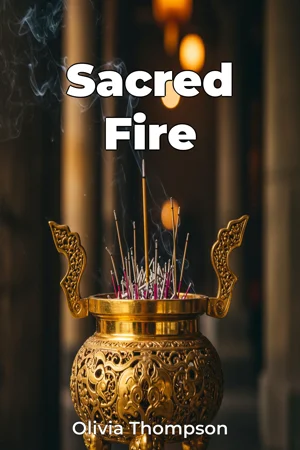
Why, across millennia and continents, has humankind been drawn to the flickering allure of fire? "Sacred Fire" delves into this fundamental question, exploring the profound significance of fire rituals in diverse religious traditions, its integral role in prayer practices, and its pervasive association with purification. This book illuminates how flames serve as a conduit to the divine, a symbol of transformation, and a tool for spiritual cleansing. This exploration is critical because fire, beyond its practical applications, resonates deeply within the human psyche. Understanding its symbolic function allows us to gain insight into the core beliefs, values, and practices of various cultures and religions. This knowledge fosters a greater appreciation for the diversity of human spirituality and provides a fresh perspective on our shared human experience. "Sacred Fire" begins by establishing a historical context, tracing the earliest evidence of fire use in ritualistic practices from prehistoric times to the dawn of organized religion. It examines the social context in which such rituals developed, including the role of fire in community bonding, social hierarchies, and the establishment of religious authority. No specific prerequisite knowledge is needed. The central argument of "Sacred Fire" posits that fire rituals, while varying in form and execution, consistently reflect humanity's intrinsic need to connect with transcendental realities, to purge impurities, and to invoke transformation. This argument is important because it challenges simplistic interpretations of religious rituals as mere cultural artifacts, instead revealing their enduring power to shape individual and collective consciousness. The book unfolds in three major sections. First, it introduces the fundamental concepts of fire as a symbol of divinity, purification, and transformation across a range of religious traditions, including Hinduism, Zoroastrianism, Christianity, and various indigenous spiritualities. Second, it develops these ideas through detailed case studies, examining specific fire rituals and their associated beliefs, such as the Agnihotra in Hinduism, the fire temples of Zoroastrianism, and the use of candles and incense in Christian worship. This section will analyze the theological underpinnings of each ritual and its intended effect on participants. Third, the book culminates by synthesizing these diverse perspectives, highlighting common themes and exploring the enduring appeal of fire rituals in the modern world. It concludes by discussing the practical implications of understanding fire rituals, such as promoting interfaith dialogue, enhancing personal spiritual practices, and appreciating the cultural heritage embodied in these traditions. To support its arguments, "Sacred Fire" draws upon a wide range of evidence, including anthropological studies, religious texts, archaeological findings, and ethnographic accounts of contemporary fire rituals. Primary source materials, such as ancient scriptures and liturgical texts, will be analyzed alongside secondary sources to provide a balanced and comprehensive account. Interdisciplinary connections are crucial to understanding the multifaceted nature of fire rituals. The book connects to fields such as anthropology, which provides insights into the cultural significance of fire; history, which traces the evolution of fire rituals over time; and psychology, which explores the psychological impact of fire on human emotions and cognition. These connections enrich the analysis and offer a more holistic understanding of the subject matter. "Sacred Fire" offers a unique perspective by examining fire rituals not as isolated phenomena but as interconnected expressions of humanity's quest for meaning and spiritual connection. It emphasizes the shared symbolic language of fire across different cultures, revealing the underlying unity of human spirituality despite its diverse manifestations. The book adopts an academic yet accessible tone, presenting complex ideas in a clear and engaging manner. While grounded in scholarly research, it avoids jargon and aims to be accessible to a wide audience. The target audience includes students of religion, anthropology, and cultural studies, as well as anyone interested in exploring the spiritual dimensions of human experience. It would be valuable to those seeking a deeper understanding of religious diversity and the enduring power of ritual. As a work of non-fiction in the genres of spirituality and religion, "Sacred Fire" adheres to the conventions of scholarly rigor, presenting well-researched information and supporting arguments with evidence. It also embraces the genre's emphasis on exploring the subjective and personal aspects of religious experience. The scope of "Sacred Fire" is intentionally broad, encompassing a wide range of religious traditions and cultural contexts. However, it acknowledges that certain traditions and rituals may receive less attention due to limitations in available research and space. The book does not aim to be exhaustive but rather to provide a representative overview of the diverse ways in which fire is used in religious practices. The information in "Sacred Fire" can be applied practically by readers seeking to enhance their own spiritual practices. By understanding the symbolic language of fire, they can incorporate it into their own rituals and meditations, fostering a deeper connection to the sacred. While fire rituals are generally viewed positively within their respective traditions, certain practices may raise concerns related to environmental impact or cultural appropriation. "Sacred Fire" addresses these controversies by presenting a balanced and nuanced perspective, acknowledging the ethical considerations involved and promoting responsible engagement with fire rituals.
Why, across millennia and continents, has humankind been drawn to the flickering allure of fire? "Sacred Fire" delves into this fundamental question, exploring the profound significance of fire rituals in diverse religious traditions, its integral role in prayer practices, and its pervasive association with purification. This book illuminates how flames serve as a conduit to the divine, a symbol of transformation, and a tool for spiritual cleansing. This exploration is critical because fire, beyond its practical applications, resonates deeply within the human psyche. Understanding its symbolic function allows us to gain insight into the core beliefs, values, and practices of various cultures and religions. This knowledge fosters a greater appreciation for the diversity of human spirituality and provides a fresh perspective on our shared human experience. "Sacred Fire" begins by establishing a historical context, tracing the earliest evidence of fire use in ritualistic practices from prehistoric times to the dawn of organized religion. It examines the social context in which such rituals developed, including the role of fire in community bonding, social hierarchies, and the establishment of religious authority. No specific prerequisite knowledge is needed. The central argument of "Sacred Fire" posits that fire rituals, while varying in form and execution, consistently reflect humanity's intrinsic need to connect with transcendental realities, to purge impurities, and to invoke transformation. This argument is important because it challenges simplistic interpretations of religious rituals as mere cultural artifacts, instead revealing their enduring power to shape individual and collective consciousness. The book unfolds in three major sections. First, it introduces the fundamental concepts of fire as a symbol of divinity, purification, and transformation across a range of religious traditions, including Hinduism, Zoroastrianism, Christianity, and various indigenous spiritualities. Second, it develops these ideas through detailed case studies, examining specific fire rituals and their associated beliefs, such as the Agnihotra in Hinduism, the fire temples of Zoroastrianism, and the use of candles and incense in Christian worship. This section will analyze the theological underpinnings of each ritual and its intended effect on participants. Third, the book culminates by synthesizing these diverse perspectives, highlighting common themes and exploring the enduring appeal of fire rituals in the modern world. It concludes by discussing the practical implications of understanding fire rituals, such as promoting interfaith dialogue, enhancing personal spiritual practices, and appreciating the cultural heritage embodied in these traditions. To support its arguments, "Sacred Fire" draws upon a wide range of evidence, including anthropological studies, religious texts, archaeological findings, and ethnographic accounts of contemporary fire rituals. Primary source materials, such as ancient scriptures and liturgical texts, will be analyzed alongside secondary sources to provide a balanced and comprehensive account. Interdisciplinary connections are crucial to understanding the multifaceted nature of fire rituals. The book connects to fields such as anthropology, which provides insights into the cultural significance of fire; history, which traces the evolution of fire rituals over time; and psychology, which explores the psychological impact of fire on human emotions and cognition. These connections enrich the analysis and offer a more holistic understanding of the subject matter. "Sacred Fire" offers a unique perspective by examining fire rituals not as isolated phenomena but as interconnected expressions of humanity's quest for meaning and spiritual connection. It emphasizes the shared symbolic language of fire across different cultures, revealing the underlying unity of human spirituality despite its diverse manifestations. The book adopts an academic yet accessible tone, presenting complex ideas in a clear and engaging manner. While grounded in scholarly research, it avoids jargon and aims to be accessible to a wide audience. The target audience includes students of religion, anthropology, and cultural studies, as well as anyone interested in exploring the spiritual dimensions of human experience. It would be valuable to those seeking a deeper understanding of religious diversity and the enduring power of ritual. As a work of non-fiction in the genres of spirituality and religion, "Sacred Fire" adheres to the conventions of scholarly rigor, presenting well-researched information and supporting arguments with evidence. It also embraces the genre's emphasis on exploring the subjective and personal aspects of religious experience. The scope of "Sacred Fire" is intentionally broad, encompassing a wide range of religious traditions and cultural contexts. However, it acknowledges that certain traditions and rituals may receive less attention due to limitations in available research and space. The book does not aim to be exhaustive but rather to provide a representative overview of the diverse ways in which fire is used in religious practices. The information in "Sacred Fire" can be applied practically by readers seeking to enhance their own spiritual practices. By understanding the symbolic language of fire, they can incorporate it into their own rituals and meditations, fostering a deeper connection to the sacred. While fire rituals are generally viewed positively within their respective traditions, certain practices may raise concerns related to environmental impact or cultural appropriation. "Sacred Fire" addresses these controversies by presenting a balanced and nuanced perspective, acknowledging the ethical considerations involved and promoting responsible engagement with fire rituals.
"Sacred Fire" explores the universal human fascination with fire, examining its pivotal role in religious traditions and spiritual practices across cultures. From ancient rituals to contemporary expressions, fire serves as a potent symbol of purification, transformation, and connection to the divine. The book demonstrates how fire rituals, though diverse, consistently reflect our innate desire to transcend earthly limitations and invoke spiritual change. The book begins by establishing the historical context of fire use in rituals, tracing its evolution from prehistoric times. It then delves into case studies, analyzing specific rituals like the Agnihotra in Hinduism and the use of candles in Christianity, uncovering their theological underpinnings and intended effects. Did you know that fire has been used for millennia as a way to connect with transcendental realities? Or that across vastly different cultures, fire often symbolizes purification? "Sacred Fire" culminates by synthesizing these perspectives, highlighting common themes and exploring the enduring appeal of these rituals. By drawing on anthropological studies, religious texts, and archaeological findings, the book fosters interfaith dialogue and offers a fresh perspective on our shared human experience. Ultimately, understanding the symbolic language of fire can enhance personal spiritual practices and promote a deeper appreciation for cultural heritage.
Book Details
ISBN
9788235276803
Publisher
Publifye AS
Your Licenses
You don't own any licenses for this book
Purchase a license below to unlock this book and download the EPUB.
Purchase License
Select a tier to unlock this book
Need bulk licensing?
Contact us for enterprise agreements.