
About This Book
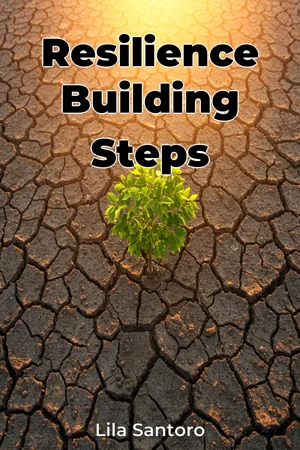
Are you searching for ways to not just survive but thrive amidst life's inevitable challenges? This book, *Resilience Building Steps*, offers a comprehensive guide to understanding and cultivating mental resilience, your capacity to recover quickly from difficulties. We delve into the core components of resilience: self-acceptance, adaptability, and the development of effective coping mechanisms, illuminating how these work in concert to help you navigate adversity. Resilience isn't simply a personality trait; it's a skill set that can be learned and strengthened. In this book, we argue that by understanding the psychological underpinnings of resilience and implementing practical strategies, you can significantly enhance your ability to bounce back from setbacks, manage stress, and maintain overall well-being. This perspective is crucial in today’s fast-paced and often unpredictable world, where the ability to adapt and persevere is more important than ever. The book is structured to provide a clear and actionable pathway to building resilience. It begins with an exploration of the foundational concepts, examining the history of resilience research and defining its key elements. We then delve into the psychological processes that contribute to resilience, such as cognitive reappraisal, emotional regulation, and the cultivation of a growth mindset. We investigate how early life experiences, social support networks, and individual differences can influence resilience levels. Moving beyond theory, the book provides practical strategies and techniques for building resilience in various aspects of life. Chapters are dedicated to fostering self-acceptance through practicing self-compassion and challenging negative self-talk; enhancing adaptability by developing problem-solving skills and embracing change; and mastering coping mechanisms by learning stress management techniques and cultivating healthy habits. To support our arguments, we draw upon a wealth of evidence from psychological research, clinical studies, and real-life examples. We present findings from studies on stress and coping, trauma and recovery, and the impact of positive psychology interventions. Our approach is grounded in empirical data, offering evidence-based strategies for building resilience. The principles of resilience extend beyond the realm of psychology, connecting to fields such as neuroscience, sociology, and organizational behavior. We explore how brain plasticity contributes to resilience, how social connectedness fosters a sense of belonging and support, and how resilient leadership can enhance team performance. These interdisciplinary connections enrich our understanding of resilience and its broader implications. *Resilience Building Steps* stands out by providing a holistic and practical approach to building resilience. Rather than focusing solely on individual factors, we consider the interplay between personal traits, social contexts, and environmental factors. Our emphasis on actionable strategies and real-world applications makes this book a valuable resource for anyone seeking to enhance their resilience. Our writing style is accessible but rigorous, blending scientific insights with practical guidance. We avoid jargon and use clear, concise language to convey complex concepts. The book is intended for a broad audience, including individuals seeking personal growth, mental health professionals, educators, and leaders. It would be valuable to readers interested in self-help, psychology or anyone wanting to improve their capacity to deal with difficulties. The scope of this book is comprehensive, covering a wide range of topics related to resilience. We intentionally limit our focus to evidence-based strategies and techniques, avoiding overly speculative or unsubstantiated claims. The book also acknowledges existing debates such as the emphasis on individual responsibility versus systemic factors. The teachings of this book can be applied in various contexts, from managing workplace stress to overcoming personal challenges. By implementing the strategies outlined in the book, you can develop a more resilient mindset, enhance your ability to cope with adversity, and lead a more fulfilling life.
Are you searching for ways to not just survive but thrive amidst life's inevitable challenges? This book, *Resilience Building Steps*, offers a comprehensive guide to understanding and cultivating mental resilience, your capacity to recover quickly from difficulties. We delve into the core components of resilience: self-acceptance, adaptability, and the development of effective coping mechanisms, illuminating how these work in concert to help you navigate adversity. Resilience isn't simply a personality trait; it's a skill set that can be learned and strengthened. In this book, we argue that by understanding the psychological underpinnings of resilience and implementing practical strategies, you can significantly enhance your ability to bounce back from setbacks, manage stress, and maintain overall well-being. This perspective is crucial in today’s fast-paced and often unpredictable world, where the ability to adapt and persevere is more important than ever. The book is structured to provide a clear and actionable pathway to building resilience. It begins with an exploration of the foundational concepts, examining the history of resilience research and defining its key elements. We then delve into the psychological processes that contribute to resilience, such as cognitive reappraisal, emotional regulation, and the cultivation of a growth mindset. We investigate how early life experiences, social support networks, and individual differences can influence resilience levels. Moving beyond theory, the book provides practical strategies and techniques for building resilience in various aspects of life. Chapters are dedicated to fostering self-acceptance through practicing self-compassion and challenging negative self-talk; enhancing adaptability by developing problem-solving skills and embracing change; and mastering coping mechanisms by learning stress management techniques and cultivating healthy habits. To support our arguments, we draw upon a wealth of evidence from psychological research, clinical studies, and real-life examples. We present findings from studies on stress and coping, trauma and recovery, and the impact of positive psychology interventions. Our approach is grounded in empirical data, offering evidence-based strategies for building resilience. The principles of resilience extend beyond the realm of psychology, connecting to fields such as neuroscience, sociology, and organizational behavior. We explore how brain plasticity contributes to resilience, how social connectedness fosters a sense of belonging and support, and how resilient leadership can enhance team performance. These interdisciplinary connections enrich our understanding of resilience and its broader implications. *Resilience Building Steps* stands out by providing a holistic and practical approach to building resilience. Rather than focusing solely on individual factors, we consider the interplay between personal traits, social contexts, and environmental factors. Our emphasis on actionable strategies and real-world applications makes this book a valuable resource for anyone seeking to enhance their resilience. Our writing style is accessible but rigorous, blending scientific insights with practical guidance. We avoid jargon and use clear, concise language to convey complex concepts. The book is intended for a broad audience, including individuals seeking personal growth, mental health professionals, educators, and leaders. It would be valuable to readers interested in self-help, psychology or anyone wanting to improve their capacity to deal with difficulties. The scope of this book is comprehensive, covering a wide range of topics related to resilience. We intentionally limit our focus to evidence-based strategies and techniques, avoiding overly speculative or unsubstantiated claims. The book also acknowledges existing debates such as the emphasis on individual responsibility versus systemic factors. The teachings of this book can be applied in various contexts, from managing workplace stress to overcoming personal challenges. By implementing the strategies outlined in the book, you can develop a more resilient mindset, enhance your ability to cope with adversity, and lead a more fulfilling life.
"Resilience Building Steps" offers a practical guide to cultivating mental resilience, emphasizing that it's a learnable skill, not just an innate trait. This self-help psychology book explores how resilience is built on foundations of self-acceptance, adaptability, and effective coping mechanisms. By understanding the psychological underpinnings and implementing actionable strategies, readers can enhance their ability to bounce back from setbacks, manage stress, and foster personal growth. The book leverages insights from psychological research and clinical studies to provide evidence-based strategies, demonstrating, for instance, how cognitive reappraisal can transform responses to challenging situations. The book progresses systematically, beginning with the history and key elements of resilience before delving into the psychological processes that contribute to it, such as emotional regulation and cultivating a growth mindset. It then moves into practical techniques for building resilience in different areas of life, including mastering stress management and embracing change. What sets this book apart is its holistic approach, considering the interplay between individual traits, social contexts, and environmental factors to offer a comprehensive pathway to building resilience and improving overall well-being.
Book Details
ISBN
9788235276735
Publisher
Publifye AS
Your Licenses
You don't own any licenses for this book
Purchase a license below to unlock this book and download the EPUB.
Purchase License
Select a tier to unlock this book
Need bulk licensing?
Contact us for enterprise agreements.