
About This Book
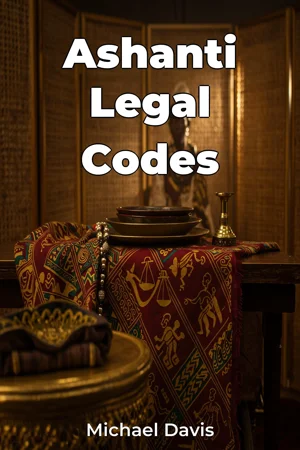
What can the sophisticated jurisprudence of a pre-colonial African kingdom teach us about law, governance, and conflict resolution today? "Ashanti Legal Codes" delves into the intricate legal customs and conflict resolution structures of the Ashanti kingdom, offering a comprehensive examination of its unique system of justice. This book will be significant to those interested in History World, World History, and Politics. This book focuses on the three main tenets of Ashanti Law: the symbolic documentation of legal principles through adinkra symbols, the central role of the council of elders in judicial proceedings, and the multi-layered system of conflict resolution ranging from the family level to the Asantehene's court. These topics reveal how the Ashanti successfully maintained order and social cohesion for centuries. To fully appreciate the Ashanti legal system, the reader should understand the socio-political context of the Ashanti kingdom, a powerful state in pre-colonial West Africa. A basic understanding of the Ashanti social hierarchy, the role of the Asantehene (king), and the importance of lineage and ancestor veneration is beneficial. The central argument of "Ashanti Legal Codes" is that the Ashanti legal system represents a sophisticated and nuanced approach to justice that prioritized reconciliation, community harmony, and the preservation of social order. This challenges the often-simplistic view of pre-colonial African societies and demonstrates the existence of complex legal traditions rooted in customary law and philosophical principles. The book begins by introducing the fundamental concepts of Ashanti customary law, highlighting its oral tradition and its connection to Ashanti social and religious beliefs. The argument then unfolds through three major sections. First, the book analyzes the meaning and application of adinkra symbols as legal codes, revealing how these visual representations encapsulated legal principles and precedents. Next, it examines the structure and function of the Ashanti council system, detailing the roles of different council members, the procedures for conducting trials, and the types of evidence considered. Finally, the book explores the various methods of conflict resolution used in Ashanti society, from informal mediation to formal adjudication, illustrating how disputes were resolved at different levels of the social hierarchy. It culminates by emphasizing the enduring relevance of Ashanti legal principles for contemporary legal systems, particularly in the areas of restorative justice and community-based dispute resolution. Evidence will be drawn from a variety of sources, including oral histories collected from Ashanti elders, anthropological studies of Ashanti culture, and colonial-era records and reports which document legal cases and customs. Furthermore, the book analyzes the symbolic language of adinkra cloths and their use in communicating legal concepts. "Ashanti Legal Codes" connects to several other fields of study, including anthropology (through its examination of cultural practices), political science (through its analysis of governance structures), and comparative law (through its comparison of Ashanti legal principles with those of other legal systems). These interdisciplinary connections provide a richer and more nuanced understanding of the Ashanti legal system and its significance. The book offers a unique perspective by treating adinkra symbols not merely as decorative motifs but as sophisticated forms of legal documentation. It also challenges traditional interpretations of African customary law as being static or unsophisticated, demonstrating the dynamic and adaptable nature of the Ashanti legal system. The writing style will be academic yet accessible, aiming to clearly explain complex legal concepts while engaging the reader with vivid descriptions of Ashanti society and culture. The target audience includes students and scholars of African history, legal history, anthropology, and political science. It will appeal to anyone interested in learning about indigenous legal systems and alternative approaches to justice. As a work of non-fiction, "Ashanti Legal Codes" will adhere to the standards of scholarly rigor and accuracy. It will be thoroughly researched, meticulously footnoted, and objectively presented. The book's scope is limited to the legal customs and conflict resolution structures of the Ashanti kingdom during its pre-colonial and early colonial periods. While it acknowledges the impact of colonialism on the Ashanti legal system, it primarily focuses on the indigenous legal traditions that existed prior to European influence. The information presented in "Ashanti Legal Codes" can be applied practically by legal professionals seeking to understand alternative dispute resolution methods, policymakers interested in promoting restorative justice, and community leaders seeking to strengthen social cohesion.
What can the sophisticated jurisprudence of a pre-colonial African kingdom teach us about law, governance, and conflict resolution today? "Ashanti Legal Codes" delves into the intricate legal customs and conflict resolution structures of the Ashanti kingdom, offering a comprehensive examination of its unique system of justice. This book will be significant to those interested in History World, World History, and Politics. This book focuses on the three main tenets of Ashanti Law: the symbolic documentation of legal principles through adinkra symbols, the central role of the council of elders in judicial proceedings, and the multi-layered system of conflict resolution ranging from the family level to the Asantehene's court. These topics reveal how the Ashanti successfully maintained order and social cohesion for centuries. To fully appreciate the Ashanti legal system, the reader should understand the socio-political context of the Ashanti kingdom, a powerful state in pre-colonial West Africa. A basic understanding of the Ashanti social hierarchy, the role of the Asantehene (king), and the importance of lineage and ancestor veneration is beneficial. The central argument of "Ashanti Legal Codes" is that the Ashanti legal system represents a sophisticated and nuanced approach to justice that prioritized reconciliation, community harmony, and the preservation of social order. This challenges the often-simplistic view of pre-colonial African societies and demonstrates the existence of complex legal traditions rooted in customary law and philosophical principles. The book begins by introducing the fundamental concepts of Ashanti customary law, highlighting its oral tradition and its connection to Ashanti social and religious beliefs. The argument then unfolds through three major sections. First, the book analyzes the meaning and application of adinkra symbols as legal codes, revealing how these visual representations encapsulated legal principles and precedents. Next, it examines the structure and function of the Ashanti council system, detailing the roles of different council members, the procedures for conducting trials, and the types of evidence considered. Finally, the book explores the various methods of conflict resolution used in Ashanti society, from informal mediation to formal adjudication, illustrating how disputes were resolved at different levels of the social hierarchy. It culminates by emphasizing the enduring relevance of Ashanti legal principles for contemporary legal systems, particularly in the areas of restorative justice and community-based dispute resolution. Evidence will be drawn from a variety of sources, including oral histories collected from Ashanti elders, anthropological studies of Ashanti culture, and colonial-era records and reports which document legal cases and customs. Furthermore, the book analyzes the symbolic language of adinkra cloths and their use in communicating legal concepts. "Ashanti Legal Codes" connects to several other fields of study, including anthropology (through its examination of cultural practices), political science (through its analysis of governance structures), and comparative law (through its comparison of Ashanti legal principles with those of other legal systems). These interdisciplinary connections provide a richer and more nuanced understanding of the Ashanti legal system and its significance. The book offers a unique perspective by treating adinkra symbols not merely as decorative motifs but as sophisticated forms of legal documentation. It also challenges traditional interpretations of African customary law as being static or unsophisticated, demonstrating the dynamic and adaptable nature of the Ashanti legal system. The writing style will be academic yet accessible, aiming to clearly explain complex legal concepts while engaging the reader with vivid descriptions of Ashanti society and culture. The target audience includes students and scholars of African history, legal history, anthropology, and political science. It will appeal to anyone interested in learning about indigenous legal systems and alternative approaches to justice. As a work of non-fiction, "Ashanti Legal Codes" will adhere to the standards of scholarly rigor and accuracy. It will be thoroughly researched, meticulously footnoted, and objectively presented. The book's scope is limited to the legal customs and conflict resolution structures of the Ashanti kingdom during its pre-colonial and early colonial periods. While it acknowledges the impact of colonialism on the Ashanti legal system, it primarily focuses on the indigenous legal traditions that existed prior to European influence. The information presented in "Ashanti Legal Codes" can be applied practically by legal professionals seeking to understand alternative dispute resolution methods, policymakers interested in promoting restorative justice, and community leaders seeking to strengthen social cohesion.
"Ashanti Legal Codes" explores the sophisticated legal system of the pre-colonial Ashanti kingdom, demonstrating its advanced approach to justice, governance, and conflict resolution. The book highlights how the Ashanti maintained order and social cohesion through customary law, challenging simplistic views of pre-colonial African societies. Intriguingly, the Ashanti used *adinkra* symbols as visual representations of legal principles, showcasing a unique form of legal documentation. The legal framework also heavily relied on the council of elders in judicial proceedings, emphasizing community involvement in dispute resolution. The book argues that the Ashanti legal system prioritized reconciliation and community harmony. It begins by introducing the fundamentals of Ashanti customary law, then delves into the meaning and application of *adinkra* symbols. Next, it examines the structure and function of the Ashanti council system. Finally, the book explores various conflict resolution methods, demonstrating how disputes were handled at different levels of society, ultimately emphasizing the relevance of Ashanti legal principles for contemporary legal systems and offering valuable insights into alternative approaches to justice within History World, World History, and Politics.
Book Details
ISBN
9788235276704
Publisher
Publifye AS
Your Licenses
You don't own any licenses for this book
Purchase a license below to unlock this book and download the EPUB.
Purchase License
Select a tier to unlock this book
Need bulk licensing?
Contact us for enterprise agreements.