
About This Book
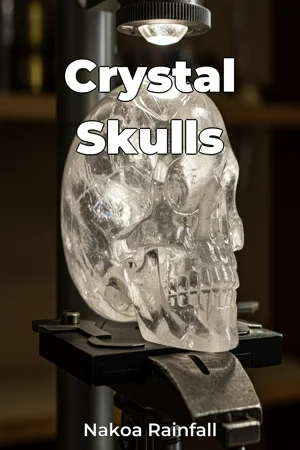
Do crystal skulls hold the secrets of ancient civilizations, or are they artifacts of more recent origins? "Crystal Skulls" unravels the captivating mystery surrounding these objects, challenging long-held beliefs about their pre-Columbian Mesoamerican provenance. This book delves into the core questions of authenticity, craftsmanship, and historical context, offering a comprehensive investigation into the true story behind these enigmatic carvings. We will explore two key areas: first, an examination of the material science involved in determining the age and origin of the skulls, focusing on the analysis of tool marks and crystallographic structures. Second, we will trace the documented history of these objects from initial discovery to their presence in private collections and museums. Understanding these two aspects is crucial to separating fact from fiction and arriving at an informed conclusion about the skulls' origins. The book presents a compelling argument: that the crystal skulls, far from being relics of ancient Mesoamerica, are more likely products of 19th-century European workshops. This conclusion is based on meticulous scientific analysis and historical research, challenging widely accepted New Age beliefs and recontextualizing the skulls within a framework of art history and commercial trade. "Crystal Skulls" is structured to guide the reader through the evidence. The book begins with an introduction to the history of crystal skulls: how they entered public consciousness and the associated myths. We then move into the details of materials analysis, explaining how modern techniques such as electron microscopy reveal tool marks inconsistent with pre-Columbian technology. Crystallographic studies provide further data points, comparing the structures of the skulls with known quartz sources. Concluding the scientific analysis, the book examines the historical documentation surrounding the skulls. Archival records, auction catalogs, and personal correspondence shed light on the skulls' documented origins in Europe, including the identities of known artisans. This evidence culminates in a clear statement identifying the likely origins of the skulls. The evidence presented draws from a wide range of sources, including scientific reports from leading crystallography laboratories, museum archives, and historical documents from European art dealers. The methodology employed involves a combination of scientific analysis, archival research, and comparative art history. This book also speaks to broader themes in science and history: the role of provenance in artifact authentication, the impact of technology on our understanding of the past, and the intersection of art, science, and cultural belief. By looking at the history and fabrication of the crystal skulls, it touches on the history of art collecting, the relationship between indigenous communities and European markets, and the intersection of science and folklore. "Crystal Skulls" offers a novel perspective by combining rigorous scientific techniques with detailed historical analysis to challenge prevailing narratives. We will adopt a factual, evidence-based approach, presenting the data clearly and allowing the reader to draw their own conclusions based on the available information. The target audience includes anyone interested in archaeology, art history, or scientific analysis of artifacts, as well as those curious about the history of crystal skulls and the associated controversies. This book offers value to readers seeking a balanced and objective perspective on a subject often shrouded in myth and speculation. As a work of science and history, "Crystal Skulls" adheres to the conventions of providing verifiable evidence, presenting arguments based on data, and acknowledging alternative viewpoints. The scope of this book is limited to examining the authenticity and origins of the crystal skulls themselves. It does not delve into broader discussions of ancient Mesoamerican culture or broader New Age spiritual practices beyond their direct relevance to the skulls. The information in this book has real-world applications for those involved in artifact authentication, museum curation, and the study of historical forgeries. Understanding the methods used to analyze and trace the origins of the crystal skulls can be applied to the investigation of other questionable artifacts, helping to separate genuine relics from manufactured objects. The debate over the authenticity of crystal skulls has been ongoing for decades. This book addresses these controversies head-on, presenting the evidence in a clear and unbiased manner, allowing readers to form their own informed opinions.
Do crystal skulls hold the secrets of ancient civilizations, or are they artifacts of more recent origins? "Crystal Skulls" unravels the captivating mystery surrounding these objects, challenging long-held beliefs about their pre-Columbian Mesoamerican provenance. This book delves into the core questions of authenticity, craftsmanship, and historical context, offering a comprehensive investigation into the true story behind these enigmatic carvings. We will explore two key areas: first, an examination of the material science involved in determining the age and origin of the skulls, focusing on the analysis of tool marks and crystallographic structures. Second, we will trace the documented history of these objects from initial discovery to their presence in private collections and museums. Understanding these two aspects is crucial to separating fact from fiction and arriving at an informed conclusion about the skulls' origins. The book presents a compelling argument: that the crystal skulls, far from being relics of ancient Mesoamerica, are more likely products of 19th-century European workshops. This conclusion is based on meticulous scientific analysis and historical research, challenging widely accepted New Age beliefs and recontextualizing the skulls within a framework of art history and commercial trade. "Crystal Skulls" is structured to guide the reader through the evidence. The book begins with an introduction to the history of crystal skulls: how they entered public consciousness and the associated myths. We then move into the details of materials analysis, explaining how modern techniques such as electron microscopy reveal tool marks inconsistent with pre-Columbian technology. Crystallographic studies provide further data points, comparing the structures of the skulls with known quartz sources. Concluding the scientific analysis, the book examines the historical documentation surrounding the skulls. Archival records, auction catalogs, and personal correspondence shed light on the skulls' documented origins in Europe, including the identities of known artisans. This evidence culminates in a clear statement identifying the likely origins of the skulls. The evidence presented draws from a wide range of sources, including scientific reports from leading crystallography laboratories, museum archives, and historical documents from European art dealers. The methodology employed involves a combination of scientific analysis, archival research, and comparative art history. This book also speaks to broader themes in science and history: the role of provenance in artifact authentication, the impact of technology on our understanding of the past, and the intersection of art, science, and cultural belief. By looking at the history and fabrication of the crystal skulls, it touches on the history of art collecting, the relationship between indigenous communities and European markets, and the intersection of science and folklore. "Crystal Skulls" offers a novel perspective by combining rigorous scientific techniques with detailed historical analysis to challenge prevailing narratives. We will adopt a factual, evidence-based approach, presenting the data clearly and allowing the reader to draw their own conclusions based on the available information. The target audience includes anyone interested in archaeology, art history, or scientific analysis of artifacts, as well as those curious about the history of crystal skulls and the associated controversies. This book offers value to readers seeking a balanced and objective perspective on a subject often shrouded in myth and speculation. As a work of science and history, "Crystal Skulls" adheres to the conventions of providing verifiable evidence, presenting arguments based on data, and acknowledging alternative viewpoints. The scope of this book is limited to examining the authenticity and origins of the crystal skulls themselves. It does not delve into broader discussions of ancient Mesoamerican culture or broader New Age spiritual practices beyond their direct relevance to the skulls. The information in this book has real-world applications for those involved in artifact authentication, museum curation, and the study of historical forgeries. Understanding the methods used to analyze and trace the origins of the crystal skulls can be applied to the investigation of other questionable artifacts, helping to separate genuine relics from manufactured objects. The debate over the authenticity of crystal skulls has been ongoing for decades. This book addresses these controversies head-on, presenting the evidence in a clear and unbiased manner, allowing readers to form their own informed opinions.
"Crystal Skulls" tackles the enduring mystery of these captivating objects, investigating whether they are ancient Mesoamerican relics or more recent creations. The book uniquely combines scientific materials analysis with historical research to challenge popular beliefs about the skulls' origins. For instance, electron microscopy reveals tool marks inconsistent with pre-Columbian technology, and crystallographic studies compare the skulls' structures with known quartz sources. The book progresses systematically, beginning with an overview of the history and associated myths of crystal skulls. It then delves into the scientific techniques used to analyze the skulls, followed by an examination of historical documentation. This approach reveals the likely origins of the skulls to be 19th-century European workshops, reframing them within the context of art history and commercial trade rather than ancient civilizations. The investigation also sheds light on the history of art collecting and the relationship between indigenous communities and European markets.
Book Details
ISBN
9788235276636
Publisher
Publifye AS
Your Licenses
You don't own any licenses for this book
Purchase a license below to unlock this book and download the EPUB.
Purchase License
Select a tier to unlock this book
Need bulk licensing?
Contact us for enterprise agreements.