
About This Book
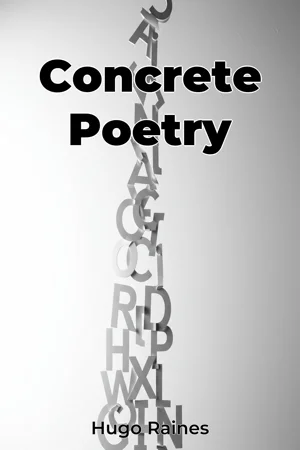
Have you ever considered poetry as a visual art form, where the arrangement of words on a page contributes as much meaning as the words themselves? "Concrete Poetry" delves into this fascinating realm, exploring the emergence and evolution of shape-based poetry, where spatial arrangements of words become integral to the poem's message and impact. This book examines how poets manipulate typography, layout, and visual space to create works that transcend traditional poetic conventions. Two key topics form the foundation of this exploration: the historical development of concrete poetry and the theoretical underpinnings that justify its status as a distinct art form. Understanding the historical context is vital because concrete poetry did not emerge in a vacuum; it was influenced by artistic movements like Futurism, Dadaism, and Constructivism. Furthermore, it is important to distinguish concrete poetry as a legitimate artistic endeavor. It is more than just decorative typography; it is a calculated fusion of visual and linguistic elements that create a synergistic effect. To fully appreciate concrete poetry, a basic understanding of traditional poetic forms and visual art principles is beneficial, though not strictly required. The book provides context by examining the historical avant-garde movements that questioned traditional art forms and paved the way for experimental poetry. The central argument of "Concrete Poetry" is that the spatial arrangement of words in concrete poetry is not merely decorative but is fundamentally integral to the poem's meaning. The visual form enhances, complicates, or even subverts the textual content, creating a multi-sensory reading experience that challenges conventional notions of poetry. This argument is crucial because it elevates concrete poetry from a peripheral genre to a significant form of artistic expression. The book unfolds systematically. First, it introduces the core concepts and definitions of concrete poetry, distinguishing it from other forms of visual poetry, such as calligrams. Second, it traces the historical development of the movement, highlighting key figures and notable works, through movements that influenced its genesis to its manifestations across various cultures. Third, the book explores the theoretical framework underpinning concrete poetry, examining its relationship to semiotics, visual communication theory, and the broader field of language arts. Finally, the book discusses the practical applications of concrete poetry in education, design, and other creative fields, highlighting its potential to enhance visual literacy and stimulate innovative thinking. Throughout the book, arguments are supported by a diverse range of evidence, including examples of concrete poems from various eras and cultural contexts, critical analyses of these works, and theoretical essays by prominent poets and art theorists. Unique data sources include archival materials, personal correspondence of concrete poets, and visual analyses of the poems' spatial structures. "Concrete Poetry" intersects with several other fields of study. It connects with visual arts through its emphasis on spatial composition and visual communication. It also relates to semiotics through the study of how visual signs contribute to meaning-making. Further, it links to the broader field of language arts, challenging traditional definitions of poetry and expanding the possibilities of linguistic expression. These interdisciplinary connections underscore the richness and complexity of concrete poetry. A unique aspect of this book is its focus on the theoretical underpinnings of concrete poetry, providing a rigorous framework for understanding its artistic value. This book takes a critical approach to analyzing the visual and textual elements of concrete poems, offering new insights into their meaning and impact. The book maintains a professional yet accessible tone, aiming to engage a broad audience, including students, educators, artists, designers, and anyone interested in the intersection of language and visual art. It avoids overly academic jargon, explaining complex concepts in a clear and concise manner. The primary target audience is students and scholars of language arts, art history, and visual communication. It particularly appeals to educators seeking innovative ways to engage students with poetry and visual literacy. Artists and designers may also benefit from the book's exploration of spatial composition and visual communication techniques. As a work of nonfiction in the language arts and art genres, "Concrete Poetry" adheres to standards of accuracy, objectivity, and thoroughness. It cites sources meticulously and presents a balanced perspective, acknowledging different interpretations and critical viewpoints. The book's scope is limited to the study of concrete poetry as a distinct art form, focusing on its historical development, theoretical underpinnings, and practical applications. It does not delve into other forms of visual poetry or experimental literature, except where they directly relate to the emergence and evolution of concrete poetry. The principles outlined in "Concrete Poetry" have real-world applications. Educators can use concrete poetry to enhance students' visual literacy and creative writing skills. Designers can draw inspiration from concrete poetry's innovative use of typography and spatial composition. Artists can explore the possibilities of combining language and visual elements to create new forms of artistic expression. While concrete poetry is generally accepted as a legitimate art form, some critics argue that it lacks the emotional depth and complexity of traditional poetry. This book addresses these criticisms by arguing that concrete poetry engages with emotions and ideas in a different way, utilizing visual elements to create a unique form of aesthetic experience.
Have you ever considered poetry as a visual art form, where the arrangement of words on a page contributes as much meaning as the words themselves? "Concrete Poetry" delves into this fascinating realm, exploring the emergence and evolution of shape-based poetry, where spatial arrangements of words become integral to the poem's message and impact. This book examines how poets manipulate typography, layout, and visual space to create works that transcend traditional poetic conventions. Two key topics form the foundation of this exploration: the historical development of concrete poetry and the theoretical underpinnings that justify its status as a distinct art form. Understanding the historical context is vital because concrete poetry did not emerge in a vacuum; it was influenced by artistic movements like Futurism, Dadaism, and Constructivism. Furthermore, it is important to distinguish concrete poetry as a legitimate artistic endeavor. It is more than just decorative typography; it is a calculated fusion of visual and linguistic elements that create a synergistic effect. To fully appreciate concrete poetry, a basic understanding of traditional poetic forms and visual art principles is beneficial, though not strictly required. The book provides context by examining the historical avant-garde movements that questioned traditional art forms and paved the way for experimental poetry. The central argument of "Concrete Poetry" is that the spatial arrangement of words in concrete poetry is not merely decorative but is fundamentally integral to the poem's meaning. The visual form enhances, complicates, or even subverts the textual content, creating a multi-sensory reading experience that challenges conventional notions of poetry. This argument is crucial because it elevates concrete poetry from a peripheral genre to a significant form of artistic expression. The book unfolds systematically. First, it introduces the core concepts and definitions of concrete poetry, distinguishing it from other forms of visual poetry, such as calligrams. Second, it traces the historical development of the movement, highlighting key figures and notable works, through movements that influenced its genesis to its manifestations across various cultures. Third, the book explores the theoretical framework underpinning concrete poetry, examining its relationship to semiotics, visual communication theory, and the broader field of language arts. Finally, the book discusses the practical applications of concrete poetry in education, design, and other creative fields, highlighting its potential to enhance visual literacy and stimulate innovative thinking. Throughout the book, arguments are supported by a diverse range of evidence, including examples of concrete poems from various eras and cultural contexts, critical analyses of these works, and theoretical essays by prominent poets and art theorists. Unique data sources include archival materials, personal correspondence of concrete poets, and visual analyses of the poems' spatial structures. "Concrete Poetry" intersects with several other fields of study. It connects with visual arts through its emphasis on spatial composition and visual communication. It also relates to semiotics through the study of how visual signs contribute to meaning-making. Further, it links to the broader field of language arts, challenging traditional definitions of poetry and expanding the possibilities of linguistic expression. These interdisciplinary connections underscore the richness and complexity of concrete poetry. A unique aspect of this book is its focus on the theoretical underpinnings of concrete poetry, providing a rigorous framework for understanding its artistic value. This book takes a critical approach to analyzing the visual and textual elements of concrete poems, offering new insights into their meaning and impact. The book maintains a professional yet accessible tone, aiming to engage a broad audience, including students, educators, artists, designers, and anyone interested in the intersection of language and visual art. It avoids overly academic jargon, explaining complex concepts in a clear and concise manner. The primary target audience is students and scholars of language arts, art history, and visual communication. It particularly appeals to educators seeking innovative ways to engage students with poetry and visual literacy. Artists and designers may also benefit from the book's exploration of spatial composition and visual communication techniques. As a work of nonfiction in the language arts and art genres, "Concrete Poetry" adheres to standards of accuracy, objectivity, and thoroughness. It cites sources meticulously and presents a balanced perspective, acknowledging different interpretations and critical viewpoints. The book's scope is limited to the study of concrete poetry as a distinct art form, focusing on its historical development, theoretical underpinnings, and practical applications. It does not delve into other forms of visual poetry or experimental literature, except where they directly relate to the emergence and evolution of concrete poetry. The principles outlined in "Concrete Poetry" have real-world applications. Educators can use concrete poetry to enhance students' visual literacy and creative writing skills. Designers can draw inspiration from concrete poetry's innovative use of typography and spatial composition. Artists can explore the possibilities of combining language and visual elements to create new forms of artistic expression. While concrete poetry is generally accepted as a legitimate art form, some critics argue that it lacks the emotional depth and complexity of traditional poetry. This book addresses these criticisms by arguing that concrete poetry engages with emotions and ideas in a different way, utilizing visual elements to create a unique form of aesthetic experience.
"Concrete Poetry" explores the fascinating world where language and visual art merge, focusing on poetry where the arrangement of words is as crucial as their meaning. This book examines how poets use typography and spatial arrangement to create works that move beyond traditional verse. A key insight is how historical avant-garde movements like Futurism and Dadaism influenced the development of this experimental poetry. The book argues that the spatial arrangement in concrete poetry isn't just decorative; it fundamentally contributes to the poem's message. By analyzing visual and textual elements, the book highlights how concrete poems engage with emotions and ideas in unique ways, creating a multi-sensory reading experience. This approach elevates concrete poetry from a niche genre to a significant form of artistic expression, demonstrating that visual literacy can be enhanced through innovative thinking and language arts. The book progresses systematically, beginning with core concepts and historical development, then moving to theoretical frameworks like semiotics and visual communication. It provides examples of concrete poems from diverse eras and cultures, supported by critical analyses and theoretical essays. Ultimately, "Concrete Poetry" demonstrates the real-world applications of its principles in education, design, and other creative fields, making it valuable for students, educators, artists, and anyone interested in the intersection of language and visual art.
Book Details
ISBN
9788235276513
Publisher
Publifye AS
Your Licenses
You don't own any licenses for this book
Purchase a license below to unlock this book and download the EPUB.
Purchase License
Select a tier to unlock this book
Need bulk licensing?
Contact us for enterprise agreements.