
About This Book
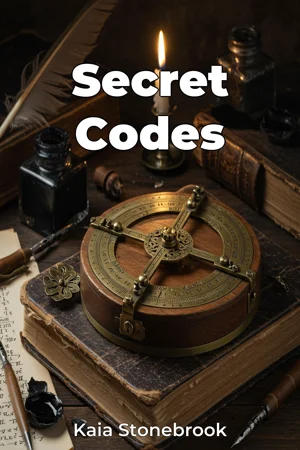
Have you ever wondered how crucial information was protected throughout history, concealed in plain sight through ingenious methods? "Secret Codes" delves into the captivating world of cryptography, exploring the evolution of codes, ciphers, and hidden messages crafted by spies, soldiers, and scientists to safeguard vital secrets. This is a journey not just through history, but into the ingenious minds that shaped it. This book examines three central themes: the historical context of code creation, the scientific principles underpinning cryptographic techniques, and the practical applications of these methods in various fields. Understanding these areas is important because they illustrate the ongoing battle between those who create secrets and those who seek to break them, a conflict that has influenced the course of wars, diplomatic relations, and technological development. To fully appreciate the intricacies of secret communication, we'll explore pivotal moments in history, such as the use of the Caesar cipher in ancient Rome, the Zimmerman telegram during World War I, and the Navajo code talkers' contributions in World War II. Grasping these historical touchstones provides a foundation for understanding the motivations and constraints that drove the development of specific codes. The central argument of "Secret Codes" is that the art and science of cryptography is not merely a technical discipline, but a reflection of human ingenuity driven by the need for security and privacy in an ever-changing world. This argument's importance lies in revealing how cryptography has been a constant companion to human civilization, shaping the flow of information and power structures. The book begins by introducing fundamental cryptographic concepts, such as substitution and transposition ciphers, and then delves into the evolution of these techniques over time. Key chapters will focus on: (1) the historical development of codes and ciphers, tracing their use from ancient civilizations to the modern era; (2) the mathematical and scientific principles behind cryptographic systems, including discussions of number theory, algebra, and computational complexity; and (3) the application of cryptography in military intelligence, diplomatic communication, and commercial transactions. The book culminates in an examination of modern cryptography, including public-key cryptography and blockchain technology, highlighting their impact on cybersecurity and digital privacy. The evidence presented in "Secret Codes" draws upon a range of primary and secondary sources, including historical documents, cryptographic manuals, scientific papers, and personal accounts from individuals involved in code creation and codebreaking. A unique aspect of the research involves the analysis of previously unexamined historical ciphers and codes, offering fresh insights into the methods employed by past cryptographers. "Secret Codes" bridges several interdisciplinary areas. Firstly, it connects to mathematics by exploring the mathematical principles that underpin many cryptographic algorithms. Secondly, it ties into computer science through the discussion of modern cryptographic techniques used in cybersecurity. Finally, it intersects with political science by examining how cryptography has influenced international relations and power dynamics. These connections enrich the book's argument by demonstrating the widespread relevance of cryptography in various fields. This book provides a unique perspective by combining historical analysis with scientific explanations, offering a comprehensive understanding of cryptography's evolution and impact. The approach is to present complex technical concepts in an accessible manner, making them understandable to a broad audience without compromising their rigor. The tone of "Secret Codes" is informative and engaging, employing a narrative non-fiction style to bring the history and science of cryptography to life. The writing aims to be clear, concise, and accessible, allowing readers to grasp complex concepts without requiring prior knowledge of mathematics or computer science. The target audience includes history enthusiasts, science buffs, students, and anyone interested in the intersection of technology and historical events. This book will be valuable to them because it demystifies the world of cryptography, revealing its fascinating history and its critical role in shaping modern society. As a work of non-fiction, "Secret Codes" adheres to the genre's conventions by providing accurate, thoroughly researched information, properly cited sources, and a clear distinction between factual accounts and speculative interpretations. The scope of "Secret Codes" is broad, covering a wide range of cryptographic techniques and historical periods. However, it focuses primarily on the evolution of symmetric and asymmetric cryptography, with less emphasis on steganography or other forms of covert communication. The information in "Secret Codes" can be applied practically by readers to enhance their understanding of cybersecurity, digital privacy, and the importance of secure communication in the modern world. It also provides valuable insights into the historical context of technological advancements and the ongoing challenges of protecting sensitive information. While "Secret Codes" explores the evolution and applications of cryptography, it also acknowledges the ongoing debates surrounding encryption policies, government surveillance, and the balance between national security and individual privacy. By addressing these controversies, the book encourages readers to critically evaluate the ethical and societal implications of cryptographic technologies.
Have you ever wondered how crucial information was protected throughout history, concealed in plain sight through ingenious methods? "Secret Codes" delves into the captivating world of cryptography, exploring the evolution of codes, ciphers, and hidden messages crafted by spies, soldiers, and scientists to safeguard vital secrets. This is a journey not just through history, but into the ingenious minds that shaped it. This book examines three central themes: the historical context of code creation, the scientific principles underpinning cryptographic techniques, and the practical applications of these methods in various fields. Understanding these areas is important because they illustrate the ongoing battle between those who create secrets and those who seek to break them, a conflict that has influenced the course of wars, diplomatic relations, and technological development. To fully appreciate the intricacies of secret communication, we'll explore pivotal moments in history, such as the use of the Caesar cipher in ancient Rome, the Zimmerman telegram during World War I, and the Navajo code talkers' contributions in World War II. Grasping these historical touchstones provides a foundation for understanding the motivations and constraints that drove the development of specific codes. The central argument of "Secret Codes" is that the art and science of cryptography is not merely a technical discipline, but a reflection of human ingenuity driven by the need for security and privacy in an ever-changing world. This argument's importance lies in revealing how cryptography has been a constant companion to human civilization, shaping the flow of information and power structures. The book begins by introducing fundamental cryptographic concepts, such as substitution and transposition ciphers, and then delves into the evolution of these techniques over time. Key chapters will focus on: (1) the historical development of codes and ciphers, tracing their use from ancient civilizations to the modern era; (2) the mathematical and scientific principles behind cryptographic systems, including discussions of number theory, algebra, and computational complexity; and (3) the application of cryptography in military intelligence, diplomatic communication, and commercial transactions. The book culminates in an examination of modern cryptography, including public-key cryptography and blockchain technology, highlighting their impact on cybersecurity and digital privacy. The evidence presented in "Secret Codes" draws upon a range of primary and secondary sources, including historical documents, cryptographic manuals, scientific papers, and personal accounts from individuals involved in code creation and codebreaking. A unique aspect of the research involves the analysis of previously unexamined historical ciphers and codes, offering fresh insights into the methods employed by past cryptographers. "Secret Codes" bridges several interdisciplinary areas. Firstly, it connects to mathematics by exploring the mathematical principles that underpin many cryptographic algorithms. Secondly, it ties into computer science through the discussion of modern cryptographic techniques used in cybersecurity. Finally, it intersects with political science by examining how cryptography has influenced international relations and power dynamics. These connections enrich the book's argument by demonstrating the widespread relevance of cryptography in various fields. This book provides a unique perspective by combining historical analysis with scientific explanations, offering a comprehensive understanding of cryptography's evolution and impact. The approach is to present complex technical concepts in an accessible manner, making them understandable to a broad audience without compromising their rigor. The tone of "Secret Codes" is informative and engaging, employing a narrative non-fiction style to bring the history and science of cryptography to life. The writing aims to be clear, concise, and accessible, allowing readers to grasp complex concepts without requiring prior knowledge of mathematics or computer science. The target audience includes history enthusiasts, science buffs, students, and anyone interested in the intersection of technology and historical events. This book will be valuable to them because it demystifies the world of cryptography, revealing its fascinating history and its critical role in shaping modern society. As a work of non-fiction, "Secret Codes" adheres to the genre's conventions by providing accurate, thoroughly researched information, properly cited sources, and a clear distinction between factual accounts and speculative interpretations. The scope of "Secret Codes" is broad, covering a wide range of cryptographic techniques and historical periods. However, it focuses primarily on the evolution of symmetric and asymmetric cryptography, with less emphasis on steganography or other forms of covert communication. The information in "Secret Codes" can be applied practically by readers to enhance their understanding of cybersecurity, digital privacy, and the importance of secure communication in the modern world. It also provides valuable insights into the historical context of technological advancements and the ongoing challenges of protecting sensitive information. While "Secret Codes" explores the evolution and applications of cryptography, it also acknowledges the ongoing debates surrounding encryption policies, government surveillance, and the balance between national security and individual privacy. By addressing these controversies, the book encourages readers to critically evaluate the ethical and societal implications of cryptographic technologies.
"Secret Codes" unveils the hidden history and science of cryptography, exploring how codes and ciphers have shaped communication through the ages. From protecting military intelligence to safeguarding digital privacy, this book examines the evolution of secret communication. It reveals how cryptography isn't just a technical field, but a reflection of human ingenuity and the constant need for security. Did you know the Caesar cipher, used in ancient Rome, was one of the earliest forms of substitution? Or that the Zimmerman telegram played a crucial role in World War I, demonstrating the impact of codebreaking on international relations? The book explores historical contexts, scientific principles, and practical applications, highlighting the ongoing battle between code makers and codebreakers. Beginning with fundamental concepts like substitution and transposition ciphers, the narrative progresses through key historical moments and mathematical underpinnings. Chapters delve into the development of codes from ancient times to modern cybersecurity applications, examining both symmetric and asymmetric cryptography. By combining historical analysis with accessible explanations of complex scientific concepts, "Secret Codes" offers a comprehensive understanding of cryptography's evolution and its impact on our world.
Book Details
ISBN
9788235276445
Publisher
Publifye AS
Your Licenses
You don't own any licenses for this book
Purchase a license below to unlock this book and download the EPUB.
Purchase License
Select a tier to unlock this book
Need bulk licensing?
Contact us for enterprise agreements.