
About This Book
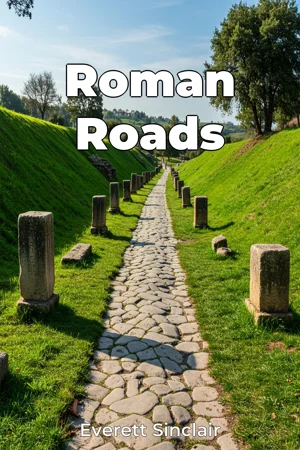
Have you ever wondered how an empire, vast and influential, maintained its power and extended its reach for centuries? The answer, in no small part, lies in the remarkable network of roads constructed by the Romans. This book, "Roman Roads," delves into the architecture, engineering, and historical significance of these vital arteries of the Roman world, exploring how they facilitated military campaigns, fostered trade, and promoted urban development. We will examine not only the techniques of Roman road construction, but also the broader impact these roads had on Roman society and the world beyond. "Roman Roads" presents a detailed analysis of Roman road building, emphasizing three key areas: engineering principles, socio-economic impact, and lasting legacy. Understanding Roman engineering is crucial to appreciating the sheer scale and durability of their road system. Analyzing the socio-economic effects reveals how these roads reshaped trade routes, facilitated communication, and contributed to the growth of cities. Finally, examining the lasting legacy demonstrates how Roman roads continue to influence modern infrastructure and transportation planning. The central argument of this book is that Roman roads were not merely practical infrastructure projects; they were deliberate instruments of imperial control and economic expansion, profoundly shaping the course of Western civilization. The book begins by establishing a historical context, detailing the rise of Rome and the increasing need for efficient transportation networks. We’ll describe the evolution of Roman road construction from simple dirt tracks to sophisticated, multi-layered paved highways. The book will then examine the techniques and materials employed by Roman engineers, delving into the processes of surveying, grading, paving, and drainage. We will present the various strata that comprised a typical Roman road, from the foundation (statumen) to the paving stones (summum dorsum), and will explore how these roads were adapted to diverse terrains and environmental conditions. A key section will address the legal and administrative frameworks that governed road construction and maintenance, highlighting the roles played by the Roman army, private contractors, and local communities. The second major section of the book will explore the socio-economic impact of Roman roads. We will analyze how these roads facilitated trade, enabling the efficient movement of goods and services across the empire. The impact on military campaigns, allowing for rapid deployment of troops and supplies, will also be addressed. We will examine how the roads promoted urbanization, connecting rural hinterlands to urban centers and fostering economic growth. Furthermore, this section will address the social impact of the roads, examining how they facilitated the spread of Roman culture, language, and institutions. The concluding section will assess the lasting legacy of Roman roads. We will trace the influence of Roman road construction on subsequent road building traditions, highlighting examples of Roman roads that are still in use today. The book will also examine the role of Roman roads in shaping modern transportation planning and infrastructure development. The evidence presented in this book will consist of archaeological findings, primary source texts (including Roman engineering manuals and historical accounts), and comparative analyses of Roman roads with contemporary infrastructure systems. The book will draw material from both well-known and lesser-known archaeological sites throughout the former Roman Empire. "Roman Roads" also engages with several other disciplines, including economics (analyzing the impact of infrastructure on trade), sociology (examining the social consequences of increased mobility), and political science (exploring the relationship between infrastructure and imperial power). This book is written in an accessible, yet scholarly style, aimed at a broad audience, including students, history enthusiasts, and anyone interested in the origins of modern infrastructure. While comprehensive, the book focuses primarily on the construction and impact of major Roman highways, with less emphasis on minor local roads. We acknowledge that there are complex debates surrounding the precise methods of Roman road construction and the degree of centralized control exerted by the Roman government. Where appropriate, the book presents different perspectives on these matters, acknowledging the uncertainties and complexities inherent in historical interpretation. The reader will be provided with comprehensive knowledge of how Roman roads helped to shape society, and how their legacy still lives on today.
Have you ever wondered how an empire, vast and influential, maintained its power and extended its reach for centuries? The answer, in no small part, lies in the remarkable network of roads constructed by the Romans. This book, "Roman Roads," delves into the architecture, engineering, and historical significance of these vital arteries of the Roman world, exploring how they facilitated military campaigns, fostered trade, and promoted urban development. We will examine not only the techniques of Roman road construction, but also the broader impact these roads had on Roman society and the world beyond. "Roman Roads" presents a detailed analysis of Roman road building, emphasizing three key areas: engineering principles, socio-economic impact, and lasting legacy. Understanding Roman engineering is crucial to appreciating the sheer scale and durability of their road system. Analyzing the socio-economic effects reveals how these roads reshaped trade routes, facilitated communication, and contributed to the growth of cities. Finally, examining the lasting legacy demonstrates how Roman roads continue to influence modern infrastructure and transportation planning. The central argument of this book is that Roman roads were not merely practical infrastructure projects; they were deliberate instruments of imperial control and economic expansion, profoundly shaping the course of Western civilization. The book begins by establishing a historical context, detailing the rise of Rome and the increasing need for efficient transportation networks. We’ll describe the evolution of Roman road construction from simple dirt tracks to sophisticated, multi-layered paved highways. The book will then examine the techniques and materials employed by Roman engineers, delving into the processes of surveying, grading, paving, and drainage. We will present the various strata that comprised a typical Roman road, from the foundation (statumen) to the paving stones (summum dorsum), and will explore how these roads were adapted to diverse terrains and environmental conditions. A key section will address the legal and administrative frameworks that governed road construction and maintenance, highlighting the roles played by the Roman army, private contractors, and local communities. The second major section of the book will explore the socio-economic impact of Roman roads. We will analyze how these roads facilitated trade, enabling the efficient movement of goods and services across the empire. The impact on military campaigns, allowing for rapid deployment of troops and supplies, will also be addressed. We will examine how the roads promoted urbanization, connecting rural hinterlands to urban centers and fostering economic growth. Furthermore, this section will address the social impact of the roads, examining how they facilitated the spread of Roman culture, language, and institutions. The concluding section will assess the lasting legacy of Roman roads. We will trace the influence of Roman road construction on subsequent road building traditions, highlighting examples of Roman roads that are still in use today. The book will also examine the role of Roman roads in shaping modern transportation planning and infrastructure development. The evidence presented in this book will consist of archaeological findings, primary source texts (including Roman engineering manuals and historical accounts), and comparative analyses of Roman roads with contemporary infrastructure systems. The book will draw material from both well-known and lesser-known archaeological sites throughout the former Roman Empire. "Roman Roads" also engages with several other disciplines, including economics (analyzing the impact of infrastructure on trade), sociology (examining the social consequences of increased mobility), and political science (exploring the relationship between infrastructure and imperial power). This book is written in an accessible, yet scholarly style, aimed at a broad audience, including students, history enthusiasts, and anyone interested in the origins of modern infrastructure. While comprehensive, the book focuses primarily on the construction and impact of major Roman highways, with less emphasis on minor local roads. We acknowledge that there are complex debates surrounding the precise methods of Roman road construction and the degree of centralized control exerted by the Roman government. Where appropriate, the book presents different perspectives on these matters, acknowledging the uncertainties and complexities inherent in historical interpretation. The reader will be provided with comprehensive knowledge of how Roman roads helped to shape society, and how their legacy still lives on today.
"Roman Roads" explores the remarkable engineering and socio-economic impact of the Roman Empire's vast road network. These roads, more than just pathways, were vital to Rome's military campaigns and trade, fostering urban development and solidifying imperial control. A key insight is how Roman roads facilitated not only the movement of armies but also the efficient distribution of goods, profoundly shaping economic growth. The book uniquely presents a detailed analysis of Roman road construction, emphasizing engineering principles, socio-economic impact, and lasting legacy. The book begins by establishing a historical context, detailing the rise of Rome and the increasing need for efficient transportation networks. It progresses through chapters examining construction techniques, material usage, and administrative frameworks. It also explores the socio-economic impact of Roman roads, analyzing their role in facilitating trade, military campaigns, and urbanization. The concluding section assesses the enduring legacy of Roman roads, tracing their influence on subsequent road-building traditions and modern transportation planning.
Book Details
ISBN
9788235276315
Publisher
Publifye AS
Your Licenses
You don't own any licenses for this book
Purchase a license below to unlock this book and download the EPUB.
Purchase License
Select a tier to unlock this book
Need bulk licensing?
Contact us for enterprise agreements.