
About This Book
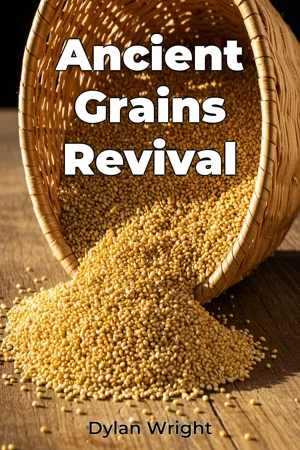
Are you ready to unlock the nutritional powerhouses of the past and revolutionize your understanding of healthy eating? "Ancient Grains Revival" delves into the remarkable world of ancient grains – quinoa, amaranth, teff, and many more – exploring their origins, nutritional profiles, and potential to enhance modern diets. This book aims to reintroduce these resilient foods to your table and provide a comprehensive guide to incorporating them into your daily meals. We explore two crucial aspects of these grains: their inherent resilience and their dense nutritional composition. Understanding their resilience helps us appreciate their historical significance as staples in diverse climates and terrains. Examining their nutritional composition uncovers a wealth of vitamins, minerals, and amino acids often surpassing those found in more common grains. This exploration empowers readers to make informed choices about their diet. The book provides a journey through the history of agriculture, tracing the cultivation and consumption of these grains across various cultures and time periods. It details the environmental benefits of growing ancient grains, such as their lower water requirements and natural resistance to pests, potentially offering more sustainable agricultural practices compared to modern wheat and corn farming. Readers will gain insight into the agronomic advantages that support biodiversity. The central argument of "Ancient Grains Revival" is that reintegrating ancient grains into our diets is essential for improved health and dietary diversity. By understanding their unique nutritional properties, we can address common deficiencies and promote overall well-being. We also offer an alternative approach to conventional grain consumption. The book is structured into three major parts. Section one introduces the concept of ancient grains, defining what they are and why they matter in today's world. It explores the history of each major grain, describing its origin, traditional uses, and cultural significance. Section two dives deep into the nutritional benefits of ancient grains with detailed analyses of their vitamin, mineral, and amino acid content compared to modern grains. It also investigates their role in addressing specific health concerns. Finally, section three offers practical advice for incorporating ancient grains into the modern diet, providing recipes, tips, and techniques for cooking with these versatile ingredients. The book is backed by scientific studies, nutritional analyses, and agricultural research, which validate the health benefits and sustainability of ancient grains. It cites academic papers, reports from agricultural organizations, and dietary guidelines to support its claims. The book also includes culinary insights, incorporating traditional and contemporary recipes to showcase the versatility of these grains. "Ancient Grains Revival" connects the fields of nutrition, agriculture, and culinary arts. It examines the nutritional benefits of these grains, their impact on sustainable farming practices, and how they can be used creatively in the kitchen. This interdisciplinary approach highlights the holistic value of ancient grains. This book adopts a practical and accessible tone, aiming to educate and inspire readers to embrace these forgotten foods. The writing style is clear and concise, avoiding technical jargon while providing sufficient scientific detail to support its arguments. The book is aimed at health-conscious consumers, culinary enthusiasts, and anyone seeking to diversify their diet with nutritious and sustainable food options. It is valuable for those interested in exploring the rich history and potential health benefits of ancient grains. As a book in the 'Cooking, Health & Fitness, Health Fitness' genres, it provides not only information but also practical guidance for incorporating these grains into everyday meals. This book's scope is intentionally broad, covering a wide range of ancient grains and their applications, but limiting its focus to readily available grains for consumer use. The information in this book allows readers to make dietary substitutions to improve their overall health by including a wider variety of nutrients. Readers can also learn to support sustainable farming practices by increasing demand for crops that require less water and pesticides. Though ancient grains are generally recognized as healthy, some debate surrounds the best methods of cultivation and whether consuming large quantities of any single grain is advisable. We address these concerns throughout the book. "Ancient Grains Revival" encourages readers to explore the fascinating world of ancient grains and discover how these nutritional powerhouses can be integrated into a healthy and sustainable lifestyle.
Are you ready to unlock the nutritional powerhouses of the past and revolutionize your understanding of healthy eating? "Ancient Grains Revival" delves into the remarkable world of ancient grains – quinoa, amaranth, teff, and many more – exploring their origins, nutritional profiles, and potential to enhance modern diets. This book aims to reintroduce these resilient foods to your table and provide a comprehensive guide to incorporating them into your daily meals. We explore two crucial aspects of these grains: their inherent resilience and their dense nutritional composition. Understanding their resilience helps us appreciate their historical significance as staples in diverse climates and terrains. Examining their nutritional composition uncovers a wealth of vitamins, minerals, and amino acids often surpassing those found in more common grains. This exploration empowers readers to make informed choices about their diet. The book provides a journey through the history of agriculture, tracing the cultivation and consumption of these grains across various cultures and time periods. It details the environmental benefits of growing ancient grains, such as their lower water requirements and natural resistance to pests, potentially offering more sustainable agricultural practices compared to modern wheat and corn farming. Readers will gain insight into the agronomic advantages that support biodiversity. The central argument of "Ancient Grains Revival" is that reintegrating ancient grains into our diets is essential for improved health and dietary diversity. By understanding their unique nutritional properties, we can address common deficiencies and promote overall well-being. We also offer an alternative approach to conventional grain consumption. The book is structured into three major parts. Section one introduces the concept of ancient grains, defining what they are and why they matter in today's world. It explores the history of each major grain, describing its origin, traditional uses, and cultural significance. Section two dives deep into the nutritional benefits of ancient grains with detailed analyses of their vitamin, mineral, and amino acid content compared to modern grains. It also investigates their role in addressing specific health concerns. Finally, section three offers practical advice for incorporating ancient grains into the modern diet, providing recipes, tips, and techniques for cooking with these versatile ingredients. The book is backed by scientific studies, nutritional analyses, and agricultural research, which validate the health benefits and sustainability of ancient grains. It cites academic papers, reports from agricultural organizations, and dietary guidelines to support its claims. The book also includes culinary insights, incorporating traditional and contemporary recipes to showcase the versatility of these grains. "Ancient Grains Revival" connects the fields of nutrition, agriculture, and culinary arts. It examines the nutritional benefits of these grains, their impact on sustainable farming practices, and how they can be used creatively in the kitchen. This interdisciplinary approach highlights the holistic value of ancient grains. This book adopts a practical and accessible tone, aiming to educate and inspire readers to embrace these forgotten foods. The writing style is clear and concise, avoiding technical jargon while providing sufficient scientific detail to support its arguments. The book is aimed at health-conscious consumers, culinary enthusiasts, and anyone seeking to diversify their diet with nutritious and sustainable food options. It is valuable for those interested in exploring the rich history and potential health benefits of ancient grains. As a book in the 'Cooking, Health & Fitness, Health Fitness' genres, it provides not only information but also practical guidance for incorporating these grains into everyday meals. This book's scope is intentionally broad, covering a wide range of ancient grains and their applications, but limiting its focus to readily available grains for consumer use. The information in this book allows readers to make dietary substitutions to improve their overall health by including a wider variety of nutrients. Readers can also learn to support sustainable farming practices by increasing demand for crops that require less water and pesticides. Though ancient grains are generally recognized as healthy, some debate surrounds the best methods of cultivation and whether consuming large quantities of any single grain is advisable. We address these concerns throughout the book. "Ancient Grains Revival" encourages readers to explore the fascinating world of ancient grains and discover how these nutritional powerhouses can be integrated into a healthy and sustainable lifestyle.
"Ancient Grains Revival" explores the resurgence of ancient grains like quinoa, amaranth, and teff, positioning them as nutritional powerhouses for the modern diet. These resilient grains, cultivated for centuries across diverse climates, offer a wealth of vitamins, minerals, and essential amino acids often surpassing common grains. The book details their origins, sustainable agricultural benefits, and the crucial role they can play in improving dietary diversity and overall well-being. The book journeys through agricultural history, highlighting the environmental advantages of ancient grains, such as lower water requirements and natural pest resistance. It champions the reintegration of these grains to combat nutritional deficiencies and promote a more sustainable food system. Divided into three parts, the book first introduces ancient grains and their historical significance. Next, it delves into their nutritional benefits, comparing them to modern grains. Finally, it offers practical guidance with recipes and cooking techniques, empowering readers to incorporate these versatile ingredients into their daily meals. This book uniquely connects nutrition, agriculture, and culinary arts. It's backed by scientific studies and agricultural research validating the health benefits and sustainability of ancient grains. The book uses a practical and accessible tone, aiming to educate and inspire readers to embrace these forgotten foods, providing both information and actionable steps for a healthier lifestyle.
Book Details
ISBN
9788235276247
Publisher
Publifye AS
Your Licenses
You don't own any licenses for this book
Purchase a license below to unlock this book and download the EPUB.
Purchase License
Select a tier to unlock this book
Need bulk licensing?
Contact us for enterprise agreements.