
About This Book
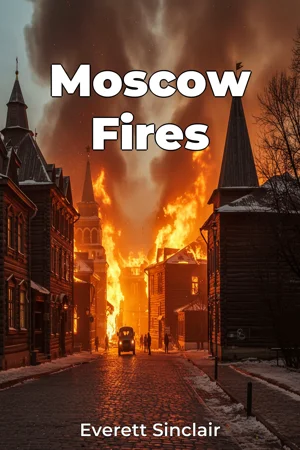
How can a city repeatedly consumed by flames not only survive but also evolve, its very misfortunes shaping its identity? "Moscow Fires" delves into the tumultuous history of Moscow, a city punctuated by devastating conflagrations. This book examines the causes, the immense physical and human costs, and the surprising role these fires played in the city's architectural development and its ever-evolving defensive strategies. These events are important because they reveal the resilience of Moscow and its people, showcasing how disaster can be a catalyst for profound urban transformation. This exploration requires understanding the historical context of Moscow as a growing medieval city, its construction primarily with wood, and the political and social pressures that made it both a strategic target and a volatile environment. The central argument of "Moscow Fires" is that the cycle of destruction and rebuilding, driven by frequent fires, fundamentally altered Moscow's urban fabric, leading to innovative architectural solutions and more robust defense mechanisms. This argument challenges conventional views of urban development, demonstrating how adversity can foster progress. The book begins by introducing the factors that contributed to Moscow's vulnerability to fire, including its dense wooden construction, inadequate fire prevention measures, and the frequent outbreaks caused by accident or warfare. It then proceeds with a chronological analysis of major fires, detailing the events of each, the extent of the damage, and the immediate response. Each fire event will be a 'chapter' and a major point of reference, analyzing the political fallout and shifts in urban planning strategies. A significant portion of the book is dedicated to examining the architectural responses to these repeated disasters, exploring how successive rebuilding efforts led to the gradual introduction of stone construction, the widening of streets to act as firebreaks, and the development of more sophisticated fire-fighting techniques. The book culminates by demonstrating how Moscow's experience with fire shaped its unique urban character and contributed to its identity as a resilient and strategically fortified city. The book draws on a range of historical sources, including chronicles, archival records, architectural plans, and contemporary accounts. It also incorporates interdisciplinary perspectives, connecting urban history with architectural history and military strategy. For example, it explores how the threat of fire influenced the design of the Kremlin and other key defensive structures. The book stands out by providing a comprehensive, fire-centric analysis of Moscow's urban development. "Moscow Fires" adopts an academic tone, aiming to present a well-researched and insightful account of the city's history. It is aimed at historians, architects, urban planners, and anyone interested in the history of Moscow or the impact of disasters on urban development. The book's genre aligns with the conventions of architectural and world history, providing a detailed, evidence-based analysis of a specific historical phenomenon and its broader implications. The book's scope is limited to the major fires that significantly impacted Moscow's urban development. While smaller fires are acknowledged, the focus is on those events that led to substantial changes in the city's architecture and defensive strategies. The information presented in "Moscow Fires" can be applied to contemporary urban planning challenges, offering valuable lessons about disaster preparedness, resilience, and the importance of adapting to changing circumstances. While the book doesn't directly address ongoing debates, it does provide a context for understanding the historical roots of Moscow's urban form and the challenges it faces in the modern era.
How can a city repeatedly consumed by flames not only survive but also evolve, its very misfortunes shaping its identity? "Moscow Fires" delves into the tumultuous history of Moscow, a city punctuated by devastating conflagrations. This book examines the causes, the immense physical and human costs, and the surprising role these fires played in the city's architectural development and its ever-evolving defensive strategies. These events are important because they reveal the resilience of Moscow and its people, showcasing how disaster can be a catalyst for profound urban transformation. This exploration requires understanding the historical context of Moscow as a growing medieval city, its construction primarily with wood, and the political and social pressures that made it both a strategic target and a volatile environment. The central argument of "Moscow Fires" is that the cycle of destruction and rebuilding, driven by frequent fires, fundamentally altered Moscow's urban fabric, leading to innovative architectural solutions and more robust defense mechanisms. This argument challenges conventional views of urban development, demonstrating how adversity can foster progress. The book begins by introducing the factors that contributed to Moscow's vulnerability to fire, including its dense wooden construction, inadequate fire prevention measures, and the frequent outbreaks caused by accident or warfare. It then proceeds with a chronological analysis of major fires, detailing the events of each, the extent of the damage, and the immediate response. Each fire event will be a 'chapter' and a major point of reference, analyzing the political fallout and shifts in urban planning strategies. A significant portion of the book is dedicated to examining the architectural responses to these repeated disasters, exploring how successive rebuilding efforts led to the gradual introduction of stone construction, the widening of streets to act as firebreaks, and the development of more sophisticated fire-fighting techniques. The book culminates by demonstrating how Moscow's experience with fire shaped its unique urban character and contributed to its identity as a resilient and strategically fortified city. The book draws on a range of historical sources, including chronicles, archival records, architectural plans, and contemporary accounts. It also incorporates interdisciplinary perspectives, connecting urban history with architectural history and military strategy. For example, it explores how the threat of fire influenced the design of the Kremlin and other key defensive structures. The book stands out by providing a comprehensive, fire-centric analysis of Moscow's urban development. "Moscow Fires" adopts an academic tone, aiming to present a well-researched and insightful account of the city's history. It is aimed at historians, architects, urban planners, and anyone interested in the history of Moscow or the impact of disasters on urban development. The book's genre aligns with the conventions of architectural and world history, providing a detailed, evidence-based analysis of a specific historical phenomenon and its broader implications. The book's scope is limited to the major fires that significantly impacted Moscow's urban development. While smaller fires are acknowledged, the focus is on those events that led to substantial changes in the city's architecture and defensive strategies. The information presented in "Moscow Fires" can be applied to contemporary urban planning challenges, offering valuable lessons about disaster preparedness, resilience, and the importance of adapting to changing circumstances. While the book doesn't directly address ongoing debates, it does provide a context for understanding the historical roots of Moscow's urban form and the challenges it faces in the modern era.
"Moscow Fires" explores the history of Moscow through the lens of the devastating fires that repeatedly ravaged the city. More than just recounting disasters, the book examines how these events shaped Moscow's urban development and defensive strategies. Readers may be surprised to learn that these fires, despite their destructive nature, acted as catalysts for innovation, leading to the adoption of stone construction and the widening of streets to serve as firebreaks. The book argues that Moscow's cycle of destruction and rebuilding fundamentally altered its urban fabric. It challenges conventional views by demonstrating how adversity fostered progress, influencing architectural solutions and defense mechanisms. Beginning with an overview of Moscow's vulnerability, the narrative progresses chronologically, detailing each major fire's impact, the immediate responses, and the subsequent political and urban planning shifts. A significant portion of "Moscow Fires" is dedicated to the architectural responses to these disasters. By drawing on historical sources and incorporating interdisciplinary perspectives, the book showcases how Moscow's experience with fire shaped its unique urban character and contributed to its identity as a resilient and strategically fortified city.
Book Details
ISBN
9788235276087
Publisher
Publifye AS
Your Licenses
You don't own any licenses for this book
Purchase a license below to unlock this book and download the EPUB.
Purchase License
Select a tier to unlock this book
Need bulk licensing?
Contact us for enterprise agreements.