
About This Book
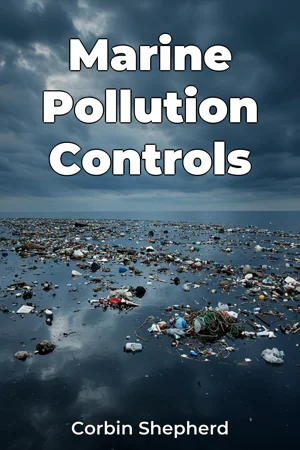
Can our oceans withstand the continued onslaught of pollution, or are we nearing a tipping point of irreversible damage? "Marine Pollution Controls" delves into the complex world of legal frameworks designed to protect marine environments from the detrimental effects of pollution, oil spills, and indiscriminate dumping. These are critical issues, because the health of our oceans directly impacts global biodiversity, climate regulation, and the livelihoods of billions. This book provides a comprehensive analysis of international maritime law and national enforcement frameworks governing marine pollution. The core argument posits that while significant legal progress has been made in establishing pollution controls, effective implementation and robust enforcement mechanisms remain crucial to mitigating the escalating threats to marine ecosystems. The book emphasizes the disparity between the legal ideals enshrined in international conventions and the practical realities of enforcement on the high seas and within national jurisdictions. To establish a firm foundation, the book initially outlines the history of international maritime law, tracing the evolution of regulations aimed at preventing and controlling marine pollution. This includes detailed examinations of key conventions such as MARPOL (International Convention for the Prevention of Pollution from Ships), the UN Convention on the Law of the Sea (UNCLOS), and related regional agreements. Following this historical context, the book is structured around three major themes: firstly, the legal frameworks addressing vessel-source pollution, including regulations regarding oil discharge, sewage, and garbage disposal. Secondly, it examines legal responses to accidental pollution events, focusing on oil spill liability, compensation mechanisms, and international cooperation in emergency response. Finally, it investigates the regulation of dumping activities at sea, assessing the effectiveness of permitting systems, monitoring programs, and enforcement actions against illegal dumping. The analysis draws on a variety of sources, including international treaties, national legislation, case law from international tribunals and domestic courts, reports from intergovernmental organizations, and scientific studies on marine pollution. Unique data sets are utilized to evaluate the effectiveness of different enforcement strategies in various regions. "Marine Pollution Controls" connects to several other fields, including international relations (examining the role of diplomacy and treaty-making), environmental science (analyzing the ecological impacts of pollution), and economics (assessing the costs and benefits of pollution control measures). These interdisciplinary connections enrich the book's argument by illustrating the multifaceted nature of the marine pollution problem and the need for integrated solutions. The book offers a practical perspective, evaluating the strengths and weaknesses of existing legal regimes and proposing concrete recommendations for improvement. It adopts an academic tone, presenting information in a clear, well-researched manner, but also strives to be accessible to a broader audience interested in environmental policy and law. The target audience includes policymakers, legal scholars, environmental advocates, maritime industry professionals, and students studying international law, environmental science, or marine affairs. The book will be valuable to them as a comprehensive resource on the legal and policy challenges of marine pollution control. The book’s scope is intentionally broad, encompassing a wide range of pollution sources and legal instruments, but it does not delve into the technical engineering aspects of pollution control technologies. Rather, it focuses on the legal and regulatory dimensions of these technologies. The book recognizes that ongoing debates exist regarding the appropriate balance between economic development and environmental protection, and it seeks to contribute to these debates by providing a rigorous analysis of the legal tools available for managing marine pollution. The information can be applied by policymakers to design more effective regulations, by industry professionals to ensure compliance with environmental standards, and by environmental advocates to promote stronger enforcement of existing laws.
Can our oceans withstand the continued onslaught of pollution, or are we nearing a tipping point of irreversible damage? "Marine Pollution Controls" delves into the complex world of legal frameworks designed to protect marine environments from the detrimental effects of pollution, oil spills, and indiscriminate dumping. These are critical issues, because the health of our oceans directly impacts global biodiversity, climate regulation, and the livelihoods of billions. This book provides a comprehensive analysis of international maritime law and national enforcement frameworks governing marine pollution. The core argument posits that while significant legal progress has been made in establishing pollution controls, effective implementation and robust enforcement mechanisms remain crucial to mitigating the escalating threats to marine ecosystems. The book emphasizes the disparity between the legal ideals enshrined in international conventions and the practical realities of enforcement on the high seas and within national jurisdictions. To establish a firm foundation, the book initially outlines the history of international maritime law, tracing the evolution of regulations aimed at preventing and controlling marine pollution. This includes detailed examinations of key conventions such as MARPOL (International Convention for the Prevention of Pollution from Ships), the UN Convention on the Law of the Sea (UNCLOS), and related regional agreements. Following this historical context, the book is structured around three major themes: firstly, the legal frameworks addressing vessel-source pollution, including regulations regarding oil discharge, sewage, and garbage disposal. Secondly, it examines legal responses to accidental pollution events, focusing on oil spill liability, compensation mechanisms, and international cooperation in emergency response. Finally, it investigates the regulation of dumping activities at sea, assessing the effectiveness of permitting systems, monitoring programs, and enforcement actions against illegal dumping. The analysis draws on a variety of sources, including international treaties, national legislation, case law from international tribunals and domestic courts, reports from intergovernmental organizations, and scientific studies on marine pollution. Unique data sets are utilized to evaluate the effectiveness of different enforcement strategies in various regions. "Marine Pollution Controls" connects to several other fields, including international relations (examining the role of diplomacy and treaty-making), environmental science (analyzing the ecological impacts of pollution), and economics (assessing the costs and benefits of pollution control measures). These interdisciplinary connections enrich the book's argument by illustrating the multifaceted nature of the marine pollution problem and the need for integrated solutions. The book offers a practical perspective, evaluating the strengths and weaknesses of existing legal regimes and proposing concrete recommendations for improvement. It adopts an academic tone, presenting information in a clear, well-researched manner, but also strives to be accessible to a broader audience interested in environmental policy and law. The target audience includes policymakers, legal scholars, environmental advocates, maritime industry professionals, and students studying international law, environmental science, or marine affairs. The book will be valuable to them as a comprehensive resource on the legal and policy challenges of marine pollution control. The book’s scope is intentionally broad, encompassing a wide range of pollution sources and legal instruments, but it does not delve into the technical engineering aspects of pollution control technologies. Rather, it focuses on the legal and regulatory dimensions of these technologies. The book recognizes that ongoing debates exist regarding the appropriate balance between economic development and environmental protection, and it seeks to contribute to these debates by providing a rigorous analysis of the legal tools available for managing marine pollution. The information can be applied by policymakers to design more effective regulations, by industry professionals to ensure compliance with environmental standards, and by environmental advocates to promote stronger enforcement of existing laws.
"Marine Pollution Controls" explores the intricate legal structures created to defend our oceans from the harm of pollution, addressing the critical question of whether current measures are sufficient to prevent irreversible damage to marine ecosystems. The book highlights the fact that oceans play a vital role in regulating climate and supporting global biodiversity, further emphasizing the urgency of effective pollution controls. It dives into international maritime law, examining conventions like MARPOL and UNCLOS, while also scrutinizing national enforcement frameworks. The book progresses by first tracing the history of international maritime law, then centers on vessel-source pollution, responses to accidental pollution such as oil spills, and the regulation of dumping at sea. A key insight is the disparity between the legal ideals of international conventions and the practical challenges of enforcement, particularly on the high seas. Ultimately, this comprehensive analysis offers valuable insights for policymakers, legal scholars, and environmental advocates interested in strengthening marine environmental policy and law.
Book Details
ISBN
9788235276025
Publisher
Publifye AS
Your Licenses
You don't own any licenses for this book
Purchase a license below to unlock this book and download the EPUB.
Purchase License
Select a tier to unlock this book
Need bulk licensing?
Contact us for enterprise agreements.