
About This Book
How did precolonial Zulu societies preserve their history and govern their people without written records? "Zulu Oral Systems" delves into the intricate methods used to encode and transmit crucial knowledge through structured verbal forms and ritualistic performance, uncovering a sophisticated system of governance and historical preservation. This book is profoundly important because it challenges conventional understandings of history-keeping, particularly in societies often characterized as "pre-literate," revealing the depth and complexity of Zulu intellectual traditions. This study explores two core themes: firstly, the specific verbal structures employed, including praise poems (izibongo), genealogies, proverbs, and specialized legal and military terminology; and secondly, the ritualistic contexts in which this knowledge was enacted and transmitted. These rituals encompassed initiation ceremonies, royal court proceedings, and annual First Fruits celebrations (umkhosi). Understanding these systems is critical not only for reconstructing Zulu history but also for appreciating the diverse ways in which human societies create and maintain collective memory. The historical context for this study lies in the precolonial period, before the widespread adoption of literacy among the Zulu people in the 19th century. Prior knowledge of basic South African history and anthropological concepts related to oral tradition would be beneficial, although the book provides necessary background information. The central argument is that precolonial Zulu society possessed a highly structured and effective system of oral governance and historical record-keeping. Verbal art forms and ritualistic performances were not merely cultural expressions but were integral to the functioning of the Zulu state, serving to legitimize power, transmit laws, and maintain social cohesion. This argument is vital because it repositions oral traditions as active and dynamic tools of governance and challenges Eurocentric views of historical knowledge. The book's structure begins with an introduction to the core concepts of oral tradition, performance theory, and Zulu history. It then develops its argument through three main sections. The first section examines the structure and function of different verbal forms, analyzing their linguistic features and historical content. The second explores the ritualistic contexts in which these forms were performed, focusing on how performance shaped the transmission and interpretation of knowledge. The third integrates these findings to demonstrate how oral systems functioned as a form of governance. The culmination of the argument presents a holistic understanding of Zulu society and its unique approach to knowledge management. The book relies on a range of evidence, including transcriptions of izibongo collected from prominent Zulu figures, historical accounts from early European observers, and ethnographic research on contemporary Zulu cultural practices. It also employs interdisciplinary methodologies, drawing on linguistics, anthropology, and performance studies to analyze the data. Interdisciplinary connections are made with linguistics, exploring the structural components of the verbal forms; anthropology, analyzing cultural practices and social structures; and performance studies, understanding the dynamics of ritualistic performance. This book provides a unique perspective by treating oral traditions not as static records but as dynamic systems of governance and historical consciousness. It moves beyond simply documenting oral traditions to analyzing their function within the broader social and political context of precolonial Zulu society. The tone is academic, but the writing style aims for clarity and accessibility, making the complex theoretical concepts understandable to a broad audience. The target audience includes historians, anthropologists, African studies scholars, and anyone interested in the history of oral traditions and knowledge systems. This book is valuable to them because it offers a nuanced and in-depth analysis of a complex and often misunderstood aspect of Zulu history. As a work of history, the book is built around rigorous research, critical analysis of sources, and a commitment to accuracy and objectivity. The scope is limited to the precolonial period and focuses primarily on the Zulu kingdom, but it also acknowledges the diversity of oral traditions within Southern Africa. The information presented can be applied to contemporary discussions about cultural preservation, indigenous knowledge, and the role of oral traditions in shaping identity and nationhood. One ongoing debate involves the reliability of oral traditions as historical sources. This book directly addresses this debate by demonstrating the structured and regulated nature of Zulu oral systems, arguing that they were carefully designed to preserve accurate information.
How did precolonial Zulu societies preserve their history and govern their people without written records? "Zulu Oral Systems" delves into the intricate methods used to encode and transmit crucial knowledge through structured verbal forms and ritualistic performance, uncovering a sophisticated system of governance and historical preservation. This book is profoundly important because it challenges conventional understandings of history-keeping, particularly in societies often characterized as "pre-literate," revealing the depth and complexity of Zulu intellectual traditions. This study explores two core themes: firstly, the specific verbal structures employed, including praise poems (izibongo), genealogies, proverbs, and specialized legal and military terminology; and secondly, the ritualistic contexts in which this knowledge was enacted and transmitted. These rituals encompassed initiation ceremonies, royal court proceedings, and annual First Fruits celebrations (umkhosi). Understanding these systems is critical not only for reconstructing Zulu history but also for appreciating the diverse ways in which human societies create and maintain collective memory. The historical context for this study lies in the precolonial period, before the widespread adoption of literacy among the Zulu people in the 19th century. Prior knowledge of basic South African history and anthropological concepts related to oral tradition would be beneficial, although the book provides necessary background information. The central argument is that precolonial Zulu society possessed a highly structured and effective system of oral governance and historical record-keeping. Verbal art forms and ritualistic performances were not merely cultural expressions but were integral to the functioning of the Zulu state, serving to legitimize power, transmit laws, and maintain social cohesion. This argument is vital because it repositions oral traditions as active and dynamic tools of governance and challenges Eurocentric views of historical knowledge. The book's structure begins with an introduction to the core concepts of oral tradition, performance theory, and Zulu history. It then develops its argument through three main sections. The first section examines the structure and function of different verbal forms, analyzing their linguistic features and historical content. The second explores the ritualistic contexts in which these forms were performed, focusing on how performance shaped the transmission and interpretation of knowledge. The third integrates these findings to demonstrate how oral systems functioned as a form of governance. The culmination of the argument presents a holistic understanding of Zulu society and its unique approach to knowledge management. The book relies on a range of evidence, including transcriptions of izibongo collected from prominent Zulu figures, historical accounts from early European observers, and ethnographic research on contemporary Zulu cultural practices. It also employs interdisciplinary methodologies, drawing on linguistics, anthropology, and performance studies to analyze the data. Interdisciplinary connections are made with linguistics, exploring the structural components of the verbal forms; anthropology, analyzing cultural practices and social structures; and performance studies, understanding the dynamics of ritualistic performance. This book provides a unique perspective by treating oral traditions not as static records but as dynamic systems of governance and historical consciousness. It moves beyond simply documenting oral traditions to analyzing their function within the broader social and political context of precolonial Zulu society. The tone is academic, but the writing style aims for clarity and accessibility, making the complex theoretical concepts understandable to a broad audience. The target audience includes historians, anthropologists, African studies scholars, and anyone interested in the history of oral traditions and knowledge systems. This book is valuable to them because it offers a nuanced and in-depth analysis of a complex and often misunderstood aspect of Zulu history. As a work of history, the book is built around rigorous research, critical analysis of sources, and a commitment to accuracy and objectivity. The scope is limited to the precolonial period and focuses primarily on the Zulu kingdom, but it also acknowledges the diversity of oral traditions within Southern Africa. The information presented can be applied to contemporary discussions about cultural preservation, indigenous knowledge, and the role of oral traditions in shaping identity and nationhood. One ongoing debate involves the reliability of oral traditions as historical sources. This book directly addresses this debate by demonstrating the structured and regulated nature of Zulu oral systems, arguing that they were carefully designed to preserve accurate information.
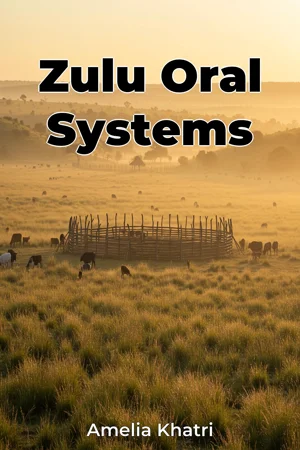
"Zulu Oral Systems" explores the sophisticated methods precolonial Zulu societies used to preserve their history and govern without written records. It delves into how structured verbal forms, like praise poems (izibongo), and ritualistic performances, such as the annual First Fruits celebrations (umkhosi), encoded and transmitted crucial knowledge. The book challenges conventional understandings of pre-literate societies by revealing the depth and complexity of Zulu intellectual traditions, emphasizing that these oral systems were integral to governance and historical preservation. The study examines specific verbal structures and the ritualistic contexts in which knowledge was enacted. It argues that these verbal art forms were not mere cultural expressions but vital tools for legitimizing power and maintaining social cohesion. "Zulu Oral Systems" progresses by first introducing core concepts, then analyzing verbal forms and ritualistic contexts, and finally integrating these findings to demonstrate the holistic function of oral governance. This approach provides a unique perspective on how oral traditions functioned within the broader social and political context of precolonial Zulu society.
Book Details
ISBN
9788235275806
Publisher
Publifye AS
Your Licenses
You don't own any licenses for this book
Purchase a license below to unlock this book and download the EPUB.
Purchase License
Select a tier to unlock this book
Need bulk licensing?
Contact us for enterprise agreements.