
About This Book
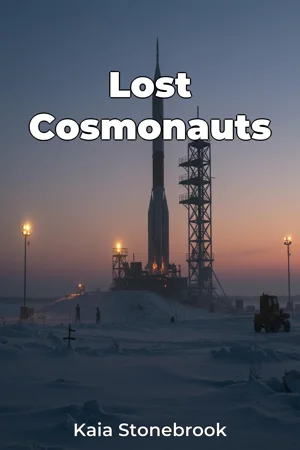
Did the Soviet Union conceal fatal spaceflights during the heat of the space race, sacrificing cosmonauts in their relentless pursuit of dominance? "Lost Cosmonauts" delves into this enduring mystery, separating fact from Cold War fiction by meticulously examining the evidence. The book’s core objective is to investigate claims that the Soviet space program deliberately suppressed information acknowledging failed missions and the astronauts who perished in them. This inquiry is crucial because it challenges the established narrative of early space exploration, raising questions about transparency, ethical considerations, and the human cost of technological advancement. This book navigates through three primary lines of inquiry. First, it scrutinizes declassified government archives from both the Soviet Union and the United States, searching for discrepancies and anomalies in official records related to space launches, mission objectives, and astronaut biographies. Second, it analyzes radio intercepts captured by amateur operators worldwide during the 1960s, specifically those alleging distress signals or unusual communications indicative of off-course or failing spacecraft. Finally, the book examines the gaps and inconsistencies within the official Soviet space program timelines, seeking to identify periods where undocumented launches or unexplained delays might suggest hidden incidents. The historical context is vital. Set against the backdrop of the Cold War, the space race was a high-stakes competition between the superpowers, fueled by national pride and ideological rivalry. The book details how this intense pressure may have incentivized the Soviet Union to conceal failures to maintain a perception of technological superiority. A basic understanding of orbital mechanics, radio communication, and the structure of the Soviet political system is beneficial for fully appreciating the evidence presented. "Lost Cosmonauts" does not aim to definitively “prove” or “disprove” the existence of lost cosmonauts. Instead, its central argument emphasizes the importance of critical analysis when evaluating historical claims, particularly those shrouded in secrecy and propaganda. It asserts that even without conclusive proof, examining the available evidence allows for a deeper understanding of the complexities and moral ambiguities inherent in the early space race. The book begins by introducing the existing claims of lost cosmonauts and detailing the motivations behind the alleged cover-ups. It then dedicates sections to analyzing declassified archives, interpreting Cold War era radio intercepts, and scrutinizing Soviet space program timelines. A chapter will be dedicated to the "Judica-Cordiglia recordings", audio recordings from the early 1960s picked up by Italian amateur radio operators Achille and Giovanni Judica-Cordiglia, which allegedly contain the voices of cosmonauts in distress during failed missions. These will be looked at with a critical, and methodological approach. The book culminates by exploring the potential implications of these findings on our understanding of space history and the ethical responsibilities of nations engaged in scientific endeavors. To support its arguments, "Lost Cosmonauts" relies on rigorous methodological research. This includes the aforementioned government archives and radio intercepts and a detailed analysis of technical documentation related to Soviet spacecraft. Furthermore, it incorporates interviews with historians, space experts, and individuals who claim to have witnessed or have knowledge of related events. The book’s conclusions are derived from a careful evaluation of the available information, acknowledging the limitations of circumstantial evidence and the potential for misinterpretation. The book connects to political science by exploring the role of propaganda and secrecy in authoritarian regimes during the Cold War. It links to media studies through the analysis of radio communications and their interpretations, and intersects with bioethics by considering the ethical implications of human spaceflight and the potential sacrifices made in the name of scientific progress. “Lost Cosmonauts” adopts a fact-based approach, presenting evidence objectively and allowing readers draw their own conclusions. While acknowledging the sensational nature of the topic, it maintains a tone of scholarly consideration, emphasizing the importance of critical thinking and historical accuracy. The book is intended for space enthusiasts, history buffs, students, and anyone interested in Cold War history and scientific mysteries. By presenting complex and ambiguous claims with clarity and rigor, this book provides a valuable contribution to the historical record and offers a compelling look into a previously hidden part of the space race. The scope of "Lost Cosmonauts" is intentionally limited to the early years of the space race, primarily the late 1950s and early 1960s. It focuses specifically on the claims of fatal Soviet spaceflights and does not attempt to provide a comprehensive history of either the American or the Soviet space program. This targeted approach allows for a more in-depth examination of the evidence related to the central mystery. The controversies surrounding the "lost cosmonauts" are ongoing. Skeptics cite the lack of definitive proof, such as recovered spacecraft or documented obituaries, while proponents point to circumstantial evidence and the historical context of Soviet secrecy. "Lost Cosmonauts" explores both sides of this debate, presenting each argument fairly and evaluating the strengths and weaknesses of the various perspectives.
Did the Soviet Union conceal fatal spaceflights during the heat of the space race, sacrificing cosmonauts in their relentless pursuit of dominance? "Lost Cosmonauts" delves into this enduring mystery, separating fact from Cold War fiction by meticulously examining the evidence. The book’s core objective is to investigate claims that the Soviet space program deliberately suppressed information acknowledging failed missions and the astronauts who perished in them. This inquiry is crucial because it challenges the established narrative of early space exploration, raising questions about transparency, ethical considerations, and the human cost of technological advancement. This book navigates through three primary lines of inquiry. First, it scrutinizes declassified government archives from both the Soviet Union and the United States, searching for discrepancies and anomalies in official records related to space launches, mission objectives, and astronaut biographies. Second, it analyzes radio intercepts captured by amateur operators worldwide during the 1960s, specifically those alleging distress signals or unusual communications indicative of off-course or failing spacecraft. Finally, the book examines the gaps and inconsistencies within the official Soviet space program timelines, seeking to identify periods where undocumented launches or unexplained delays might suggest hidden incidents. The historical context is vital. Set against the backdrop of the Cold War, the space race was a high-stakes competition between the superpowers, fueled by national pride and ideological rivalry. The book details how this intense pressure may have incentivized the Soviet Union to conceal failures to maintain a perception of technological superiority. A basic understanding of orbital mechanics, radio communication, and the structure of the Soviet political system is beneficial for fully appreciating the evidence presented. "Lost Cosmonauts" does not aim to definitively “prove” or “disprove” the existence of lost cosmonauts. Instead, its central argument emphasizes the importance of critical analysis when evaluating historical claims, particularly those shrouded in secrecy and propaganda. It asserts that even without conclusive proof, examining the available evidence allows for a deeper understanding of the complexities and moral ambiguities inherent in the early space race. The book begins by introducing the existing claims of lost cosmonauts and detailing the motivations behind the alleged cover-ups. It then dedicates sections to analyzing declassified archives, interpreting Cold War era radio intercepts, and scrutinizing Soviet space program timelines. A chapter will be dedicated to the "Judica-Cordiglia recordings", audio recordings from the early 1960s picked up by Italian amateur radio operators Achille and Giovanni Judica-Cordiglia, which allegedly contain the voices of cosmonauts in distress during failed missions. These will be looked at with a critical, and methodological approach. The book culminates by exploring the potential implications of these findings on our understanding of space history and the ethical responsibilities of nations engaged in scientific endeavors. To support its arguments, "Lost Cosmonauts" relies on rigorous methodological research. This includes the aforementioned government archives and radio intercepts and a detailed analysis of technical documentation related to Soviet spacecraft. Furthermore, it incorporates interviews with historians, space experts, and individuals who claim to have witnessed or have knowledge of related events. The book’s conclusions are derived from a careful evaluation of the available information, acknowledging the limitations of circumstantial evidence and the potential for misinterpretation. The book connects to political science by exploring the role of propaganda and secrecy in authoritarian regimes during the Cold War. It links to media studies through the analysis of radio communications and their interpretations, and intersects with bioethics by considering the ethical implications of human spaceflight and the potential sacrifices made in the name of scientific progress. “Lost Cosmonauts” adopts a fact-based approach, presenting evidence objectively and allowing readers draw their own conclusions. While acknowledging the sensational nature of the topic, it maintains a tone of scholarly consideration, emphasizing the importance of critical thinking and historical accuracy. The book is intended for space enthusiasts, history buffs, students, and anyone interested in Cold War history and scientific mysteries. By presenting complex and ambiguous claims with clarity and rigor, this book provides a valuable contribution to the historical record and offers a compelling look into a previously hidden part of the space race. The scope of "Lost Cosmonauts" is intentionally limited to the early years of the space race, primarily the late 1950s and early 1960s. It focuses specifically on the claims of fatal Soviet spaceflights and does not attempt to provide a comprehensive history of either the American or the Soviet space program. This targeted approach allows for a more in-depth examination of the evidence related to the central mystery. The controversies surrounding the "lost cosmonauts" are ongoing. Skeptics cite the lack of definitive proof, such as recovered spacecraft or documented obituaries, while proponents point to circumstantial evidence and the historical context of Soviet secrecy. "Lost Cosmonauts" explores both sides of this debate, presenting each argument fairly and evaluating the strengths and weaknesses of the various perspectives.
"Lost Cosmonauts" investigates the compelling question of whether the Soviet Union concealed fatal spaceflights during the intense Space Race, examining claims of suppressed information and sacrificed cosmonauts. This book navigates through declassified archives, radio intercepts, and inconsistencies within the Soviet space program to separate fact from Cold War fiction. The book emphasizes the importance of critical analysis when evaluating historical claims, even without conclusive proof. The book explores the Judica-Cordiglia recordings, audio recordings picked up by Italian amateur radio operators, which allegedly contain the voices of cosmonauts in distress during failed missions. The intense pressure of the Cold War may have incentivized the Soviet Union to conceal failures to maintain a perception of technological superiority. It begins by introducing the existing claims of lost cosmonauts and detailing the motivations behind the alleged cover-ups, dedicating sections to analyzing declassified archives, interpreting Cold War era radio intercepts, and scrutinizing Soviet space program timelines. This fact-based exploration offers a unique perspective into the mysteries of the Soviet space program, challenging the established narrative of early space exploration. By presenting complex and ambiguous claims with clarity and rigor, "Lost Cosmonauts" provides a valuable contribution to the historical record and offers a compelling look into a previously hidden part of the space race. The book culminates by exploring the potential implications of these findings on our understanding of space history and the ethical responsibilities of nations engaged in scientific endeavors.
Book Details
ISBN
9788235275684
Publisher
Publifye AS
Your Licenses
You don't own any licenses for this book
Purchase a license below to unlock this book and download the EPUB.
Purchase License
Select a tier to unlock this book
Need bulk licensing?
Contact us for enterprise agreements.