
About This Book
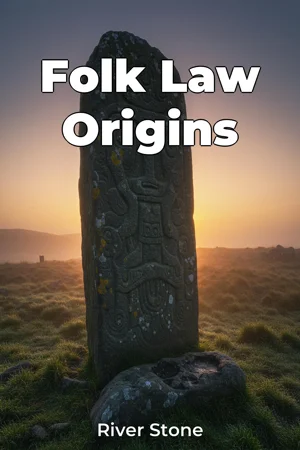
Have you ever wondered how societies maintained order and resolved disputes before the advent of formal, written legal systems? "Folk Law Origins" delves into the fascinating world of unwritten laws, exploring their development through oral tradition and the mechanisms of cultural enforcement that sustained them for generations. This book is an essential investigation into the foundations of legal thought and social organization. We examine two central themes: the transmission of legal norms through oral tradition and the power of cultural institutions in enforcing those norms. Oral tradition, the primary method of preserving and disseminating knowledge in pre-literate societies, played a crucial role in shaping legal consciousness. Simultaneously, cultural enforcement—incorporating social pressure, ritual practices, and communal expectations—provided the means of ensuring compliance with unwritten laws. These themes are vital for understanding how societies functioned and maintained stability in the absence of codified legal systems. Consider the historical context: for millennia, human societies relied on orally transmitted customs and traditions to govern behavior and resolve conflicts. Without written records, these folk laws served as the bedrock of social order. Understanding this history is paramount for appreciating the diversity and complexity of legal systems across cultures and throughout time. The central argument of "Folk Law Origins" is that unwritten laws, born from oral tradition and sustained by cultural enforcement, represent a sophisticated and adaptable framework for social regulation. These laws, though lacking formal codification, are not arbitrary or unsystematic. Instead, they reflect a deep understanding of social dynamics and a commitment to collective well-being. The book unfolds in a structured manner. First, it introduces the fundamental concepts of folk law, oral tradition, and cultural enforcement, establishing a theoretical framework for subsequent analysis. Then, through case studies drawn from diverse cultures and historical periods, it demonstrates how these unwritten laws shaped social interactions and maintained order. Chapters will explore the role of storytelling, ritual, and community leaders in preserving and enforcing folk law. The book culminates by considering the legacy of folk law in contemporary legal systems, exploring how its principles continue to influence legal thinking and social practices. The arguments presented are supported by a wealth of ethnographic data, historical accounts, and legal scholarship. Drawing upon anthropological studies of contemporary indigenous societies, as well as historical records of pre-literate cultures, "Folk Law Origins" offers a nuanced and evidence-based exploration of unwritten laws. "Folk Law Origins" connects to various fields, including anthropology, history, and legal studies. Anthropological perspectives shed light on the cultural context of folk law, historical analysis situates it within specific time periods, and legal theory provides a framework for understanding its normative dimensions. These interdisciplinary connections enrich the analysis and offer a more holistic understanding of the subject matter. This book offers a unique perspective by treating folk law not as a primitive precursor to formal legal systems, but as a sophisticated and adaptable framework for social regulation in its own right. By focusing on the mechanisms of oral transmission and cultural enforcement, it reveals the dynamic processes through which legal norms are created, maintained, and transformed. "Folk Law Origins" is written in a clear and accessible style, making it suitable for students, scholars, and anyone interested in the origins of law and social order. It aims to appeal to readers with an interdisciplinary interest in history, social sciences, and legal studies. The scope of the book encompasses a wide range of cultures and historical periods, from ancient societies to contemporary indigenous communities. While the book seeks to provide a comprehensive overview of folk law, it acknowledges the limitations of focusing on specific case studies and cultural contexts. The insights offered in "Folk Law Origins" have practical applications for understanding contemporary legal issues, such as customary law, indigenous rights, and alternative dispute resolution. By shedding light on the origins and dynamics of unwritten legal systems, the book provides a valuable perspective on the challenges and opportunities of legal pluralism. The book addresses ongoing debates about the nature of law, the role of culture in legal development, and the relationship between formal and informal legal systems. By engaging with these controversies, it contributes to a more nuanced and critical understanding of law and society.
Have you ever wondered how societies maintained order and resolved disputes before the advent of formal, written legal systems? "Folk Law Origins" delves into the fascinating world of unwritten laws, exploring their development through oral tradition and the mechanisms of cultural enforcement that sustained them for generations. This book is an essential investigation into the foundations of legal thought and social organization. We examine two central themes: the transmission of legal norms through oral tradition and the power of cultural institutions in enforcing those norms. Oral tradition, the primary method of preserving and disseminating knowledge in pre-literate societies, played a crucial role in shaping legal consciousness. Simultaneously, cultural enforcement—incorporating social pressure, ritual practices, and communal expectations—provided the means of ensuring compliance with unwritten laws. These themes are vital for understanding how societies functioned and maintained stability in the absence of codified legal systems. Consider the historical context: for millennia, human societies relied on orally transmitted customs and traditions to govern behavior and resolve conflicts. Without written records, these folk laws served as the bedrock of social order. Understanding this history is paramount for appreciating the diversity and complexity of legal systems across cultures and throughout time. The central argument of "Folk Law Origins" is that unwritten laws, born from oral tradition and sustained by cultural enforcement, represent a sophisticated and adaptable framework for social regulation. These laws, though lacking formal codification, are not arbitrary or unsystematic. Instead, they reflect a deep understanding of social dynamics and a commitment to collective well-being. The book unfolds in a structured manner. First, it introduces the fundamental concepts of folk law, oral tradition, and cultural enforcement, establishing a theoretical framework for subsequent analysis. Then, through case studies drawn from diverse cultures and historical periods, it demonstrates how these unwritten laws shaped social interactions and maintained order. Chapters will explore the role of storytelling, ritual, and community leaders in preserving and enforcing folk law. The book culminates by considering the legacy of folk law in contemporary legal systems, exploring how its principles continue to influence legal thinking and social practices. The arguments presented are supported by a wealth of ethnographic data, historical accounts, and legal scholarship. Drawing upon anthropological studies of contemporary indigenous societies, as well as historical records of pre-literate cultures, "Folk Law Origins" offers a nuanced and evidence-based exploration of unwritten laws. "Folk Law Origins" connects to various fields, including anthropology, history, and legal studies. Anthropological perspectives shed light on the cultural context of folk law, historical analysis situates it within specific time periods, and legal theory provides a framework for understanding its normative dimensions. These interdisciplinary connections enrich the analysis and offer a more holistic understanding of the subject matter. This book offers a unique perspective by treating folk law not as a primitive precursor to formal legal systems, but as a sophisticated and adaptable framework for social regulation in its own right. By focusing on the mechanisms of oral transmission and cultural enforcement, it reveals the dynamic processes through which legal norms are created, maintained, and transformed. "Folk Law Origins" is written in a clear and accessible style, making it suitable for students, scholars, and anyone interested in the origins of law and social order. It aims to appeal to readers with an interdisciplinary interest in history, social sciences, and legal studies. The scope of the book encompasses a wide range of cultures and historical periods, from ancient societies to contemporary indigenous communities. While the book seeks to provide a comprehensive overview of folk law, it acknowledges the limitations of focusing on specific case studies and cultural contexts. The insights offered in "Folk Law Origins" have practical applications for understanding contemporary legal issues, such as customary law, indigenous rights, and alternative dispute resolution. By shedding light on the origins and dynamics of unwritten legal systems, the book provides a valuable perspective on the challenges and opportunities of legal pluralism. The book addresses ongoing debates about the nature of law, the role of culture in legal development, and the relationship between formal and informal legal systems. By engaging with these controversies, it contributes to a more nuanced and critical understanding of law and society.
"Folk Law Origins" explores the fascinating realm of unwritten laws and their crucial role in shaping early societies. It examines how communities maintained order and resolved disputes through folk law, relying on oral tradition to transmit legal norms across generations. Cultural enforcement mechanisms, such as social pressure and ritual practices, ensured compliance, highlighting the sophisticated social regulation present even without formal legal systems. The book argues that these unwritten laws, far from being primitive, represent a highly adaptable framework for social order. It presents case studies from diverse cultures and historical periods to demonstrate how these laws shaped social interactions. For example, storytelling and community leaders played key roles in preserving and enforcing folk law. The book progresses from introducing fundamental concepts like oral tradition and cultural enforcement to exploring their legacies in contemporary legal systems. Through its interdisciplinary approach, drawing on anthropology, history, and legal studies, "Folk Law Origins" offers a unique perspective on the origins of law. It sheds light on customary law, indigenous rights, and dispute resolution, making it valuable for those interested in the history of legal systems and social sciences.
Book Details
ISBN
9788235275530
Publisher
Publifye AS
Your Licenses
You don't own any licenses for this book
Purchase a license below to unlock this book and download the EPUB.
Purchase License
Select a tier to unlock this book
Need bulk licensing?
Contact us for enterprise agreements.