
About This Book
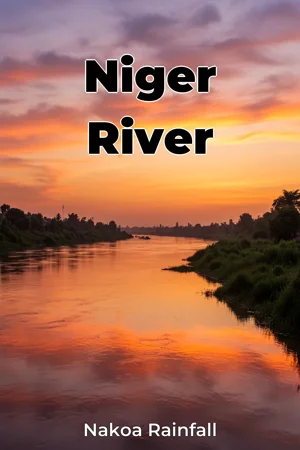
How has a single river shaped the destiny of West Africa for millennia? *Niger River* explores the intricate relationship between this vital waterway and the civilizations that have flourished along its banks. This work delves into the river's multifaceted role in sustaining agriculture, facilitating trade, and empowering empires, offering a comprehensive understanding of its historical, geographical, and ecological significance. This book examines three primary topics: the Niger River's hydrological system and its impact on the environment, the river's influence on the economic development of West African societies, and its centrality to the rise and fall of powerful empires like Mali and Songhai. These topics are crucial because understanding the river's dynamics provides insights into the complex interplay between natural resources and human development, which is essential for addressing contemporary challenges like climate change and resource management. We begin by establishing the geographical and climatological context of the Niger River, tracing its source in the Guinea Highlands through its vast inland delta and eventual outflow into the Atlantic Ocean. Readers will gain an understanding of the river's unique annual flood cycle and its impact on the surrounding ecosystems. The central argument of this book is that the Niger River has acted as a catalyst for societal development in West Africa, shaping not only economic and political structures but also cultural practices and belief systems. The book is structured to systematically build upon this argument. First, it introduces the geological formation of the Niger River basin which includes analysis of its unique course and hydrological characteristics. Second, it explores the agricultural practices supported by the river's annual floods, illustrating how these practices enabled settled communities and surplus production. Third, the book examines the role of the Niger River as a crucial trade artery, connecting diverse regions and facilitating the exchange of goods, ideas, and cultural influences. Fourth, it analyzes the rise and fall of the great empires that controlled the Niger River, showing how the river's resources and strategic importance influenced their power dynamics. Finally, the book culminates by exploring contemporary challenges facing the Niger River, including pollution, climate change, and the impact of large-scale irrigation projects, suggesting potential solutions for sustainable management. The arguments presented in this book are supported by a combination of historical accounts, archaeological findings, geographical data, and ecological studies. We draw upon primary sources such as Arabic chronicles and oral traditions, as well as scientific data on river flow, soil composition, and biodiversity. The book connects to several other fields of study, including environmental science, economics, political science, and cultural anthropology, enhancing its analysis of the complex interactions between the Niger River and human societies. This book offers a unique interdisciplinary perspective by integrating scientific data with historical narratives to provide a holistic understanding of the Niger River's significance. The tone throughout the book is academic yet accessible, aiming to engage a broad audience interested in African history, geography, and environmental studies. The target audience includes students, researchers, policymakers, and anyone interested in understanding the complex relationship between human societies and their environment. As a work of historical geography, the book adheres to genre conventions by providing detailed maps, timelines, and case studies to support its arguments. The scope of the book is limited to the historical and contemporary significance of the Niger River, focusing primarily on its impact on the societies within its basin. It does not delve into detailed analyses of specific ethnic groups or political events unless they are directly related to the river's influence. The information in the book can be applied practically to inform sustainable development strategies, promote responsible resource management, and foster cross-cultural understanding. The book also addresses current debates surrounding the management of the Niger River, considering different perspectives on issues such as dam construction, water allocation, and environmental conservation.
How has a single river shaped the destiny of West Africa for millennia? *Niger River* explores the intricate relationship between this vital waterway and the civilizations that have flourished along its banks. This work delves into the river's multifaceted role in sustaining agriculture, facilitating trade, and empowering empires, offering a comprehensive understanding of its historical, geographical, and ecological significance. This book examines three primary topics: the Niger River's hydrological system and its impact on the environment, the river's influence on the economic development of West African societies, and its centrality to the rise and fall of powerful empires like Mali and Songhai. These topics are crucial because understanding the river's dynamics provides insights into the complex interplay between natural resources and human development, which is essential for addressing contemporary challenges like climate change and resource management. We begin by establishing the geographical and climatological context of the Niger River, tracing its source in the Guinea Highlands through its vast inland delta and eventual outflow into the Atlantic Ocean. Readers will gain an understanding of the river's unique annual flood cycle and its impact on the surrounding ecosystems. The central argument of this book is that the Niger River has acted as a catalyst for societal development in West Africa, shaping not only economic and political structures but also cultural practices and belief systems. The book is structured to systematically build upon this argument. First, it introduces the geological formation of the Niger River basin which includes analysis of its unique course and hydrological characteristics. Second, it explores the agricultural practices supported by the river's annual floods, illustrating how these practices enabled settled communities and surplus production. Third, the book examines the role of the Niger River as a crucial trade artery, connecting diverse regions and facilitating the exchange of goods, ideas, and cultural influences. Fourth, it analyzes the rise and fall of the great empires that controlled the Niger River, showing how the river's resources and strategic importance influenced their power dynamics. Finally, the book culminates by exploring contemporary challenges facing the Niger River, including pollution, climate change, and the impact of large-scale irrigation projects, suggesting potential solutions for sustainable management. The arguments presented in this book are supported by a combination of historical accounts, archaeological findings, geographical data, and ecological studies. We draw upon primary sources such as Arabic chronicles and oral traditions, as well as scientific data on river flow, soil composition, and biodiversity. The book connects to several other fields of study, including environmental science, economics, political science, and cultural anthropology, enhancing its analysis of the complex interactions between the Niger River and human societies. This book offers a unique interdisciplinary perspective by integrating scientific data with historical narratives to provide a holistic understanding of the Niger River's significance. The tone throughout the book is academic yet accessible, aiming to engage a broad audience interested in African history, geography, and environmental studies. The target audience includes students, researchers, policymakers, and anyone interested in understanding the complex relationship between human societies and their environment. As a work of historical geography, the book adheres to genre conventions by providing detailed maps, timelines, and case studies to support its arguments. The scope of the book is limited to the historical and contemporary significance of the Niger River, focusing primarily on its impact on the societies within its basin. It does not delve into detailed analyses of specific ethnic groups or political events unless they are directly related to the river's influence. The information in the book can be applied practically to inform sustainable development strategies, promote responsible resource management, and foster cross-cultural understanding. The book also addresses current debates surrounding the management of the Niger River, considering different perspectives on issues such as dam construction, water allocation, and environmental conservation.
"Niger River" explores the profound and enduring relationship between West African civilizations and the river that has shaped their destinies. From its role in sustaining agriculture and enabling trade to its influence on the rise and fall of empires like Mali and Songhai, the Niger River's historical geography reveals a complex interplay between natural resources and human development. The book delves into the river's hydrological system, highlighting its unique annual flood cycle, akin to a life-giving pulse, and its impact on the surrounding ecosystems, demonstrating how these environmental factors have molded economic and political structures. The book systematically builds its argument across chapters, starting with the geological formation of the Niger River basin and progressing through agricultural practices, trade dynamics, and the rise and fall of empires. By integrating historical accounts, archaeological findings, and ecological studies, the book offers an interdisciplinary perspective on the river's significance. Readers will gain insight into how the Niger River has not only facilitated the exchange of goods and ideas but also shaped cultural practices and belief systems, culminating in an exploration of contemporary challenges such as climate change and pollution and suggesting pathways for sustainable management.
Book Details
ISBN
9788235275516
Publisher
Publifye AS
Your Licenses
You don't own any licenses for this book
Purchase a license below to unlock this book and download the EPUB.
Purchase License
Select a tier to unlock this book
Need bulk licensing?
Contact us for enterprise agreements.