
About This Book
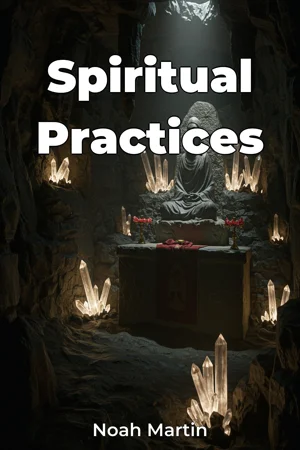
How do individuals across cultures and time cultivate a deeper connection with their faith and the spiritual realm? "Spiritual Practices" explores this question by examining four fundamental pathways: meditation, fasting, chanting, and rituals. These practices, while diverse in their expression, share a common thread: they offer structured methods for transcending the ordinary and accessing profound spiritual experiences. The book delves into the historical roots, psychological underpinnings, and practical applications of these disciplines, offering insights for both the curious seeker and the committed practitioner. This exploration is significant because, in an increasingly secular and materialistic world, many individuals seek meaning and purpose beyond the tangible. Understanding spiritual practices provides a framework for personal growth, stress reduction, and a deeper understanding of one's place in the universe. Furthermore, these practices often serve as cornerstones of cultural identity and communal cohesion, offering a sense of belonging and shared values. "Spiritual Practices" begins by establishing the context for understanding spirituality as a universal human impulse, tracing its manifestations across various religions and philosophical traditions. It addresses the historical and social contexts that have shaped these practices, acknowledging the influences of cultural norms, power dynamics, and evolving belief systems. No specific prior knowledge is needed to understand the book. The central argument of "Spiritual Practices" is that while religious doctrines and spiritual beliefs may differ widely, the underlying practices share common neurological and psychological effects that foster inner peace, heightened awareness, and a sense of connection to something greater than oneself. This argument is important because it moves beyond dogma and offers a scientifically informed perspective on the transformative power of spiritual engagement. The book unfolds in three major parts. Part One introduces the core concepts of meditation, fasting, chanting, and rituals, providing definitions, historical origins, and cross-cultural examples. Part Two delves into the psychological and neurological aspects of each practice, drawing upon scientific studies to explain how these activities affect the brain and body. This section examines the impact on stress hormones, brainwave patterns, and emotional regulation. Part Three explores the applied dimensions of these practices, offering guidance on how to incorporate them into daily life. It also examines the ethical considerations and potential challenges associated with each practice, such as the risks of spiritual bypassing or the importance of mindful fasting. The conclusion synthesizes the book's findings, reiterating the potential of these practices to enhance well-being and foster a deeper sense of meaning and purpose. The evidence presented throughout "Spiritual Practices" draws from a wide range of sources, including anthropological studies of religious rituals, clinical trials on the effects of meditation, historical analyses of fasting traditions, and linguistic analyses of sacred chants. In addition, the book incorporates first-person accounts and interviews with practitioners from diverse spiritual backgrounds, adding a personal and experiential dimension to the analysis. "Spiritual Practices" also connects to several other fields of study. It intersects with psychology by examining the cognitive and emotional effects of these practices. It relates to neuroscience by exploring the neural mechanisms involved in meditation and altered states of consciousness. Moreover, it connects to sociology by analyzing the social functions of rituals and the role of spiritual communities in providing support and belonging. These interdisciplinary connections enrich the book's argument by demonstrating the multifaceted nature of spiritual experience. This book adopts a balanced and accessible tone, blending scholarly rigor with practical guidance. The writing style is designed to be engaging and informative, making complex topics accessible to a broad audience. The target audience for "Spiritual Practices" includes individuals interested in exploring different spiritual paths, those seeking to deepen their existing practice, and anyone curious about the science behind spiritual experience. It is also relevant for healthcare professionals and educators who want to understand the potential benefits of these practices for their clients or students. As a work in the 'Spirituality, Religion' genres, it avoids proselytizing or promoting any particular belief system. Instead, it offers an objective and evidence-based exploration of practices that are common to many traditions. While "Spiritual Practices" aims to provide a comprehensive overview of meditation, fasting, chanting, and rituals, it does not delve into specific theological doctrines or attempt to provide a definitive answer to the question of what constitutes "spirituality." The scope is intentionally limited to the practical and experiential aspects of these practices. "Spiritual Practices" offers real-world applications for readers seeking to reduce stress, improve focus, cultivate mindfulness, and enhance their overall well-being. It provides step-by-step guidance on how to incorporate these practices into daily life, as well as resources for further exploration. Finally, the book acknowledges the ongoing debates surrounding the interpretation of spiritual experiences and the potential for misusing these practices. It addresses issues such as cultural appropriation, the commercialization of spirituality, and the importance of ethical guidelines. By acknowledging these controversies, "Spiritual Practices" aims to provide a nuanced and responsible exploration of a complex and deeply personal topic.
How do individuals across cultures and time cultivate a deeper connection with their faith and the spiritual realm? "Spiritual Practices" explores this question by examining four fundamental pathways: meditation, fasting, chanting, and rituals. These practices, while diverse in their expression, share a common thread: they offer structured methods for transcending the ordinary and accessing profound spiritual experiences. The book delves into the historical roots, psychological underpinnings, and practical applications of these disciplines, offering insights for both the curious seeker and the committed practitioner. This exploration is significant because, in an increasingly secular and materialistic world, many individuals seek meaning and purpose beyond the tangible. Understanding spiritual practices provides a framework for personal growth, stress reduction, and a deeper understanding of one's place in the universe. Furthermore, these practices often serve as cornerstones of cultural identity and communal cohesion, offering a sense of belonging and shared values. "Spiritual Practices" begins by establishing the context for understanding spirituality as a universal human impulse, tracing its manifestations across various religions and philosophical traditions. It addresses the historical and social contexts that have shaped these practices, acknowledging the influences of cultural norms, power dynamics, and evolving belief systems. No specific prior knowledge is needed to understand the book. The central argument of "Spiritual Practices" is that while religious doctrines and spiritual beliefs may differ widely, the underlying practices share common neurological and psychological effects that foster inner peace, heightened awareness, and a sense of connection to something greater than oneself. This argument is important because it moves beyond dogma and offers a scientifically informed perspective on the transformative power of spiritual engagement. The book unfolds in three major parts. Part One introduces the core concepts of meditation, fasting, chanting, and rituals, providing definitions, historical origins, and cross-cultural examples. Part Two delves into the psychological and neurological aspects of each practice, drawing upon scientific studies to explain how these activities affect the brain and body. This section examines the impact on stress hormones, brainwave patterns, and emotional regulation. Part Three explores the applied dimensions of these practices, offering guidance on how to incorporate them into daily life. It also examines the ethical considerations and potential challenges associated with each practice, such as the risks of spiritual bypassing or the importance of mindful fasting. The conclusion synthesizes the book's findings, reiterating the potential of these practices to enhance well-being and foster a deeper sense of meaning and purpose. The evidence presented throughout "Spiritual Practices" draws from a wide range of sources, including anthropological studies of religious rituals, clinical trials on the effects of meditation, historical analyses of fasting traditions, and linguistic analyses of sacred chants. In addition, the book incorporates first-person accounts and interviews with practitioners from diverse spiritual backgrounds, adding a personal and experiential dimension to the analysis. "Spiritual Practices" also connects to several other fields of study. It intersects with psychology by examining the cognitive and emotional effects of these practices. It relates to neuroscience by exploring the neural mechanisms involved in meditation and altered states of consciousness. Moreover, it connects to sociology by analyzing the social functions of rituals and the role of spiritual communities in providing support and belonging. These interdisciplinary connections enrich the book's argument by demonstrating the multifaceted nature of spiritual experience. This book adopts a balanced and accessible tone, blending scholarly rigor with practical guidance. The writing style is designed to be engaging and informative, making complex topics accessible to a broad audience. The target audience for "Spiritual Practices" includes individuals interested in exploring different spiritual paths, those seeking to deepen their existing practice, and anyone curious about the science behind spiritual experience. It is also relevant for healthcare professionals and educators who want to understand the potential benefits of these practices for their clients or students. As a work in the 'Spirituality, Religion' genres, it avoids proselytizing or promoting any particular belief system. Instead, it offers an objective and evidence-based exploration of practices that are common to many traditions. While "Spiritual Practices" aims to provide a comprehensive overview of meditation, fasting, chanting, and rituals, it does not delve into specific theological doctrines or attempt to provide a definitive answer to the question of what constitutes "spirituality." The scope is intentionally limited to the practical and experiential aspects of these practices. "Spiritual Practices" offers real-world applications for readers seeking to reduce stress, improve focus, cultivate mindfulness, and enhance their overall well-being. It provides step-by-step guidance on how to incorporate these practices into daily life, as well as resources for further exploration. Finally, the book acknowledges the ongoing debates surrounding the interpretation of spiritual experiences and the potential for misusing these practices. It addresses issues such as cultural appropriation, the commercialization of spirituality, and the importance of ethical guidelines. By acknowledging these controversies, "Spiritual Practices" aims to provide a nuanced and responsible exploration of a complex and deeply personal topic.
"Spiritual Practices" explores universal methods people use to connect with their faith, focusing on meditation, fasting, chanting, and rituals. It examines these pathways as structured means to transcend the ordinary and access profound spiritual experiences. Intriguingly, these practices share common neurological and psychological effects, fostering inner peace and heightened awareness, regardless of religious doctrine. The book emphasizes personal growth, stress reduction, and understanding one's place in the universe. The book starts by establishing spirituality as a universal impulse, tracing its manifestations across religions. It then delves into the psychological and neurological aspects of each practice, drawing from scientific studies. For instance, meditation has shown to impact stress hormones and brainwave patterns. Finally, it explores applied dimensions, guiding readers on incorporating these practices into daily life, while also examining the ethical considerations and potential challenges associated with each. Offering real-world applications for stress reduction and enhanced well-being, "Spiritual Practices" adopts a balanced tone, blending scholarly rigor with practical guidance. It avoids promoting any specific belief system, instead offering an objective exploration. This approach makes it valuable for those curious about the science behind spiritual experience and those seeking to deepen their mindfulness through religious practices and rituals.
Book Details
ISBN
9788235275486
Publisher
Publifye AS
Your Licenses
You don't own any licenses for this book
Purchase a license below to unlock this book and download the EPUB.
Purchase License
Select a tier to unlock this book
Need bulk licensing?
Contact us for enterprise agreements.