
About This Book
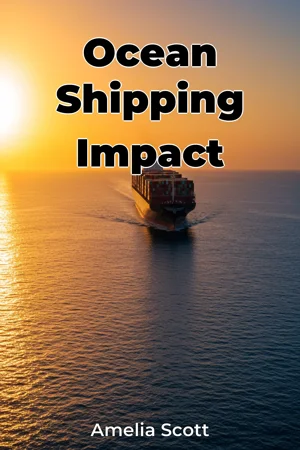
Can the arteries of global commerce, the ocean trade routes, sustain the ecological health of the seas they traverse? This book, "Ocean Shipping Impact," delves into the intricate and often conflicting economic and ecological roles of these vital waterways. Understanding this complex interplay is crucial for policymakers, businesses, and concerned citizens alike, especially as global trade continues to expand. This book tackles two key topics: first, the economic significance of ocean trade routes as the backbone of globalization, examining their contribution to international trade, economic growth, and global supply chains. Second, it explores the multifaceted ecological impacts of shipping, including pollution, invasive species, and disruption of marine ecosystems. These topics are not mutually exclusive; rather, they are deeply intertwined, creating both opportunities and challenges for sustainable development. Historically, ocean trade has been a catalyst for cultural exchange and economic prosperity, yet this growth has come at a cost. From the age of sail to the modern era of container ships, the environmental burden has steadily increased. The reader will benefit from a basic understanding of economic principles related to international trade and an awareness of fundamental ecological concepts such as biodiversity and ecosystem services. The central argument of "Ocean Shipping Impact" asserts that the current model of ocean trade is ecologically unsustainable and requires a fundamental shift towards practices that prioritize environmental stewardship alongside economic efficiency. This argument is critical because the health of our oceans directly impacts global climate, food security, and human well-being. The book is structured in three parts. Part one introduces the economic framework of ocean trade, detailing the history of shipping, the current state of global trade networks, and the economic benefits derived from maritime commerce. Part two examines the ecological consequences of shipping activities, including pollution from ship emissions and ballast water, noise pollution affecting marine life, and the physical impacts of shipping infrastructure. Part three proposes solutions for mitigating the environmental impact of ocean trade, focusing on technological innovations, regulatory frameworks, and sustainable business practices. It culminates by advocating for a circular economy approach to shipping, emphasizing waste reduction, resource efficiency, and ecosystem restoration. The evidence presented in this book draws from a variety of sources, including economic data from international trade organizations, scientific research on marine ecology, and case studies of shipping companies implementing sustainable practices. Unique data from port authorities and environmental monitoring agencies are also utilized to provide a comprehensive analysis. This analysis connects to other fields such as environmental economics, international law, and marine biology. Environmental economics provides the tools to assess the economic costs and benefits of environmental regulations. International law frames the legal obligations of nations to protect the marine environment. Marine biology offers the scientific understanding of the impacts of shipping on marine ecosystems. These interdisciplinary connections strengthen the book's argument by providing a holistic perspective on the issue. "Ocean Shipping Impact" offers a unique, holistic view by integrating economic analysis with rigorous ecological assessment. It avoids simplistic solutions, instead advocating for systemic changes that address the root causes of the problem. The writing style is academic yet accessible, aiming to present complex information in a clear and engaging manner. The book targets policymakers involved in trade and environmental regulation; business leaders in the shipping industry; academics and students in economics, environmental science, and maritime studies; and environmentally conscious citizens interested in understanding the impact of global trade. This book offers valuable insights for anyone seeking to understand and address the environmental challenges posed by ocean shipping. As a work of non-fiction focused on economics and the environment, this book adheres to standards of accuracy, objectivity, and rigorous analysis. While global in scope, the book acknowledges limitations in data availability for certain regions and focuses primarily on international shipping rather than coastal transport. The information presented has real-world applications for policymakers seeking to develop effective environmental regulations, for businesses looking to improve their sustainability practices, and for consumers who want to make informed choices about the products they purchase. Finally, the book addresses ongoing debates about the appropriate balance between economic growth and environmental protection, acknowledging different perspectives and proposing solutions that consider both economic and ecological factors.
Can the arteries of global commerce, the ocean trade routes, sustain the ecological health of the seas they traverse? This book, "Ocean Shipping Impact," delves into the intricate and often conflicting economic and ecological roles of these vital waterways. Understanding this complex interplay is crucial for policymakers, businesses, and concerned citizens alike, especially as global trade continues to expand. This book tackles two key topics: first, the economic significance of ocean trade routes as the backbone of globalization, examining their contribution to international trade, economic growth, and global supply chains. Second, it explores the multifaceted ecological impacts of shipping, including pollution, invasive species, and disruption of marine ecosystems. These topics are not mutually exclusive; rather, they are deeply intertwined, creating both opportunities and challenges for sustainable development. Historically, ocean trade has been a catalyst for cultural exchange and economic prosperity, yet this growth has come at a cost. From the age of sail to the modern era of container ships, the environmental burden has steadily increased. The reader will benefit from a basic understanding of economic principles related to international trade and an awareness of fundamental ecological concepts such as biodiversity and ecosystem services. The central argument of "Ocean Shipping Impact" asserts that the current model of ocean trade is ecologically unsustainable and requires a fundamental shift towards practices that prioritize environmental stewardship alongside economic efficiency. This argument is critical because the health of our oceans directly impacts global climate, food security, and human well-being. The book is structured in three parts. Part one introduces the economic framework of ocean trade, detailing the history of shipping, the current state of global trade networks, and the economic benefits derived from maritime commerce. Part two examines the ecological consequences of shipping activities, including pollution from ship emissions and ballast water, noise pollution affecting marine life, and the physical impacts of shipping infrastructure. Part three proposes solutions for mitigating the environmental impact of ocean trade, focusing on technological innovations, regulatory frameworks, and sustainable business practices. It culminates by advocating for a circular economy approach to shipping, emphasizing waste reduction, resource efficiency, and ecosystem restoration. The evidence presented in this book draws from a variety of sources, including economic data from international trade organizations, scientific research on marine ecology, and case studies of shipping companies implementing sustainable practices. Unique data from port authorities and environmental monitoring agencies are also utilized to provide a comprehensive analysis. This analysis connects to other fields such as environmental economics, international law, and marine biology. Environmental economics provides the tools to assess the economic costs and benefits of environmental regulations. International law frames the legal obligations of nations to protect the marine environment. Marine biology offers the scientific understanding of the impacts of shipping on marine ecosystems. These interdisciplinary connections strengthen the book's argument by providing a holistic perspective on the issue. "Ocean Shipping Impact" offers a unique, holistic view by integrating economic analysis with rigorous ecological assessment. It avoids simplistic solutions, instead advocating for systemic changes that address the root causes of the problem. The writing style is academic yet accessible, aiming to present complex information in a clear and engaging manner. The book targets policymakers involved in trade and environmental regulation; business leaders in the shipping industry; academics and students in economics, environmental science, and maritime studies; and environmentally conscious citizens interested in understanding the impact of global trade. This book offers valuable insights for anyone seeking to understand and address the environmental challenges posed by ocean shipping. As a work of non-fiction focused on economics and the environment, this book adheres to standards of accuracy, objectivity, and rigorous analysis. While global in scope, the book acknowledges limitations in data availability for certain regions and focuses primarily on international shipping rather than coastal transport. The information presented has real-world applications for policymakers seeking to develop effective environmental regulations, for businesses looking to improve their sustainability practices, and for consumers who want to make informed choices about the products they purchase. Finally, the book addresses ongoing debates about the appropriate balance between economic growth and environmental protection, acknowledging different perspectives and proposing solutions that consider both economic and ecological factors.
"Ocean Shipping Impact" explores the crucial intersection of global trade and marine ecosystems, examining how ocean trade routes, the arteries of global commerce, impact ecological health. The book highlights the economic significance of ocean trade in driving international trade and economic growth, while also revealing the multifaceted environmental impact of the shipping industry, including pollution and disruption of marine ecosystems. For instance, ballast water discharge can introduce invasive species, threatening biodiversity in new environments. The book uniquely integrates economic analysis with ecological assessment. It begins by establishing the economic importance of maritime commerce, then delves into the ecological consequences of shipping activities, such as ship emissions and noise pollution, and culminates in proposing solutions for sustainable shipping. These solutions include technological innovations and regulatory frameworks. The book advocates for a shift towards practices that prioritize environmental stewardship alongside economic efficiency, emphasizing waste reduction, resource efficiency, and ecosystem restoration.
Book Details
ISBN
9788235275318
Publisher
Publifye AS
Your Licenses
You don't own any licenses for this book
Purchase a license below to unlock this book and download the EPUB.
Purchase License
Select a tier to unlock this book
Need bulk licensing?
Contact us for enterprise agreements.