
About This Book
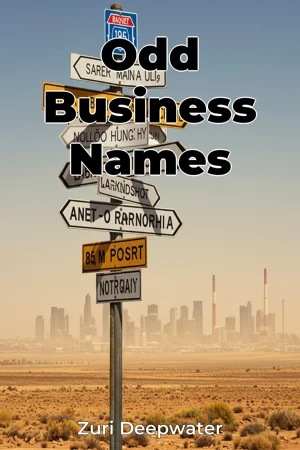
Have you ever wondered why some company names evoke laughter rather than trust or recognition? "Odd Business Names" explores the fascinating, and often costly, phenomenon of companies whose branding has gone awry due to mistranslations, unfortunate connotations, or simply poor linguistic choices. This book argues that a seemingly minor detail – a company's name – can have a significant impact on its success in both local and global markets. We'll delve into three core areas: the pitfalls of linguistic translation in branding, the importance of cultural sensitivity when selecting a name, and the legal and ethical considerations involved in rebranding after a naming mishap. These topics are crucial because in an increasingly interconnected world, overlooking these aspects can lead to financial losses, reputational damage, and even legal battles. Consider the historical context: as businesses expand internationally, the potential for miscommunication grows exponentially. What resonates positively in one culture might be offensive or nonsensical in another. This book bridges the gap between theoretical linguistic principles and practical business management. It's not about nitpicking; it's about understanding the power of language in shaping consumer perception and driving market performance. The central argument is that a proactive, linguistically informed approach to company naming and branding is a vital investment, not a frivolous expense. We will examine various business naming disasters to determine what went wrong and how these situations could have been avoided. The book's structure follows a clear progression. First, we introduce the fundamental concepts of onomastics (the study of names) and cross-cultural communication. Next, we present case studies of companies that have suffered from naming blunders, analyzing the linguistic, cultural, and business factors at play. These case studies highlight real-world consequences, showing how seemingly innocuous names have resulted in marketing failures and public relations crises. Finally, we offer practical guidelines and strategies for companies to avoid similar pitfalls, emphasizing the importance of thorough linguistic and cultural due diligence. The evidence presented will be drawn from a variety of sources, including academic research in linguistics and marketing, industry reports on branding and globalization, and firsthand accounts from businesses that have experienced naming challenges. The book also analyzes trademark disputes and advertising campaigns to illustrate the legal and practical implications of poorly chosen names. This book connects to several other fields. Firstly, it draws upon linguistics, specifically semantics and pragmatics, to understand the nuances of meaning and interpretation. Secondly, it intersects with cultural studies, examining how cultural values and beliefs influence consumer behavior and brand perception. Thirdly, it relates to international business and marketing, offering insights into the challenges and opportunities of operating in diverse global markets. What sets this book apart is its holistic approach. While existing literature often focuses on either linguistic theory or business strategy, "Odd Business Names" integrates both, providing a comprehensive framework for understanding and managing the linguistic dimensions of branding. The tone is informative and accessible, blending academic rigor with real-world examples. The target audience includes business owners, marketing professionals, brand managers, international business students, and anyone interested in the intersection of language and commerce. This book offers actionable insights and practical tools for navigating the complexities of global branding. As a work in the Language Arts General, Management, and Business Management genres, the book maintains a balance between scholarly analysis and practical application. The scope is broad, covering a wide range of industries and geographic regions, but it is intentionally limited to the specific issue of company naming. It does not delve into broader issues of marketing or business strategy. The practical applications of this book are numerous. Companies can use the guidelines and case studies presented to inform their own branding strategies, conduct thorough linguistic due diligence, and avoid costly naming mistakes. Topics, such as cultural appropriation in business and the ethics of linguistic imperialism, will be touched upon. While the importance of linguistic sensitivity is generally accepted, there are ongoing debates about the best way to achieve it. Some argue for complete localization of branding, while others advocate for a more standardized global approach. "Odd Business Names" addresses these debates by presenting a balanced perspective and offering practical guidance for navigating these complex issues.
Have you ever wondered why some company names evoke laughter rather than trust or recognition? "Odd Business Names" explores the fascinating, and often costly, phenomenon of companies whose branding has gone awry due to mistranslations, unfortunate connotations, or simply poor linguistic choices. This book argues that a seemingly minor detail – a company's name – can have a significant impact on its success in both local and global markets. We'll delve into three core areas: the pitfalls of linguistic translation in branding, the importance of cultural sensitivity when selecting a name, and the legal and ethical considerations involved in rebranding after a naming mishap. These topics are crucial because in an increasingly interconnected world, overlooking these aspects can lead to financial losses, reputational damage, and even legal battles. Consider the historical context: as businesses expand internationally, the potential for miscommunication grows exponentially. What resonates positively in one culture might be offensive or nonsensical in another. This book bridges the gap between theoretical linguistic principles and practical business management. It's not about nitpicking; it's about understanding the power of language in shaping consumer perception and driving market performance. The central argument is that a proactive, linguistically informed approach to company naming and branding is a vital investment, not a frivolous expense. We will examine various business naming disasters to determine what went wrong and how these situations could have been avoided. The book's structure follows a clear progression. First, we introduce the fundamental concepts of onomastics (the study of names) and cross-cultural communication. Next, we present case studies of companies that have suffered from naming blunders, analyzing the linguistic, cultural, and business factors at play. These case studies highlight real-world consequences, showing how seemingly innocuous names have resulted in marketing failures and public relations crises. Finally, we offer practical guidelines and strategies for companies to avoid similar pitfalls, emphasizing the importance of thorough linguistic and cultural due diligence. The evidence presented will be drawn from a variety of sources, including academic research in linguistics and marketing, industry reports on branding and globalization, and firsthand accounts from businesses that have experienced naming challenges. The book also analyzes trademark disputes and advertising campaigns to illustrate the legal and practical implications of poorly chosen names. This book connects to several other fields. Firstly, it draws upon linguistics, specifically semantics and pragmatics, to understand the nuances of meaning and interpretation. Secondly, it intersects with cultural studies, examining how cultural values and beliefs influence consumer behavior and brand perception. Thirdly, it relates to international business and marketing, offering insights into the challenges and opportunities of operating in diverse global markets. What sets this book apart is its holistic approach. While existing literature often focuses on either linguistic theory or business strategy, "Odd Business Names" integrates both, providing a comprehensive framework for understanding and managing the linguistic dimensions of branding. The tone is informative and accessible, blending academic rigor with real-world examples. The target audience includes business owners, marketing professionals, brand managers, international business students, and anyone interested in the intersection of language and commerce. This book offers actionable insights and practical tools for navigating the complexities of global branding. As a work in the Language Arts General, Management, and Business Management genres, the book maintains a balance between scholarly analysis and practical application. The scope is broad, covering a wide range of industries and geographic regions, but it is intentionally limited to the specific issue of company naming. It does not delve into broader issues of marketing or business strategy. The practical applications of this book are numerous. Companies can use the guidelines and case studies presented to inform their own branding strategies, conduct thorough linguistic due diligence, and avoid costly naming mistakes. Topics, such as cultural appropriation in business and the ethics of linguistic imperialism, will be touched upon. While the importance of linguistic sensitivity is generally accepted, there are ongoing debates about the best way to achieve it. Some argue for complete localization of branding, while others advocate for a more standardized global approach. "Odd Business Names" addresses these debates by presenting a balanced perspective and offering practical guidance for navigating these complex issues.
"Odd Business Names" delves into the critical role of language in global branding and business management, highlighting how a company's name can significantly impact its success. The book explores the high stakes involved when branding goes wrong, particularly due to linguistic translation errors or cultural insensitivity. Consider that a name resonating positively in one culture might be offensive elsewhere, leading to financial losses and reputational damage. This book uniquely bridges linguistic theory with practical business, demonstrating how a proactive approach to naming is an investment, not an expense. The book examines real-world case studies of naming blunders to dissect the linguistic, cultural, and business factors at play. It emphasizes the importance of linguistic due diligence, cultural sensitivity, and understanding onomastics (the study of names). For example, mistranslations can turn a well-intended brand into a source of amusement or even offense, severely impacting marketing efforts. Progressing from fundamental concepts to case studies and practical guidelines, this book offers actionable insights for navigating the complexities of global branding.
Book Details
ISBN
9788235275301
Publisher
Publifye AS
Your Licenses
You don't own any licenses for this book
Purchase a license below to unlock this book and download the EPUB.
Purchase License
Select a tier to unlock this book
Need bulk licensing?
Contact us for enterprise agreements.