
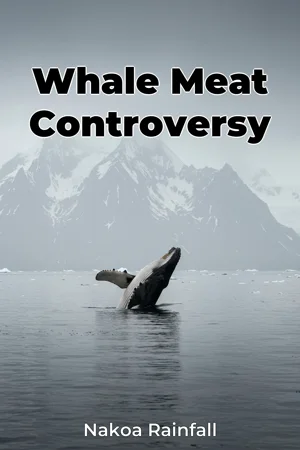
About This Book
Why does the practice of whaling persist in the 21st century, despite widespread conservation concerns? "Whale Meat Controversy" delves into this complex question, exploring the intersection of historical traditions, environmental ethics, and the often-conflicting demands of cultural preservation and species protection. This book is essential reading for anyone seeking to understand the multifaceted debate surrounding whaling and its lasting impact. This book examines three key areas: the historical context of whaling cultures, the scientific evidence concerning whale populations and the impact of hunting, and the ethical considerations involved in balancing cultural practices with conservation imperatives. These topics are significant because they highlight the inherent tensions between human needs and environmental sustainability, a conflict that extends far beyond the specific issue of whaling. Understanding the whaling debate requires knowledge of several intersecting fields. Historically, whaling has been a critical economic and cultural activity for certain communities, particularly in Norway, Iceland, Japan, and among Indigenous groups in various parts of the world. Ecologically, the role of whales in marine ecosystems is vital, and their depletion can have cascading effects on ocean health. Socially, the consumption of whale meat is intertwined with cultural identity and traditions that are fiercely defended. The central argument of "Whale Meat Controversy" is that a nuanced understanding of the whaling debate requires moving beyond simplistic narratives of conservation versus culture. By examining the economic, social, and ecological factors that drive and are affected by whaling practices, the book argues for the need for comprehensive solutions that respect both cultural heritage and environmental sustainability. This argument is crucial to fostering constructive dialogue and policy making in a field often characterized by polarized viewpoints. The book unfolds in four parts. First, it introduces the historical and cultural significance of whaling across different societies. Second, it examines the scientific evidence regarding whale populations, hunting practices, and the impact of whaling on marine ecosystems. This part involves analysis of population data, hunting quotas, and ecological models. Third, the book explores the ethical and legal dimensions of whaling, analyzing international regulations, conservation treaties, and human rights considerations. Finally, the book concludes by proposing potential pathways toward sustainable coexistence, advocating for collaborative solutions that integrate scientific knowledge, cultural values, and economic realities. The evidence presented includes historical records, scientific data from whale population studies, economic analyses of whaling industries, and ethnographic research on whaling communities. The book also draws on legal frameworks and international treaties related to whaling, such as the International Whaling Commission (IWC) regulations, and uses data from environmental organizations' reports. This book connects to other fields such as anthropology (through its study of whaling cultures), economics (through its analysis of the whaling industry), and political science (through its examination of international regulations and treaties). These connections enrich the book’s argument by providing a more comprehensive view of the whaling issue. "Whale Meat Controversy" stands out for its interdisciplinary approach, combining historical, scientific, and ethical perspectives to offer a balanced analysis of the whaling debate. Unlike many works that focus solely on the conservation aspect, this book also gives significant weight to the cultural and economic factors that drive whaling practices. The book is written in an academic style, presenting information in a clear, well-researched, and unbiased manner. While fact-based, the tone is intended to be accessible to a broad audience interested in environmental issues, cultural preservation, or international relations. The target audience includes students and scholars in environmental studies, history, anthropology, and international law, as well as policy makers, conservationists, and anyone interested in the complexities of human-wildlife conflict. This book would be valuable to them because it offers a comprehensive, balanced, and nuanced perspective on a highly controversial topic. As a non-fiction work, this book adheres to standards of accuracy and objectivity, presenting well-researched information and diverse perspectives. It is structured to provide a clear and logical argument, supported by credible evidence and analysis. The scope of the book is global, covering whaling practices in various regions and examining international regulations. The book acknowledges limitations in data availability for certain whale populations and cultural groups, but it strives to provide the most comprehensive overview possible based on existing research. The information presented in this book can be applied to real-world policy making, conservation efforts, and cultural preservation initiatives. It offers insights for developing strategies that balance the needs of both human communities and the environment. The book directly addresses the ongoing debates surrounding whaling, including disagreements over sustainable hunting quotas, the interpretation of scientific data, and the ethical implications of cultural practices that impact endangered species. It engages critically with these controversies to offer a balanced and informed perspective.
Why does the practice of whaling persist in the 21st century, despite widespread conservation concerns? "Whale Meat Controversy" delves into this complex question, exploring the intersection of historical traditions, environmental ethics, and the often-conflicting demands of cultural preservation and species protection. This book is essential reading for anyone seeking to understand the multifaceted debate surrounding whaling and its lasting impact. This book examines three key areas: the historical context of whaling cultures, the scientific evidence concerning whale populations and the impact of hunting, and the ethical considerations involved in balancing cultural practices with conservation imperatives. These topics are significant because they highlight the inherent tensions between human needs and environmental sustainability, a conflict that extends far beyond the specific issue of whaling. Understanding the whaling debate requires knowledge of several intersecting fields. Historically, whaling has been a critical economic and cultural activity for certain communities, particularly in Norway, Iceland, Japan, and among Indigenous groups in various parts of the world. Ecologically, the role of whales in marine ecosystems is vital, and their depletion can have cascading effects on ocean health. Socially, the consumption of whale meat is intertwined with cultural identity and traditions that are fiercely defended. The central argument of "Whale Meat Controversy" is that a nuanced understanding of the whaling debate requires moving beyond simplistic narratives of conservation versus culture. By examining the economic, social, and ecological factors that drive and are affected by whaling practices, the book argues for the need for comprehensive solutions that respect both cultural heritage and environmental sustainability. This argument is crucial to fostering constructive dialogue and policy making in a field often characterized by polarized viewpoints. The book unfolds in four parts. First, it introduces the historical and cultural significance of whaling across different societies. Second, it examines the scientific evidence regarding whale populations, hunting practices, and the impact of whaling on marine ecosystems. This part involves analysis of population data, hunting quotas, and ecological models. Third, the book explores the ethical and legal dimensions of whaling, analyzing international regulations, conservation treaties, and human rights considerations. Finally, the book concludes by proposing potential pathways toward sustainable coexistence, advocating for collaborative solutions that integrate scientific knowledge, cultural values, and economic realities. The evidence presented includes historical records, scientific data from whale population studies, economic analyses of whaling industries, and ethnographic research on whaling communities. The book also draws on legal frameworks and international treaties related to whaling, such as the International Whaling Commission (IWC) regulations, and uses data from environmental organizations' reports. This book connects to other fields such as anthropology (through its study of whaling cultures), economics (through its analysis of the whaling industry), and political science (through its examination of international regulations and treaties). These connections enrich the book’s argument by providing a more comprehensive view of the whaling issue. "Whale Meat Controversy" stands out for its interdisciplinary approach, combining historical, scientific, and ethical perspectives to offer a balanced analysis of the whaling debate. Unlike many works that focus solely on the conservation aspect, this book also gives significant weight to the cultural and economic factors that drive whaling practices. The book is written in an academic style, presenting information in a clear, well-researched, and unbiased manner. While fact-based, the tone is intended to be accessible to a broad audience interested in environmental issues, cultural preservation, or international relations. The target audience includes students and scholars in environmental studies, history, anthropology, and international law, as well as policy makers, conservationists, and anyone interested in the complexities of human-wildlife conflict. This book would be valuable to them because it offers a comprehensive, balanced, and nuanced perspective on a highly controversial topic. As a non-fiction work, this book adheres to standards of accuracy and objectivity, presenting well-researched information and diverse perspectives. It is structured to provide a clear and logical argument, supported by credible evidence and analysis. The scope of the book is global, covering whaling practices in various regions and examining international regulations. The book acknowledges limitations in data availability for certain whale populations and cultural groups, but it strives to provide the most comprehensive overview possible based on existing research. The information presented in this book can be applied to real-world policy making, conservation efforts, and cultural preservation initiatives. It offers insights for developing strategies that balance the needs of both human communities and the environment. The book directly addresses the ongoing debates surrounding whaling, including disagreements over sustainable hunting quotas, the interpretation of scientific data, and the ethical implications of cultural practices that impact endangered species. It engages critically with these controversies to offer a balanced and informed perspective.
"Whale Meat Controversy" explores the contentious issue of whaling by examining the historical, environmental, and ethical dimensions of this practice. The book delves into why whaling persists despite conservation concerns, highlighting the inherent tensions between cultural preservation and species protection. Did you know that whaling has been a critical economic activity for communities in Norway, Iceland, and Japan? Also, the depletion of whale populations can have cascading effects on the health of our marine ecosystems. The book unfolds by first introducing whaling's historical and cultural significance, then examining scientific evidence regarding whale populations and the impact of hunting. Finally, it explores the ethical and legal dimensions, proposing pathways toward sustainable coexistence. Unlike many works that focus solely on conservation, "Whale Meat Controversy" uniquely combines historical, scientific, and ethical perspectives to offer a balanced analysis of the whaling debate, advocating for solutions that respect both cultural heritage and environmental sustainability.
Book Details
ISBN
9788235275295
Publisher
Publifye AS
Your Licenses
You don't own any licenses for this book
Purchase a license below to unlock this book and download the EPUB.
Purchase License
Select a tier to unlock this book
Need bulk licensing?
Contact us for enterprise agreements.