
About This Book
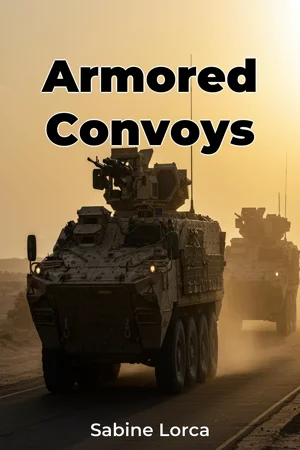
How have armored convoys shaped the outcomes of conflicts across the globe? "Armored Convoys" delves into the crucial role these mobile fortresses play in protecting military supply chains, neutralizing ambushes, and ensuring the safe transit of vital resources through some of the world's most dangerous regions. This book examines the historical evolution, tactical deployment, and technological advancements of armored convoys, revealing their enduring impact on military logistics and operational effectiveness. The book focuses on three primary areas: the strategic importance of supply line security, the tactical doctrines employed to counter ambush scenarios, and the technological innovations in armored vehicle design and convoy organization. These topics are significant because they underscore the fundamental challenges of maintaining military operations far from established bases, where supply lines become prime targets for enemy forces. Understanding these factors is critical for military strategists, historians, and anyone interested in the practical realities of modern warfare. "Armored Convoys" presents a comprehensive analysis, beginning with the early uses of protected transport in ancient times and tracing the development of armored vehicles through the World Wars, the Cold War, and into contemporary conflicts in Iraq, Afghanistan, and beyond. It details how the rise of guerrilla warfare and asymmetric threats has intensified the need for robust convoy protection, leading to innovations in vehicle armor, electronic countermeasures, and sophisticated escort tactics. At its core, "Armored Convoys" argues that the effectiveness of military campaigns is inextricably linked to the security and reliability of their supply chains. The book demonstrates that armored convoys, when properly equipped and strategically deployed, provide a critical lifeline for troops in the field, enabling them to sustain operations and achieve their objectives. This argument is vital because it challenges conventional narratives that often prioritize combat operations while underestimating the logistical support that makes them possible. The book begins by introducing the core concepts of convoy operations, including route planning, threat assessment, and communication protocols. It then proceeds to analyze key historical case studies, examining successful and unsuccessful convoy operations in various conflict zones. Major points include an analysis of convoy defense during World War II’s Eastern Front, the challenges faced in Vietnam's jungle terrain, and the adaptations required to counter IED threats in modern counterinsurgency operations. The book culminates by evaluating the future of armored convoys, considering the impact of emerging technologies such as drone escorts, AI-powered threat detection, and autonomous vehicles. The research presented in "Armored Convoys" draws upon a diverse range of sources, including primary documents from military archives, after-action reports, technical manuals, and interviews with veterans who have participated in convoy operations. It also incorporates data from open-source intelligence, academic studies, and industry reports on armored vehicle technology. The book also connects to fields such as political science (analyzing the political factors that influence military deployments and supply line vulnerabilities), engineering (examining the design and performance of armored vehicles), and economics (assessing the costs associated with convoy operations and the impact on resource allocation). "Armored Convoys" offers a detailed examination of armored convoy tactics and technology while stressing the human element: the training, leadership, and adaptability of the soldiers responsible for securing these vital supply lines. Written in a clear and accessible style, "Armored Convoys" is intended for military professionals, historians, defense analysts, and anyone interested in the logistical challenges of modern warfare. It provides valuable insights into the strategies and technologies used to protect military supply chains, offering a comprehensive understanding of this critical aspect of military operations. The book’s scope focuses primarily on ground-based convoys, with limited discussion of air or naval resupply operations. While it examines the evolution of convoy tactics across multiple conflicts, it does not provide an exhaustive account of every instance of armored convoy usage. The information presented in "Armored Convoys" can be applied practically by readers in various fields, from military logistics and security planning to risk management and disaster response. It provides a framework for understanding the challenges of protecting critical infrastructure and supply chains in high-threat environments. Finally, the book addresses debates surrounding the use of private military contractors for convoy security, considering the ethical and legal implications of outsourcing military functions. It also examines the ongoing controversy over the balance between vehicle armor and mobility, exploring the trade-offs between protection and operational effectiveness.
How have armored convoys shaped the outcomes of conflicts across the globe? "Armored Convoys" delves into the crucial role these mobile fortresses play in protecting military supply chains, neutralizing ambushes, and ensuring the safe transit of vital resources through some of the world's most dangerous regions. This book examines the historical evolution, tactical deployment, and technological advancements of armored convoys, revealing their enduring impact on military logistics and operational effectiveness. The book focuses on three primary areas: the strategic importance of supply line security, the tactical doctrines employed to counter ambush scenarios, and the technological innovations in armored vehicle design and convoy organization. These topics are significant because they underscore the fundamental challenges of maintaining military operations far from established bases, where supply lines become prime targets for enemy forces. Understanding these factors is critical for military strategists, historians, and anyone interested in the practical realities of modern warfare. "Armored Convoys" presents a comprehensive analysis, beginning with the early uses of protected transport in ancient times and tracing the development of armored vehicles through the World Wars, the Cold War, and into contemporary conflicts in Iraq, Afghanistan, and beyond. It details how the rise of guerrilla warfare and asymmetric threats has intensified the need for robust convoy protection, leading to innovations in vehicle armor, electronic countermeasures, and sophisticated escort tactics. At its core, "Armored Convoys" argues that the effectiveness of military campaigns is inextricably linked to the security and reliability of their supply chains. The book demonstrates that armored convoys, when properly equipped and strategically deployed, provide a critical lifeline for troops in the field, enabling them to sustain operations and achieve their objectives. This argument is vital because it challenges conventional narratives that often prioritize combat operations while underestimating the logistical support that makes them possible. The book begins by introducing the core concepts of convoy operations, including route planning, threat assessment, and communication protocols. It then proceeds to analyze key historical case studies, examining successful and unsuccessful convoy operations in various conflict zones. Major points include an analysis of convoy defense during World War II’s Eastern Front, the challenges faced in Vietnam's jungle terrain, and the adaptations required to counter IED threats in modern counterinsurgency operations. The book culminates by evaluating the future of armored convoys, considering the impact of emerging technologies such as drone escorts, AI-powered threat detection, and autonomous vehicles. The research presented in "Armored Convoys" draws upon a diverse range of sources, including primary documents from military archives, after-action reports, technical manuals, and interviews with veterans who have participated in convoy operations. It also incorporates data from open-source intelligence, academic studies, and industry reports on armored vehicle technology. The book also connects to fields such as political science (analyzing the political factors that influence military deployments and supply line vulnerabilities), engineering (examining the design and performance of armored vehicles), and economics (assessing the costs associated with convoy operations and the impact on resource allocation). "Armored Convoys" offers a detailed examination of armored convoy tactics and technology while stressing the human element: the training, leadership, and adaptability of the soldiers responsible for securing these vital supply lines. Written in a clear and accessible style, "Armored Convoys" is intended for military professionals, historians, defense analysts, and anyone interested in the logistical challenges of modern warfare. It provides valuable insights into the strategies and technologies used to protect military supply chains, offering a comprehensive understanding of this critical aspect of military operations. The book’s scope focuses primarily on ground-based convoys, with limited discussion of air or naval resupply operations. While it examines the evolution of convoy tactics across multiple conflicts, it does not provide an exhaustive account of every instance of armored convoy usage. The information presented in "Armored Convoys" can be applied practically by readers in various fields, from military logistics and security planning to risk management and disaster response. It provides a framework for understanding the challenges of protecting critical infrastructure and supply chains in high-threat environments. Finally, the book addresses debates surrounding the use of private military contractors for convoy security, considering the ethical and legal implications of outsourcing military functions. It also examines the ongoing controversy over the balance between vehicle armor and mobility, exploring the trade-offs between protection and operational effectiveness.
"Armored Convoys" explores the complex and crucial role of armored convoys in military history and modern warfare. These mobile fortresses are essential for securing military supply chains, enabling the safe passage of vital resources through dangerous territories. The book illuminates the evolution of convoy tactics, from ancient protected transport to the sophisticated strategies employed in contemporary counterinsurgency operations. One intriguing fact is how the rise of guerrilla warfare has directly influenced innovations in vehicle armor and electronic countermeasures. The book traces the strategic importance of supply line security, tactical doctrines for countering ambushes, and technological advancements in armored vehicle design. Beginning with the early uses of protected transport, the study progresses through key historical case studies like World War II’s Eastern Front and the challenges of Vietnam's jungle terrain. It concludes by evaluating the future of armored convoys, considering the impact of emerging technologies. Through historical analysis and examination of military archives, the book underscores the critical link between effective military campaigns and reliable supply chains.
Book Details
ISBN
9788235275165
Publisher
Publifye AS
Your Licenses
You don't own any licenses for this book
Purchase a license below to unlock this book and download the EPUB.
Purchase License
Select a tier to unlock this book
Need bulk licensing?
Contact us for enterprise agreements.