
About This Book
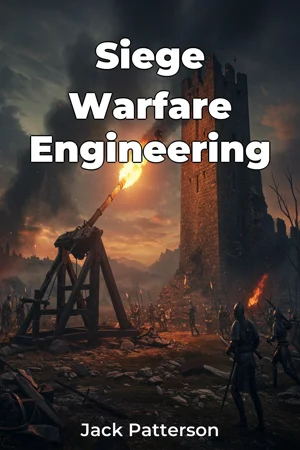
How often do we consider that the fall of cities and empires wasn't solely determined by battlefield combat, but by meticulous engineering and psychological pressure? *Siege Warfare Engineering* delves into the multifaceted world of sieges, exploring the structural, psychological, and tactical methods employed throughout history to breach fortifications or compel surrender. This book examines the crucial role mechanical engineering played in siege warfare and reveals its deep impact on the trajectory of military history. We will dissect the core elements that defined successful sieges. First, the structural aspect focusing on the design and construction of fortifications, as well as the engineering principles behind siege engines like trebuchets, catapults, and siege towers, illustrating their evolution and effectiveness. Second, the psychological component, unveiling how fear, attrition, and propaganda were weaponized to undermine the morale of defenders. Third, the tactical dimensions, showing how besiegers strategically deployed their forces, managed logistics, and adapted to evolving defensive measures. These topics are important because they offer insight into the ingenuity of ancient and medieval engineers, the brutal realities of warfare, and the complex interplay of technology, psychology, and strategy that determined the fate of cities and nations. Understanding the context of siege warfare requires familiarity with military history and basic mechanical principles. The book provides historical background on major sieges, detailing the sociopolitical factors that led to conflict and the strategic importance of targeted cities or fortresses. It also introduces fundamental engineering concepts relevant to understanding the design and operation of siege weaponry. The central argument posits that siege warfare was not simply a matter of brute force, but a sophisticated combination of engineering prowess, psychological manipulation, and tactical adaptation. This argument is crucial because it challenges the common perception of sieges as solely attritional conflicts and highlights the ingenuity and strategic thinking involved. The book is structured to systematically explore these themes, beginning with an introduction to the fundamental principles of siege warfare. It then develops these ideas through focused chapters on the engineering of fortifications, the design and development of siege engines, and the psychological techniques used to break enemy resolve. The culmination of the argument demonstrates how these elements intertwined to shape the outcome of historical sieges. We conclude by examining the lasting impact of siege warfare on military doctrine and urban planning. Evidence will be drawn from primary historical accounts, archaeological findings, and engineering analyses of surviving siege weaponry and fortifications. We will analyze siege accounts, architectural plans, and engineering drawings to provide a comprehensive understanding of siege warfare. This book connects to other fields of study, including: sociology (analyzing the impact of sieges on civilian populations), psychology (examining the effects of prolonged siege conditions on mental health), and urban planning (understanding how fortifications influenced the layout and development of cities). These connections enhance the argument by demonstrating the wide-ranging consequences of siege warfare. *Siege Warfare Engineering* offers a detailed exploration of how engineering and psychological tactics shaped historical sieges. It will appeal to history enthusiasts, military strategists, mechanical engineers, and anyone interested in the intersection of technology, psychology, and warfare. As a work of military history and mechanical engineering, it adheres to the genre's expectations for factual accuracy, thorough research, and clear presentation of evidence. The scope of this book encompasses siege warfare from ancient times through the early modern period. While focusing on European and Middle Eastern examples, it will also consider notable sieges from other parts of the world. The intention is to offer a broad overview of siege warfare, it does not delve into every siege in history. The principles outlined in this book have real-world applications for understanding modern urban warfare, security protocols, and even negotiation strategies. By analyzing the strategies of past conflicts, readers can gain insights into current challenges. The historical effectiveness and ethical implications of certain siege tactics, especially those involving psychological manipulation and the targeting of civilian populations, are ongoing topics of debate. This book will navigate these controversies by presenting diverse perspectives and engaging in critical analysis.
How often do we consider that the fall of cities and empires wasn't solely determined by battlefield combat, but by meticulous engineering and psychological pressure? *Siege Warfare Engineering* delves into the multifaceted world of sieges, exploring the structural, psychological, and tactical methods employed throughout history to breach fortifications or compel surrender. This book examines the crucial role mechanical engineering played in siege warfare and reveals its deep impact on the trajectory of military history. We will dissect the core elements that defined successful sieges. First, the structural aspect focusing on the design and construction of fortifications, as well as the engineering principles behind siege engines like trebuchets, catapults, and siege towers, illustrating their evolution and effectiveness. Second, the psychological component, unveiling how fear, attrition, and propaganda were weaponized to undermine the morale of defenders. Third, the tactical dimensions, showing how besiegers strategically deployed their forces, managed logistics, and adapted to evolving defensive measures. These topics are important because they offer insight into the ingenuity of ancient and medieval engineers, the brutal realities of warfare, and the complex interplay of technology, psychology, and strategy that determined the fate of cities and nations. Understanding the context of siege warfare requires familiarity with military history and basic mechanical principles. The book provides historical background on major sieges, detailing the sociopolitical factors that led to conflict and the strategic importance of targeted cities or fortresses. It also introduces fundamental engineering concepts relevant to understanding the design and operation of siege weaponry. The central argument posits that siege warfare was not simply a matter of brute force, but a sophisticated combination of engineering prowess, psychological manipulation, and tactical adaptation. This argument is crucial because it challenges the common perception of sieges as solely attritional conflicts and highlights the ingenuity and strategic thinking involved. The book is structured to systematically explore these themes, beginning with an introduction to the fundamental principles of siege warfare. It then develops these ideas through focused chapters on the engineering of fortifications, the design and development of siege engines, and the psychological techniques used to break enemy resolve. The culmination of the argument demonstrates how these elements intertwined to shape the outcome of historical sieges. We conclude by examining the lasting impact of siege warfare on military doctrine and urban planning. Evidence will be drawn from primary historical accounts, archaeological findings, and engineering analyses of surviving siege weaponry and fortifications. We will analyze siege accounts, architectural plans, and engineering drawings to provide a comprehensive understanding of siege warfare. This book connects to other fields of study, including: sociology (analyzing the impact of sieges on civilian populations), psychology (examining the effects of prolonged siege conditions on mental health), and urban planning (understanding how fortifications influenced the layout and development of cities). These connections enhance the argument by demonstrating the wide-ranging consequences of siege warfare. *Siege Warfare Engineering* offers a detailed exploration of how engineering and psychological tactics shaped historical sieges. It will appeal to history enthusiasts, military strategists, mechanical engineers, and anyone interested in the intersection of technology, psychology, and warfare. As a work of military history and mechanical engineering, it adheres to the genre's expectations for factual accuracy, thorough research, and clear presentation of evidence. The scope of this book encompasses siege warfare from ancient times through the early modern period. While focusing on European and Middle Eastern examples, it will also consider notable sieges from other parts of the world. The intention is to offer a broad overview of siege warfare, it does not delve into every siege in history. The principles outlined in this book have real-world applications for understanding modern urban warfare, security protocols, and even negotiation strategies. By analyzing the strategies of past conflicts, readers can gain insights into current challenges. The historical effectiveness and ethical implications of certain siege tactics, especially those involving psychological manipulation and the targeting of civilian populations, are ongoing topics of debate. This book will navigate these controversies by presenting diverse perspectives and engaging in critical analysis.
*Siege Warfare Engineering* unveils the intricate blend of mechanical engineering, military history, and psychological warfare that defined historical sieges. More than just brute force, successful sieges relied on sophisticated engineering to design fortifications and develop siege engines like trebuchets and catapults. The book reveals how psychological tactics, such as propaganda and attrition, were employed to undermine defenders' morale. The book systematically explores the structural, psychological, and tactical elements of sieges. It begins with the fundamentals, then delves into the engineering of fortifications and siege engines, and finally examines psychological techniques. By drawing from historical accounts, archaeological findings, and engineering analyses, the book demonstrates how these elements intertwined to shape the outcome of historical sieges and influence military doctrine.
Book Details
ISBN
9788235275028
Publisher
Publifye AS
Your Licenses
You don't own any licenses for this book
Purchase a license below to unlock this book and download the EPUB.
Purchase License
Select a tier to unlock this book
Need bulk licensing?
Contact us for enterprise agreements.