
About This Book
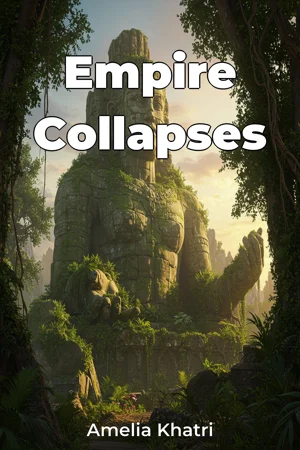
Why do empires, seemingly invincible at their zenith, inevitably crumble? "Empire Collapses" delves into this enduring question, examining the intricate web of internal and external forces that have triggered the decline of some of history's most formidable powers, and tracing their profound consequences on the modern world. This book is not just a recitation of historical events; it is an investigation into the universal patterns of imperial rise and fall, providing insights applicable across cultures and eras. The central argument of "Empire Collapses" is that no single factor accounts for imperial decline. Instead, it is the convergence of vulnerabilities – economic instability, social fragmentation, political corruption, environmental pressures, and military overreach – coupled with external challenges such as barbarian migrations, rival empires, and resource scarcity, that ultimately leads to collapse. Understanding this interplay is crucial for comprehending not only the past but also the potential trajectories of contemporary nations. This book is structured to provide a comprehensive analysis of imperial downfall. Part one lays the groundwork by establishing a framework for analyzing empires, defining key terms, and outlining the common characteristics of imperial states. Part two constitutes the core of the book, featuring detailed case studies of several major empires throughout history, from the Roman Empire and the Mongol Empire to the Ottoman Empire and the Soviet Union. Each case study will analyze the specific internal stressors and external pressures that contributed to its decline. Part three then synthesizes these case studies, identifying recurring patterns and developing a model for understanding imperial collapse. Finally, the concluding section explores the lasting legacies of collapsed empires, focusing on their impact on modern political boundaries, cultural identities, and economic systems. The analysis presented here relies on a wide range of historical sources, including primary documents, archaeological evidence, and scholarly research. Unique insights are drawn from comparative analyses of imperial governance, military strategies, and economic policies. Moreover, the book incorporates interdisciplinary perspectives from economics, sociology, political science, and environmental history to provide a holistic understanding of imperial dynamics. "Empire Collapses" offers a unique perspective by emphasizing the interconnectedness of internal and external factors in shaping imperial trajectories. Rather than focusing solely on military defeats or economic crises, it examines how these factors interact with social, political, and environmental forces to create a perfect storm of collapse. Written in a clear and accessible style, "Empire Collapses" is intended for students of history, political science, and international relations, as well as anyone interested in understanding the dynamics of power, the fragility of empires, and the lessons of history for the challenges facing the world today. It addresses ongoing debates about the causes of imperial decline, offering a nuanced and evidence-based perspective. While the book examines a wide range of empires across different time periods and regions, it acknowledges the limitations of drawing direct parallels between historical empires and contemporary nation-states. However, it argues that the underlying principles of imperial dynamics remain relevant for understanding the challenges facing powerful nations today. Ultimately, "Empire Collapses" aims to inform readers about the subtle, often-overlooked forces that determine the rise and fall of empires, providing valuable insights for navigating the complexities of the 21st century.
Why do empires, seemingly invincible at their zenith, inevitably crumble? "Empire Collapses" delves into this enduring question, examining the intricate web of internal and external forces that have triggered the decline of some of history's most formidable powers, and tracing their profound consequences on the modern world. This book is not just a recitation of historical events; it is an investigation into the universal patterns of imperial rise and fall, providing insights applicable across cultures and eras. The central argument of "Empire Collapses" is that no single factor accounts for imperial decline. Instead, it is the convergence of vulnerabilities – economic instability, social fragmentation, political corruption, environmental pressures, and military overreach – coupled with external challenges such as barbarian migrations, rival empires, and resource scarcity, that ultimately leads to collapse. Understanding this interplay is crucial for comprehending not only the past but also the potential trajectories of contemporary nations. This book is structured to provide a comprehensive analysis of imperial downfall. Part one lays the groundwork by establishing a framework for analyzing empires, defining key terms, and outlining the common characteristics of imperial states. Part two constitutes the core of the book, featuring detailed case studies of several major empires throughout history, from the Roman Empire and the Mongol Empire to the Ottoman Empire and the Soviet Union. Each case study will analyze the specific internal stressors and external pressures that contributed to its decline. Part three then synthesizes these case studies, identifying recurring patterns and developing a model for understanding imperial collapse. Finally, the concluding section explores the lasting legacies of collapsed empires, focusing on their impact on modern political boundaries, cultural identities, and economic systems. The analysis presented here relies on a wide range of historical sources, including primary documents, archaeological evidence, and scholarly research. Unique insights are drawn from comparative analyses of imperial governance, military strategies, and economic policies. Moreover, the book incorporates interdisciplinary perspectives from economics, sociology, political science, and environmental history to provide a holistic understanding of imperial dynamics. "Empire Collapses" offers a unique perspective by emphasizing the interconnectedness of internal and external factors in shaping imperial trajectories. Rather than focusing solely on military defeats or economic crises, it examines how these factors interact with social, political, and environmental forces to create a perfect storm of collapse. Written in a clear and accessible style, "Empire Collapses" is intended for students of history, political science, and international relations, as well as anyone interested in understanding the dynamics of power, the fragility of empires, and the lessons of history for the challenges facing the world today. It addresses ongoing debates about the causes of imperial decline, offering a nuanced and evidence-based perspective. While the book examines a wide range of empires across different time periods and regions, it acknowledges the limitations of drawing direct parallels between historical empires and contemporary nation-states. However, it argues that the underlying principles of imperial dynamics remain relevant for understanding the challenges facing powerful nations today. Ultimately, "Empire Collapses" aims to inform readers about the subtle, often-overlooked forces that determine the rise and fall of empires, providing valuable insights for navigating the complexities of the 21st century.
"Empire Collapses" explores why even the mightiest empires eventually fall, examining the intertwined internal and external factors that lead to their decline. It argues that imperial collapse isn't due to a single cause, but a convergence of vulnerabilities like economic instability, political corruption, and military overreach, combined with external pressures. The book highlights intriguing facts, such as how social fragmentation within an empire can be just as destructive as external invasions, and how environmental pressures can exacerbate existing tensions, contributing to the ultimate downfall. The book progresses systematically, first establishing a framework for analyzing empires before diving into detailed case studies, including the Roman Empire, the Mongol Empire, the Ottoman Empire, and the Soviet Union. By comparing these historical collapses, the author identifies recurring patterns and develops a model for understanding imperial dynamics. The analysis draws from diverse historical sources and incorporates interdisciplinary perspectives, offering a unique and interconnected view of the rise and fall of empires, useful for understanding world history and our modern world.
Book Details
ISBN
9788235274984
Publisher
Publifye AS
Your Licenses
You don't own any licenses for this book
Purchase a license below to unlock this book and download the EPUB.
Purchase License
Select a tier to unlock this book
Need bulk licensing?
Contact us for enterprise agreements.