
About This Book
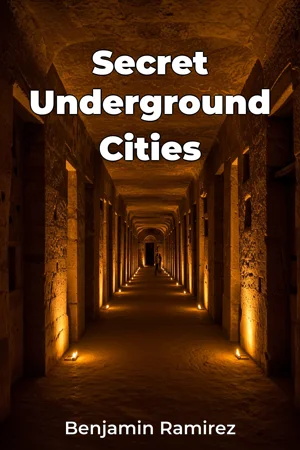
Have you ever wondered what lies beneath our feet? "Secret Underground Cities" unveils a hidden world of subterranean structures, tunnels, and shelters crafted throughout history, often shrouded in mystery and largely unknown to the general public. This book explores the architectural ingenuity and historical context of these underground spaces, revealing their purpose, construction, and enduring legacy. This book delves into two key areas: first, the diverse range of underground constructions, from ancient dwellings and storage facilities to elaborate wartime bunkers and clandestine transportation networks. Second, it examines the societal factors that drove their creation, including defense, resource management, and religious practices. Understanding these subterranean worlds offers a unique perspective on human history and our relationship with the environment. Throughout the ages, people have sought refuge and opportunity below ground. Natural caves offered initial shelter, while later civilizations engineered intricate networks to store food, escape persecution, or wage war. The book will explore specific historical periods and geographic regions, highlighting how differing needs and technological advancements shaped underground architecture. A basic understanding of architectural principles and historical timelines will enhance the reader's comprehension. The central argument of "Secret Underground Cities" is that underground constructions reflect deeper societal needs, fears, and aspirations. These subterranean spaces are not merely functional structures; they are physical manifestations of human ingenuity and adaptability in the face of environmental challenges and social unrest. Understanding these underground worlds provides critical insight into humanity's past. The book is structured to progressively reveal the subject matter. It begins with an introduction to the fundamental concepts of underground architecture, including design principles, construction techniques, and environmental considerations. Subsequent sections explore various types of underground structures across different historical periods, such as the catacombs of Rome, the cave dwellings of Cappadocia, and the Cold War bunkers of Europe. The book culminates in a discussion of the contemporary relevance of underground space, examining innovative uses for subterranean construction in the 21st century, including data centers, transportation systems, and sustainable living environments. The book's arguments are supported by a wide range of evidence, including archaeological findings, architectural plans, historical documents, and geological surveys. Unique data sources, such as previously unpublished blueprints and firsthand accounts from explorers and historians, are incorporated to provide fresh insights. "Secret Underground Cities" also connects to various fields of study, including archaeology, anthropology, and urban planning. The architectural designs provide insights into past cultures, while the social motivations behind their construction shed light on human behavior, and the urban planning considerations highlight the potential for developing sustainable underground spaces in contemporary cities. What sets this book apart is its interdisciplinary approach, combining architectural analysis with historical context and social commentary. It moves beyond simply describing the physical attributes of underground structures to explore their cultural significance and practical implications. The book is written in a clear, accessible style, suitable for both general readers and enthusiasts of architecture, history, and urban studies. Its target audience includes anyone interested in learning more about the hidden world beneath our feet and the ingenuity of past civilizations. As a work of non-fiction, "Secret Underground Cities" is committed to presenting factual information, supported by credible sources and balanced analysis. While the book aims to be comprehensive, it acknowledges the limitations of existing research and focuses on the most well-documented examples of underground construction. The information presented in "Secret Underground Cities" has practical applications for architects, urban planners, and policymakers interested in developing sustainable and resilient urban environments. By examining past examples of underground construction, we can gain valuable insights into how to create innovative and functional subterranean spaces in the future. While the benefits of underground construction are widely recognized, debates persist regarding its environmental impact, economic viability, and social acceptance. The book addresses these controversies by presenting a balanced perspective, acknowledging both the advantages and disadvantages of utilizing underground space.
Have you ever wondered what lies beneath our feet? "Secret Underground Cities" unveils a hidden world of subterranean structures, tunnels, and shelters crafted throughout history, often shrouded in mystery and largely unknown to the general public. This book explores the architectural ingenuity and historical context of these underground spaces, revealing their purpose, construction, and enduring legacy. This book delves into two key areas: first, the diverse range of underground constructions, from ancient dwellings and storage facilities to elaborate wartime bunkers and clandestine transportation networks. Second, it examines the societal factors that drove their creation, including defense, resource management, and religious practices. Understanding these subterranean worlds offers a unique perspective on human history and our relationship with the environment. Throughout the ages, people have sought refuge and opportunity below ground. Natural caves offered initial shelter, while later civilizations engineered intricate networks to store food, escape persecution, or wage war. The book will explore specific historical periods and geographic regions, highlighting how differing needs and technological advancements shaped underground architecture. A basic understanding of architectural principles and historical timelines will enhance the reader's comprehension. The central argument of "Secret Underground Cities" is that underground constructions reflect deeper societal needs, fears, and aspirations. These subterranean spaces are not merely functional structures; they are physical manifestations of human ingenuity and adaptability in the face of environmental challenges and social unrest. Understanding these underground worlds provides critical insight into humanity's past. The book is structured to progressively reveal the subject matter. It begins with an introduction to the fundamental concepts of underground architecture, including design principles, construction techniques, and environmental considerations. Subsequent sections explore various types of underground structures across different historical periods, such as the catacombs of Rome, the cave dwellings of Cappadocia, and the Cold War bunkers of Europe. The book culminates in a discussion of the contemporary relevance of underground space, examining innovative uses for subterranean construction in the 21st century, including data centers, transportation systems, and sustainable living environments. The book's arguments are supported by a wide range of evidence, including archaeological findings, architectural plans, historical documents, and geological surveys. Unique data sources, such as previously unpublished blueprints and firsthand accounts from explorers and historians, are incorporated to provide fresh insights. "Secret Underground Cities" also connects to various fields of study, including archaeology, anthropology, and urban planning. The architectural designs provide insights into past cultures, while the social motivations behind their construction shed light on human behavior, and the urban planning considerations highlight the potential for developing sustainable underground spaces in contemporary cities. What sets this book apart is its interdisciplinary approach, combining architectural analysis with historical context and social commentary. It moves beyond simply describing the physical attributes of underground structures to explore their cultural significance and practical implications. The book is written in a clear, accessible style, suitable for both general readers and enthusiasts of architecture, history, and urban studies. Its target audience includes anyone interested in learning more about the hidden world beneath our feet and the ingenuity of past civilizations. As a work of non-fiction, "Secret Underground Cities" is committed to presenting factual information, supported by credible sources and balanced analysis. While the book aims to be comprehensive, it acknowledges the limitations of existing research and focuses on the most well-documented examples of underground construction. The information presented in "Secret Underground Cities" has practical applications for architects, urban planners, and policymakers interested in developing sustainable and resilient urban environments. By examining past examples of underground construction, we can gain valuable insights into how to create innovative and functional subterranean spaces in the future. While the benefits of underground construction are widely recognized, debates persist regarding its environmental impact, economic viability, and social acceptance. The book addresses these controversies by presenting a balanced perspective, acknowledging both the advantages and disadvantages of utilizing underground space.
"Secret Underground Cities" explores the fascinating world of subterranean architecture, revealing hidden structures built throughout history. From ancient dwellings to wartime bunkers, these underground spaces reflect human ingenuity and our complex relationship with the environment. Discover how civilizations utilized underground construction for defense, resource management, and even religious practices, showcasing architectural marvels often hidden from plain sight. The book examines various types of underground structures across different historical periods, such as the catacombs of Rome and the cave dwellings of Cappadocia. These examples illustrate how differing societal needs and technological advancements shaped subterranean architecture. What makes this book unique is its interdisciplinary approach, combining architectural analysis with historical context and social commentary, supported by archaeological findings and historical documents. This exploration progresses chapter by chapter, starting with fundamental design principles and construction techniques of underground architecture. It culminates in a discussion of contemporary uses for subterranean construction, examining innovative applications for data centers, transportation systems, and sustainable living. Ultimately, "Secret Underground Cities" argues that these underground constructions reflect deeper societal needs, fears, and aspirations.
Book Details
ISBN
9788235274885
Publisher
Publifye AS
Your Licenses
You don't own any licenses for this book
Purchase a license below to unlock this book and download the EPUB.
Purchase License
Select a tier to unlock this book
Need bulk licensing?
Contact us for enterprise agreements.