
About This Book
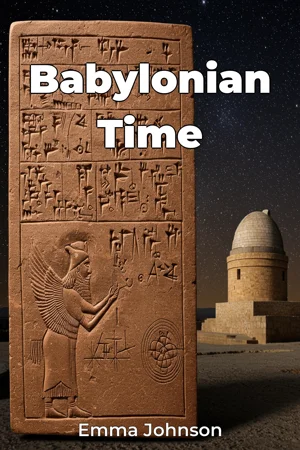
Have you ever wondered how our modern methods of tracking time were conceived? "Babylonian Time" unveils the sophisticated mathematical and astronomical systems developed in ancient Mesopotamia, demonstrating their profound influence on the world’s calendar systems and timekeeping practices. This book explores the Babylonian’s ingenious methods of predicting eclipses and shaping our perception of time today. This book focuses on three central themes: the development of the Babylonian sexagesimal number system and its application to astronomical calculations, their meticulous observations and record-keeping that enabled eclipse prediction, and the lasting legacy of Babylonian timekeeping on subsequent cultures, including the Greeks and ultimately our own. Understanding these topics is crucial because they reveal the foundations upon which much of our scientific and calendrical knowledge is built. Without the Babylonian’s pioneering efforts, our perception and measurement of time—essential for everything from agriculture to astrophysics—would be drastically different. To fully appreciate the Babylonian achievements, the book provides a crucial historical context, detailing the social and political structure of ancient Mesopotamia, the role of priests and scribes in astronomical observation, and the importance of agriculture and religious festivals in shaping their calendar. Readers do not need a background in mathematics or astronomy; the book explains fundamental concepts in an accessible manner, while also providing necessary scientific background on celestial mechanics. The central argument of "Babylonian Time" is that Babylonian astronomy and mathematics, particularly regarding timekeeping, represent a critical turning point in human intellectual history. Their innovations were not merely isolated discoveries but a systematic approach to understanding the cosmos and organizing human life in relation to it. This argument is important because it challenges the Eurocentric view of scientific progress and highlights the essential contributions of Mesopotamian civilization. The book begins by introducing the intellectual landscape of ancient Babylon and detailing the emergence of their number system and astronomical practices. It then develops its arguments through the subsequent sections: a) A detailed examination of Babylonian mathematical techniques used for predicting eclipses. b) An exploration of their calendar systems and how they were used to regulate agricultural cycles and religious observances. c) An analysis of how Babylonian astronomical knowledge was transmitted to other cultures, influencing Greek astronomy and, eventually, modern timekeeping. The culmination of the book argues that the echoes of Babylonian thought are still audible in our daily lives. The evidence presented comes from translations of cuneiform tablets containing mathematical calculations, astronomical observations, and calendar records and includes cross-referencing with archaeological findings and interpretations from modern scholars of Assyriology and the history of science. The book also examines how these findings are supported by modern astrophysical calculations, validating the accuracy of some Babylonian predictions. "Babylonian Time" also connects to several interdisciplinary fields. Firstly, it links to the history of mathematics by demonstrating the practical applications of the Babylonian sexagesimal system. Secondly, it interfaces with archaeology and Assyriology through the analysis of cuneiform texts and material culture. Thirdly, it relates to cultural studies by exploring how Babylonian timekeeping influenced religious beliefs and social structures. This book adopts a fact-based, analytical approach, presenting historical and scientific information in a clear and concise manner. While academic rigor is maintained, the writing style is accessible to a broad audience interested in history, science, and ancient cultures. "Babylonian Time" is written for anyone interested in the history of science, mathematics, astronomy, and ancient civilizations, particularly those curious about the origins of our modern systems of timekeeping. It would be valuable to students, researchers, and general readers seeking a deeper understanding of the intellectual achievements of ancient Mesopotamia. As a work of history, "Babylonian Time" presents a factual account of past events, adhering to scholarly standards of evidence and interpretation. It delves into subjects and expectations common among historical world studies. While the book provides a comprehensive overview of Babylonian timekeeping, its scope is intentionally limited to this specific area of Mesopotamian science. It does not attempt to cover all aspects of Babylonian culture but focuses on astronomy and mathematics. The knowledge gained from "Babylonian Time" can be applied to understanding the historical roots of modern technology, appreciating the diversity of scientific traditions, and developing a more nuanced perspective on the history of human intellectual achievement. It provides a framework for understanding the development of mathematics and astronomy and their continued relevance in our technological age.
Have you ever wondered how our modern methods of tracking time were conceived? "Babylonian Time" unveils the sophisticated mathematical and astronomical systems developed in ancient Mesopotamia, demonstrating their profound influence on the world’s calendar systems and timekeeping practices. This book explores the Babylonian’s ingenious methods of predicting eclipses and shaping our perception of time today. This book focuses on three central themes: the development of the Babylonian sexagesimal number system and its application to astronomical calculations, their meticulous observations and record-keeping that enabled eclipse prediction, and the lasting legacy of Babylonian timekeeping on subsequent cultures, including the Greeks and ultimately our own. Understanding these topics is crucial because they reveal the foundations upon which much of our scientific and calendrical knowledge is built. Without the Babylonian’s pioneering efforts, our perception and measurement of time—essential for everything from agriculture to astrophysics—would be drastically different. To fully appreciate the Babylonian achievements, the book provides a crucial historical context, detailing the social and political structure of ancient Mesopotamia, the role of priests and scribes in astronomical observation, and the importance of agriculture and religious festivals in shaping their calendar. Readers do not need a background in mathematics or astronomy; the book explains fundamental concepts in an accessible manner, while also providing necessary scientific background on celestial mechanics. The central argument of "Babylonian Time" is that Babylonian astronomy and mathematics, particularly regarding timekeeping, represent a critical turning point in human intellectual history. Their innovations were not merely isolated discoveries but a systematic approach to understanding the cosmos and organizing human life in relation to it. This argument is important because it challenges the Eurocentric view of scientific progress and highlights the essential contributions of Mesopotamian civilization. The book begins by introducing the intellectual landscape of ancient Babylon and detailing the emergence of their number system and astronomical practices. It then develops its arguments through the subsequent sections: a) A detailed examination of Babylonian mathematical techniques used for predicting eclipses. b) An exploration of their calendar systems and how they were used to regulate agricultural cycles and religious observances. c) An analysis of how Babylonian astronomical knowledge was transmitted to other cultures, influencing Greek astronomy and, eventually, modern timekeeping. The culmination of the book argues that the echoes of Babylonian thought are still audible in our daily lives. The evidence presented comes from translations of cuneiform tablets containing mathematical calculations, astronomical observations, and calendar records and includes cross-referencing with archaeological findings and interpretations from modern scholars of Assyriology and the history of science. The book also examines how these findings are supported by modern astrophysical calculations, validating the accuracy of some Babylonian predictions. "Babylonian Time" also connects to several interdisciplinary fields. Firstly, it links to the history of mathematics by demonstrating the practical applications of the Babylonian sexagesimal system. Secondly, it interfaces with archaeology and Assyriology through the analysis of cuneiform texts and material culture. Thirdly, it relates to cultural studies by exploring how Babylonian timekeeping influenced religious beliefs and social structures. This book adopts a fact-based, analytical approach, presenting historical and scientific information in a clear and concise manner. While academic rigor is maintained, the writing style is accessible to a broad audience interested in history, science, and ancient cultures. "Babylonian Time" is written for anyone interested in the history of science, mathematics, astronomy, and ancient civilizations, particularly those curious about the origins of our modern systems of timekeeping. It would be valuable to students, researchers, and general readers seeking a deeper understanding of the intellectual achievements of ancient Mesopotamia. As a work of history, "Babylonian Time" presents a factual account of past events, adhering to scholarly standards of evidence and interpretation. It delves into subjects and expectations common among historical world studies. While the book provides a comprehensive overview of Babylonian timekeeping, its scope is intentionally limited to this specific area of Mesopotamian science. It does not attempt to cover all aspects of Babylonian culture but focuses on astronomy and mathematics. The knowledge gained from "Babylonian Time" can be applied to understanding the historical roots of modern technology, appreciating the diversity of scientific traditions, and developing a more nuanced perspective on the history of human intellectual achievement. It provides a framework for understanding the development of mathematics and astronomy and their continued relevance in our technological age.
"Babylonian Time" explores the origins of our modern timekeeping methods, revealing the sophisticated astronomical and mathematical systems of ancient Mesopotamia. It details how the Babylonians ingeniously predicted eclipses and shaped our perception of time. The book highlights the development and application of their sexagesimal system, a base-60 number system, which influenced everything from measuring angles to dividing time into hours, minutes, and seconds – a legacy still present today. It further shows how meticulous observations, recorded on cuneiform tablets, enabled these predictions and advanced their calendar systems. The book provides historical context, explaining the social and political structure of ancient Mesopotamia and the role of priests and scribes in astronomical observation. It progresses by examining Babylonian mathematical techniques for predicting eclipses, exploring their calendar systems used to regulate agricultural cycles and religious observances, and analyzing the transmission of Babylonian astronomical knowledge to other cultures, including the Greeks. By examining cuneiform texts and archaeological findings, "Babylonian Time" demonstrates how echoes of Babylonian thought are still audible in our daily lives.
Book Details
ISBN
9788235274847
Publisher
Publifye AS
Your Licenses
You don't own any licenses for this book
Purchase a license below to unlock this book and download the EPUB.
Purchase License
Select a tier to unlock this book
Need bulk licensing?
Contact us for enterprise agreements.