
About This Book
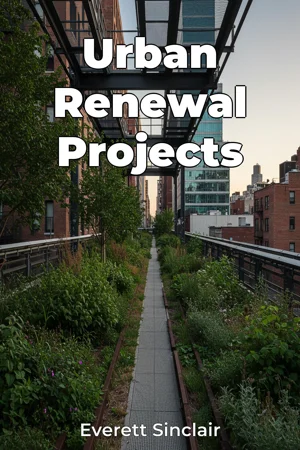
Can innovative design truly breathe new life into forgotten urban spaces, or are revitalization projects merely cosmetic interventions? "Urban Renewal Projects" delves into the complex world of urban revitalization, examining both the triumphs and failures of efforts to rejuvenate declining areas. This book focuses on two key elements: the pivotal role of architectural design in shaping urban renewal outcomes and the critical importance of historical context in understanding the long-term impacts of these projects. It analyzes how specific architectural interventions, like the celebrated High Line in New York City, have influenced urban landscapes, communities, and economies, while also exploring the broader historical forces that have driven urban decay and the subsequent need for renewal. Understanding the processes and consequences of urban renewal requires acknowledging that it is not a new phenomenon. Throughout history, cities have experienced periods of decline and subsequent efforts at revitalization. The book provides a historical overview of urban renewal movements, tracing their evolution from early 20th-century slum clearance initiatives to contemporary green infrastructure projects. This historical context helps readers understand the recurring patterns, persistent challenges, and shifting priorities that have characterized urban renewal efforts across different eras and cultural contexts. The central argument of "Urban Renewal Projects" is that truly successful urban revitalization requires a holistic approach that integrates innovative architectural design with a deep understanding of the social, economic, and historical forces that have shaped the urban environment. It emphasizes that revitalization projects must be carefully planned and executed to avoid unintended consequences, such as displacement of residents or the erasure of cultural heritage. The book is structured to provide a comprehensive exploration of this argument. It begins by introducing the core concepts of urban renewal, architectural design, and historical analysis. This section establishes a theoretical framework for understanding the complexities of urban revitalization. The following sections delve into specific case studies, examining a range of urban renewal projects from around the world. Each case study analyzes the architectural design of the project, its historical context, and its social, economic, and environmental impacts. A significant portion focuses on New York's High Line, detailing its transformation from abandoned railway to iconic public space, while also exploring the ripple effects on surrounding neighborhoods. The case studies are chosen to represent a diverse range of approaches to urban renewal, including green infrastructure projects, mixed-use developments, and historic preservation initiatives. The book culminates in a synthesis of the lessons learned from these case studies, offering practical recommendations for policymakers, urban planners, and architects involved in urban revitalization. The research presented in "Urban Renewal Projects" draws on a variety of sources, including architectural plans, historical documents, census data, and ethnographic studies. It includes original interviews with architects, urban planners, community members, and policymakers involved in urban renewal projects. The book also utilizes GIS mapping to analyze the spatial distribution of urban decay and the impact of revitalization projects on land use patterns. This interdisciplinary approach connects architectural design with fields such as urban planning, history, and sociology, to provide a more complete picture of the urban renewal process. "Urban Renewal Projects" distinguishes itself by its emphasis on the interplay between architectural design and historical context. It offers a nuanced perspective on the challenges and opportunities of urban revitalization, avoiding simplistic narratives of success or failure. The book is written in an accessible style, making it suitable for a broad audience, including students, professionals, and anyone interested in the future of cities. It provides valuable insights for urban planners, architects, policymakers, and community advocates seeking to create more vibrant, equitable, and sustainable urban environments. While the book covers a broad range of urban renewal projects, it focuses primarily on examples from North America and Europe, acknowledging that urban renewal processes may vary significantly in other parts of the world. This focus allows for a more in-depth analysis of the specific historical and cultural contexts that have shaped urban revitalization in these regions. The information presented is designed to be applied practically in various contexts, offering guidance on community engagement, sustainable design, and equitable development. The book also touches on ongoing debates surrounding gentrification, displacement, and the role of public art in urban revitalization, encouraging critical reflection on the ethical implications of these projects.
Can innovative design truly breathe new life into forgotten urban spaces, or are revitalization projects merely cosmetic interventions? "Urban Renewal Projects" delves into the complex world of urban revitalization, examining both the triumphs and failures of efforts to rejuvenate declining areas. This book focuses on two key elements: the pivotal role of architectural design in shaping urban renewal outcomes and the critical importance of historical context in understanding the long-term impacts of these projects. It analyzes how specific architectural interventions, like the celebrated High Line in New York City, have influenced urban landscapes, communities, and economies, while also exploring the broader historical forces that have driven urban decay and the subsequent need for renewal. Understanding the processes and consequences of urban renewal requires acknowledging that it is not a new phenomenon. Throughout history, cities have experienced periods of decline and subsequent efforts at revitalization. The book provides a historical overview of urban renewal movements, tracing their evolution from early 20th-century slum clearance initiatives to contemporary green infrastructure projects. This historical context helps readers understand the recurring patterns, persistent challenges, and shifting priorities that have characterized urban renewal efforts across different eras and cultural contexts. The central argument of "Urban Renewal Projects" is that truly successful urban revitalization requires a holistic approach that integrates innovative architectural design with a deep understanding of the social, economic, and historical forces that have shaped the urban environment. It emphasizes that revitalization projects must be carefully planned and executed to avoid unintended consequences, such as displacement of residents or the erasure of cultural heritage. The book is structured to provide a comprehensive exploration of this argument. It begins by introducing the core concepts of urban renewal, architectural design, and historical analysis. This section establishes a theoretical framework for understanding the complexities of urban revitalization. The following sections delve into specific case studies, examining a range of urban renewal projects from around the world. Each case study analyzes the architectural design of the project, its historical context, and its social, economic, and environmental impacts. A significant portion focuses on New York's High Line, detailing its transformation from abandoned railway to iconic public space, while also exploring the ripple effects on surrounding neighborhoods. The case studies are chosen to represent a diverse range of approaches to urban renewal, including green infrastructure projects, mixed-use developments, and historic preservation initiatives. The book culminates in a synthesis of the lessons learned from these case studies, offering practical recommendations for policymakers, urban planners, and architects involved in urban revitalization. The research presented in "Urban Renewal Projects" draws on a variety of sources, including architectural plans, historical documents, census data, and ethnographic studies. It includes original interviews with architects, urban planners, community members, and policymakers involved in urban renewal projects. The book also utilizes GIS mapping to analyze the spatial distribution of urban decay and the impact of revitalization projects on land use patterns. This interdisciplinary approach connects architectural design with fields such as urban planning, history, and sociology, to provide a more complete picture of the urban renewal process. "Urban Renewal Projects" distinguishes itself by its emphasis on the interplay between architectural design and historical context. It offers a nuanced perspective on the challenges and opportunities of urban revitalization, avoiding simplistic narratives of success or failure. The book is written in an accessible style, making it suitable for a broad audience, including students, professionals, and anyone interested in the future of cities. It provides valuable insights for urban planners, architects, policymakers, and community advocates seeking to create more vibrant, equitable, and sustainable urban environments. While the book covers a broad range of urban renewal projects, it focuses primarily on examples from North America and Europe, acknowledging that urban renewal processes may vary significantly in other parts of the world. This focus allows for a more in-depth analysis of the specific historical and cultural contexts that have shaped urban revitalization in these regions. The information presented is designed to be applied practically in various contexts, offering guidance on community engagement, sustainable design, and equitable development. The book also touches on ongoing debates surrounding gentrification, displacement, and the role of public art in urban revitalization, encouraging critical reflection on the ethical implications of these projects.
"Urban Renewal Projects" explores the intricate dynamics of revitalizing urban spaces, focusing on the crucial roles of architectural design and historical context. It examines how architectural interventions shape urban landscapes and communities, while also considering the historical forces driving urban decay and the need for renewal. For instance, the book details how green infrastructure projects aim to create sustainable urban environments. The book uses diverse case studies to examine a range of urban renewal projects, including the High Line in New York City, analyzing their architectural design, historical context, and socio-economic impacts. By tracing urban renewal movements from early slum clearance to contemporary initiatives, the book illuminates recurring patterns and challenges. It emphasizes a holistic approach, integrating design with an understanding of social, economic, and historical forces. Through its interdisciplinary research and accessible style, "Urban Renewal Projects" offers insights for policymakers, urban planners, and architects involved in urban revitalization. It progresses by first introducing core concepts, then delving into case studies, and culminating in practical recommendations, providing a nuanced perspective on the challenges and opportunities of creating equitable and sustainable urban environments.
Book Details
ISBN
9788235274281
Publisher
Publifye AS
Your Licenses
You don't own any licenses for this book
Purchase a license below to unlock this book and download the EPUB.
Purchase License
Select a tier to unlock this book
Need bulk licensing?
Contact us for enterprise agreements.