
About This Book
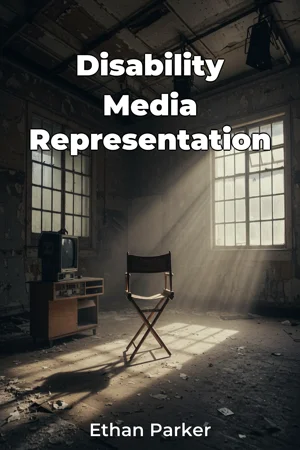
How does media shape our understanding and perception of disability? This book, *Disability Media Representation*, delves into the multifaceted portrayal of disability across both mainstream and independent media platforms, examining its profound influence on public attitudes and societal perceptions. We explore the complex interplay of biases, breakthroughs, and the ongoing evolution of disability narratives within film, television, and other media forms. This exploration is critical because media representations serve as a primary source of information and imagery for many regarding disability. These portrayals can either perpetuate harmful stereotypes, reinforce ableist ideologies, or, conversely, promote understanding, empathy, and social inclusion. The book investigates how media contributes to either the marginalization or empowerment of disabled individuals. It addresses the historical backdrop of disability representation, tracing its evolution from stereotypical depictions rooted in pity or fear to more nuanced and complex portrayals that reflect the diverse experiences of disabled people. A basic understanding of media studies, sociology, and disability studies is helpful but not essential for engaging with the book’s content. The central argument of this book is that media representations of disability, while gradually improving, continue to be fraught with challenges, demanding critical analysis and advocacy for more authentic and inclusive narratives. This argument underscores the importance of media literacy and its potential to foster a more equitable and just society for disabled individuals. The book unfolds in a structured manner. It begins by introducing fundamental concepts in disability studies and media theory, laying the groundwork for subsequent analyses. The core chapters then focus on key themes: the perpetuation of common stereotypes (e.g., the tragic victim, the supercrip), the impact of these stereotypes on public perceptions and self-identity, and the emergence of more authentic and empowering narratives in independent media. Further chapters analyze the role of disabled media makers and activists in challenging dominant representations and advocating for change within the industry. The book culminates in a discussion of the practical implications of more inclusive media portrayals, proposing strategies for media professionals, disability advocates, and educators. The analysis is supported by a diverse range of evidence, including content analysis of films and television shows, interviews with disabled actors and filmmakers, and surveys of audience perceptions. The book draws on academic research from media studies, disability studies, and sociology, as well as insights from disability advocacy organizations. *Disability Media Representation* bridges connections with several related fields, including sociology (examining the social construction of disability), psychology (analyzing the impact of media portrayals on self-esteem and mental health), and education (promoting media literacy and critical thinking skills). These interdisciplinary connections enrich the analysis and provide a more holistic understanding of the topic. This book distinguishes itself by examining both mainstream and independent media, offering a comparative analysis of their respective approaches to disability representation. The book also provides an analysis of the economic and political factors that influence media production and distribution, and how these factors can either enable or constrain the representation of disability. Written in an accessible and engaging style, *Disability Media Representation* is intended for a broad audience, including students, academics, media professionals, disability advocates, and anyone interested in media’s role in shaping social attitudes. It is particularly relevant for courses in media studies, disability studies, sociology, and communication. The book aligns with the conventions of academic non-fiction, offering a rigorous but accessible analysis of relevant issues. While the book provides a comprehensive overview of disability media representation, its scope is intentionally limited to film and television, with less emphasis on other media forms, such as print journalism or social media. Despite this limitation, the insights offered provide a valuable framework for analyzing disability representation across diverse media platforms. The insights presented can be applied by educators seeking to promote media literacy, by media professionals striving to create more inclusive content, and by disability advocates working to challenge harmful stereotypes and promote positive representation. The book engages with ongoing debates about the ethics of representation, exploring contentious issues such as the casting of non-disabled actors in disabled roles, the use of disability as a plot device, and the potential for positive stereotypes to be just as harmful as negative ones.
How does media shape our understanding and perception of disability? This book, *Disability Media Representation*, delves into the multifaceted portrayal of disability across both mainstream and independent media platforms, examining its profound influence on public attitudes and societal perceptions. We explore the complex interplay of biases, breakthroughs, and the ongoing evolution of disability narratives within film, television, and other media forms. This exploration is critical because media representations serve as a primary source of information and imagery for many regarding disability. These portrayals can either perpetuate harmful stereotypes, reinforce ableist ideologies, or, conversely, promote understanding, empathy, and social inclusion. The book investigates how media contributes to either the marginalization or empowerment of disabled individuals. It addresses the historical backdrop of disability representation, tracing its evolution from stereotypical depictions rooted in pity or fear to more nuanced and complex portrayals that reflect the diverse experiences of disabled people. A basic understanding of media studies, sociology, and disability studies is helpful but not essential for engaging with the book’s content. The central argument of this book is that media representations of disability, while gradually improving, continue to be fraught with challenges, demanding critical analysis and advocacy for more authentic and inclusive narratives. This argument underscores the importance of media literacy and its potential to foster a more equitable and just society for disabled individuals. The book unfolds in a structured manner. It begins by introducing fundamental concepts in disability studies and media theory, laying the groundwork for subsequent analyses. The core chapters then focus on key themes: the perpetuation of common stereotypes (e.g., the tragic victim, the supercrip), the impact of these stereotypes on public perceptions and self-identity, and the emergence of more authentic and empowering narratives in independent media. Further chapters analyze the role of disabled media makers and activists in challenging dominant representations and advocating for change within the industry. The book culminates in a discussion of the practical implications of more inclusive media portrayals, proposing strategies for media professionals, disability advocates, and educators. The analysis is supported by a diverse range of evidence, including content analysis of films and television shows, interviews with disabled actors and filmmakers, and surveys of audience perceptions. The book draws on academic research from media studies, disability studies, and sociology, as well as insights from disability advocacy organizations. *Disability Media Representation* bridges connections with several related fields, including sociology (examining the social construction of disability), psychology (analyzing the impact of media portrayals on self-esteem and mental health), and education (promoting media literacy and critical thinking skills). These interdisciplinary connections enrich the analysis and provide a more holistic understanding of the topic. This book distinguishes itself by examining both mainstream and independent media, offering a comparative analysis of their respective approaches to disability representation. The book also provides an analysis of the economic and political factors that influence media production and distribution, and how these factors can either enable or constrain the representation of disability. Written in an accessible and engaging style, *Disability Media Representation* is intended for a broad audience, including students, academics, media professionals, disability advocates, and anyone interested in media’s role in shaping social attitudes. It is particularly relevant for courses in media studies, disability studies, sociology, and communication. The book aligns with the conventions of academic non-fiction, offering a rigorous but accessible analysis of relevant issues. While the book provides a comprehensive overview of disability media representation, its scope is intentionally limited to film and television, with less emphasis on other media forms, such as print journalism or social media. Despite this limitation, the insights offered provide a valuable framework for analyzing disability representation across diverse media platforms. The insights presented can be applied by educators seeking to promote media literacy, by media professionals striving to create more inclusive content, and by disability advocates working to challenge harmful stereotypes and promote positive representation. The book engages with ongoing debates about the ethics of representation, exploring contentious issues such as the casting of non-disabled actors in disabled roles, the use of disability as a plot device, and the potential for positive stereotypes to be just as harmful as negative ones.
"Disability Media Representation" explores how film and television shape our understanding of disability, impacting social perceptions and inclusion. Media often serves as a primary source of information, influencing public attitudes either by perpetuating harmful stereotypes or fostering empathy. Historically, portrayals leaned towards pity or fear, but more nuanced narratives are emerging. The book critically analyzes these representations, advocating for authentic and inclusive storytelling. The book begins with core concepts in disability and media studies before exploring key themes like the "tragic victim" and "supercrip" stereotypes. It examines the impact of these stereotypes on both public perception and self-identity, contrasting them with empowering narratives found in independent media. Finally, it discusses strategies for media professionals, disability advocates, and educators to promote more inclusive portrayals. This approach allows readers to understand the evolution and current state of disability representation in media.
Book Details
ISBN
9788235274076
Publisher
Publifye AS
Your Licenses
You don't own any licenses for this book
Purchase a license below to unlock this book and download the EPUB.
Purchase License
Select a tier to unlock this book
Need bulk licensing?
Contact us for enterprise agreements.