
About This Book
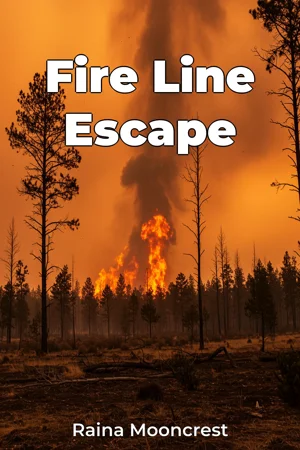
Can you outsmart a wildfire? *Fire Line Escape* delves into the critical science and strategy needed to survive when confronted by advancing wildfire fronts in forests and dry plains. This book navigates the complex interplay of fire behavior, environmental factors, and human decision-making, providing readers with practical knowledge to enhance their safety and survival prospects. Two key concepts form the bedrock of wildfire survival: understanding fire behavior and interpreting environmental cues. Fire behavior encompasses how wildfires ignite, spread, and interact with various fuels and terrains. This understanding is crucial for predicting a fire's movement and intensity. Environmental cues, such as wind direction, burn patterns, and terrain features, offer vital clues about a fire's immediate and future trajectory, enabling informed escape or survival strategies. These topics are important not only for seasoned firefighters and wilderness professionals but also for recreational hikers, residents of fire-prone areas, and anyone seeking a deeper understanding of natural disasters. *Fire Line Escape* meticulously examines the science of backfires, the direction of prevailing winds, and the interpretation of burn patterns as critical navigational tools. Backfires, intentionally set fires used to consume fuel in the path of an oncoming wildfire, can create safe zones if executed correctly and understood thoroughly. Wind direction dictates the primary path of fire spread, making it essential to identify and anticipate shifts. Burn patterns, the mosaic of burned and unburned areas left in a fire's wake, reveal valuable information about fire intensity, spread rate, and potential escape routes. The main argument of *Fire Line Escape* is that a comprehensive understanding of wildfire behavior, coupled with the ability to interpret environmental indicators, significantly increases the chances of survival during a wildfire event. This book provides the knowledge to move from being a passive victim to an informed individual capable of making life-saving decisions. The book begins by introducing fundamental wildfire concepts, explaining the fire triangle (fuel, oxygen, heat) and the factors influencing fire spread. It then develops these ideas through chapters dedicated to: 1. **Understanding Fire Dynamics:** A detailed exploration of how weather, topography, and fuel types interact to determine fire behavior. 2. **Wind's Influence:** An in-depth analysis of wind patterns, including local winds, thermal winds, and the impact of wind shifts on wildfire direction. 3. **Deciphering Burn Patterns:** A practical guide to reading burn patterns, identifying safe zones, and predicting future fire movement based on observable evidence. Culminating, the book synthesizes these elements into practical survival strategies, including route selection, shelter construction, and communication techniques. It concludes with real-world case studies illustrating both successful escapes and tragic outcomes where a lack of knowledge proved fatal. The evidence presented is drawn from fire science research, historical accounts of wildfires, and interviews with experienced wildland firefighters. Unique data sources include detailed fire progression maps, weather data analyses, and first-hand accounts from survivors. *Fire Line Escape* connects to several interdisciplinary fields, including meteorology (understanding weather patterns), geography (analyzing terrain and spatial relationships), and psychology (examining decision-making under stress). These connections enhance the book's argument by providing a holistic understanding of the factors contributing to wildfire survival. The book offers a practical approach to wildfire survival, departing from purely theoretical discussions and grounding its advice in real-world scenarios and actionable strategies. The tone is informative and accessible, balancing scientific accuracy with clear, understandable language. The intended audience includes outdoor enthusiasts, hikers, campers, residents of wildfire-prone areas, and professionals in fields such as forestry, search and rescue, and emergency management. This book will be valuable to them by providing essential knowledge and skills to mitigate risk and enhance survival prospects. Adhering to the conventions of the Earth Sciences Geography and Nature genres, *Fire Line Escape* utilizes scientific terminology precisely, supports claims with evidence, and includes detailed illustrations and diagrams to enhance understanding. The book focuses specifically on escape and survival strategies related to wildfire fronts, acknowledging that other aspects of wildfire management, such as prevention and suppression, fall outside its scope. The book's information enables the reader to apply its lessons in emergency situations, like informing evacuation plans or choosing the safest route away from a fire. While the book presents comprehensive strategies, it acknowledges that every wildfire situation is unique, and no single approach guarantees survival. The information aims to equip readers with the knowledge to make informed decisions, adapting their strategies to specific circumstances. *Fire Line Escape* addresses ongoing debates surrounding wildfire management, including the role of prescribed burns, the effectiveness of different suppression techniques, and the impact of climate change on wildfire frequency and intensity. It does not take a definitive stance on these issues but rather provides readers with the information needed to form their own opinions.
Can you outsmart a wildfire? *Fire Line Escape* delves into the critical science and strategy needed to survive when confronted by advancing wildfire fronts in forests and dry plains. This book navigates the complex interplay of fire behavior, environmental factors, and human decision-making, providing readers with practical knowledge to enhance their safety and survival prospects. Two key concepts form the bedrock of wildfire survival: understanding fire behavior and interpreting environmental cues. Fire behavior encompasses how wildfires ignite, spread, and interact with various fuels and terrains. This understanding is crucial for predicting a fire's movement and intensity. Environmental cues, such as wind direction, burn patterns, and terrain features, offer vital clues about a fire's immediate and future trajectory, enabling informed escape or survival strategies. These topics are important not only for seasoned firefighters and wilderness professionals but also for recreational hikers, residents of fire-prone areas, and anyone seeking a deeper understanding of natural disasters. *Fire Line Escape* meticulously examines the science of backfires, the direction of prevailing winds, and the interpretation of burn patterns as critical navigational tools. Backfires, intentionally set fires used to consume fuel in the path of an oncoming wildfire, can create safe zones if executed correctly and understood thoroughly. Wind direction dictates the primary path of fire spread, making it essential to identify and anticipate shifts. Burn patterns, the mosaic of burned and unburned areas left in a fire's wake, reveal valuable information about fire intensity, spread rate, and potential escape routes. The main argument of *Fire Line Escape* is that a comprehensive understanding of wildfire behavior, coupled with the ability to interpret environmental indicators, significantly increases the chances of survival during a wildfire event. This book provides the knowledge to move from being a passive victim to an informed individual capable of making life-saving decisions. The book begins by introducing fundamental wildfire concepts, explaining the fire triangle (fuel, oxygen, heat) and the factors influencing fire spread. It then develops these ideas through chapters dedicated to: 1. **Understanding Fire Dynamics:** A detailed exploration of how weather, topography, and fuel types interact to determine fire behavior. 2. **Wind's Influence:** An in-depth analysis of wind patterns, including local winds, thermal winds, and the impact of wind shifts on wildfire direction. 3. **Deciphering Burn Patterns:** A practical guide to reading burn patterns, identifying safe zones, and predicting future fire movement based on observable evidence. Culminating, the book synthesizes these elements into practical survival strategies, including route selection, shelter construction, and communication techniques. It concludes with real-world case studies illustrating both successful escapes and tragic outcomes where a lack of knowledge proved fatal. The evidence presented is drawn from fire science research, historical accounts of wildfires, and interviews with experienced wildland firefighters. Unique data sources include detailed fire progression maps, weather data analyses, and first-hand accounts from survivors. *Fire Line Escape* connects to several interdisciplinary fields, including meteorology (understanding weather patterns), geography (analyzing terrain and spatial relationships), and psychology (examining decision-making under stress). These connections enhance the book's argument by providing a holistic understanding of the factors contributing to wildfire survival. The book offers a practical approach to wildfire survival, departing from purely theoretical discussions and grounding its advice in real-world scenarios and actionable strategies. The tone is informative and accessible, balancing scientific accuracy with clear, understandable language. The intended audience includes outdoor enthusiasts, hikers, campers, residents of wildfire-prone areas, and professionals in fields such as forestry, search and rescue, and emergency management. This book will be valuable to them by providing essential knowledge and skills to mitigate risk and enhance survival prospects. Adhering to the conventions of the Earth Sciences Geography and Nature genres, *Fire Line Escape* utilizes scientific terminology precisely, supports claims with evidence, and includes detailed illustrations and diagrams to enhance understanding. The book focuses specifically on escape and survival strategies related to wildfire fronts, acknowledging that other aspects of wildfire management, such as prevention and suppression, fall outside its scope. The book's information enables the reader to apply its lessons in emergency situations, like informing evacuation plans or choosing the safest route away from a fire. While the book presents comprehensive strategies, it acknowledges that every wildfire situation is unique, and no single approach guarantees survival. The information aims to equip readers with the knowledge to make informed decisions, adapting their strategies to specific circumstances. *Fire Line Escape* addresses ongoing debates surrounding wildfire management, including the role of prescribed burns, the effectiveness of different suppression techniques, and the impact of climate change on wildfire frequency and intensity. It does not take a definitive stance on these issues but rather provides readers with the information needed to form their own opinions.
"Fire Line Escape" provides critical knowledge for surviving wildfires by teaching readers to understand fire behavior and interpret environmental cues. This Earth Sciences Geography and Nature focused book emphasizes practical skills over theory, using real-world scenarios to explain complex fire dynamics. For example, understanding wind direction is crucial, as wildfires spread most rapidly with the wind, and burn patterns can reveal safer zones within a burned area. The book uniquely prepares readers to make informed decisions during a wildfire. It begins by covering fundamental concepts such as the fire triangle and factors influencing fire spread. Then, it progresses through understanding fire dynamics, analyzing wind influences, and deciphering burn patterns. Ultimately, these elements are synthesized into practical survival strategies, including route selection and shelter construction. This book is valuable for hikers, residents of fire-prone areas, and professionals alike. It arms them with essential knowledge to mitigate risk during wildfires. By explaining fire science in accessible language, "Fire Line Escape" transforms passive bystanders into informed individuals capable of making life-saving decisions by understanding wildfire survival.
Book Details
ISBN
9788235273963
Publisher
Publifye AS
Your Licenses
You don't own any licenses for this book
Purchase a license below to unlock this book and download the EPUB.
Purchase License
Select a tier to unlock this book
Need bulk licensing?
Contact us for enterprise agreements.