
About This Book
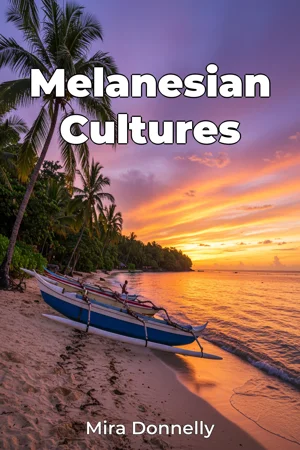
What if the vibrant tapestry of human culture were being subtly rewoven, thread by thread, by the forces of globalization? "Melanesian Cultures" delves into the heart of Melanesia, a region encompassing islands from Papua New Guinea to Fiji, to explore its astonishing cultural diversity, the rich traditions that define its people, and the profound impact of external forces on these unique societies. This book examines three primary themes: the kaleidoscopic array of Melanesian cultures and languages, the historical forces of colonialism that have shaped them, and the contemporary pressures of globalization reshaping their identities and lifestyles. Understanding these elements is crucial for anyone seeking to grasp the complexities of cultural resilience, adaptation, and change in the face of increasingly interconnected world. To fully appreciate the present state of Melanesian societies, we must acknowledge the region's deep history. The book will begin with a brief overview of Melanesia's pre-colonial past, including migration patterns, the development of distinct social structures, and the evolution of its hundreds of languages with their varied linguistic families. The central argument of "Melanesian Cultures" is that while colonialism and globalization have undeniably brought significant changes to Melanesia, the people of this region have demonstrated remarkable agency in adapting, resisting, and ultimately shaping their own futures. This is not a story of passive victims, but of active participants navigating complex historical and contemporary landscapes. The book's structure unfolds as follows: First, it defines Melanesia geographically and culturally, introducing key concepts such as "kastom" (traditional culture) and the significance of kinship systems. Second, it explores the colonial era, analyzing the impact of European powers on Melanesian societies. This section will examine the introduction of new economic systems, the disruption of traditional governance structures, and the spread of Christianity and its influence on indigenous beliefs. Third, the book turns to globalization, investigating its impact on Melanesian economies, the spread of new technologies, and the challenges of maintaining cultural identity in an era of global flows. The book concludes by discussing the future of Melanesian cultures, considering the challenges and opportunities that lie ahead. The arguments presented in "Melanesian Cultures" are supported by a range of evidence, including ethnographic studies, historical documents, linguistic analyses, and contemporary case studies. The book draws on both classic anthropological works and the latest research in the field. "Melanesian Cultures" connects to several other fields of study including anthropology, linguistics, postcolonial studies, and development studies. Anthropology provides tools for understanding cultural diversity; linguistics sheds light on the evolution and preservation of languages; postcolonial studies helps us examine the legacies of colonialism; and development studies offers insights into the challenges of economic and social change. This book offers a holistic perspective, recognizing the interconnectedness of cultural, historical, economic, and political factors in shaping the lives of Melanesian peoples. It aims to present a balanced and nuanced view, acknowledging both the challenges and the opportunities that these communities face. The book is written in an accessible style, suitable for undergraduate students, researchers, and anyone with an interest in cultural diversity and globalization. It avoids jargon and provides clear explanations of complex concepts. The target audience includes students in anthropology, sociology, history, and related fields, as well as general readers interested in learning more about Melanesia. The book offers valuable insights into the challenges of cultural preservation, the impacts of globalization, and the resilience of indigenous communities. As a work of history and social science, “Melanesian Cultures” relies on factual accuracy, rigorous analysis, and a balanced presentation of different perspectives. While the book attempts to cover the breadth of Melanesian cultures, it recognizes the vastness of the region and the limitations of any single study. It is designed to provoke thought, stimulate discussion, and inspire further research. Ultimately, "Melanesian Cultures" illustrates how the forces of globalization play out in this unique part of the world. By understanding the intricacies of Melanesian societies, we gain a deeper appreciation of the human capacity to adapt and thrive in an ever-changing world.
What if the vibrant tapestry of human culture were being subtly rewoven, thread by thread, by the forces of globalization? "Melanesian Cultures" delves into the heart of Melanesia, a region encompassing islands from Papua New Guinea to Fiji, to explore its astonishing cultural diversity, the rich traditions that define its people, and the profound impact of external forces on these unique societies. This book examines three primary themes: the kaleidoscopic array of Melanesian cultures and languages, the historical forces of colonialism that have shaped them, and the contemporary pressures of globalization reshaping their identities and lifestyles. Understanding these elements is crucial for anyone seeking to grasp the complexities of cultural resilience, adaptation, and change in the face of increasingly interconnected world. To fully appreciate the present state of Melanesian societies, we must acknowledge the region's deep history. The book will begin with a brief overview of Melanesia's pre-colonial past, including migration patterns, the development of distinct social structures, and the evolution of its hundreds of languages with their varied linguistic families. The central argument of "Melanesian Cultures" is that while colonialism and globalization have undeniably brought significant changes to Melanesia, the people of this region have demonstrated remarkable agency in adapting, resisting, and ultimately shaping their own futures. This is not a story of passive victims, but of active participants navigating complex historical and contemporary landscapes. The book's structure unfolds as follows: First, it defines Melanesia geographically and culturally, introducing key concepts such as "kastom" (traditional culture) and the significance of kinship systems. Second, it explores the colonial era, analyzing the impact of European powers on Melanesian societies. This section will examine the introduction of new economic systems, the disruption of traditional governance structures, and the spread of Christianity and its influence on indigenous beliefs. Third, the book turns to globalization, investigating its impact on Melanesian economies, the spread of new technologies, and the challenges of maintaining cultural identity in an era of global flows. The book concludes by discussing the future of Melanesian cultures, considering the challenges and opportunities that lie ahead. The arguments presented in "Melanesian Cultures" are supported by a range of evidence, including ethnographic studies, historical documents, linguistic analyses, and contemporary case studies. The book draws on both classic anthropological works and the latest research in the field. "Melanesian Cultures" connects to several other fields of study including anthropology, linguistics, postcolonial studies, and development studies. Anthropology provides tools for understanding cultural diversity; linguistics sheds light on the evolution and preservation of languages; postcolonial studies helps us examine the legacies of colonialism; and development studies offers insights into the challenges of economic and social change. This book offers a holistic perspective, recognizing the interconnectedness of cultural, historical, economic, and political factors in shaping the lives of Melanesian peoples. It aims to present a balanced and nuanced view, acknowledging both the challenges and the opportunities that these communities face. The book is written in an accessible style, suitable for undergraduate students, researchers, and anyone with an interest in cultural diversity and globalization. It avoids jargon and provides clear explanations of complex concepts. The target audience includes students in anthropology, sociology, history, and related fields, as well as general readers interested in learning more about Melanesia. The book offers valuable insights into the challenges of cultural preservation, the impacts of globalization, and the resilience of indigenous communities. As a work of history and social science, “Melanesian Cultures” relies on factual accuracy, rigorous analysis, and a balanced presentation of different perspectives. While the book attempts to cover the breadth of Melanesian cultures, it recognizes the vastness of the region and the limitations of any single study. It is designed to provoke thought, stimulate discussion, and inspire further research. Ultimately, "Melanesian Cultures" illustrates how the forces of globalization play out in this unique part of the world. By understanding the intricacies of Melanesian societies, we gain a deeper appreciation of the human capacity to adapt and thrive in an ever-changing world.
"Melanesian Cultures" explores the dynamic interplay between tradition and change in Melanesia, a region celebrated for its astonishing cultural diversity. It examines how colonialism and globalization have impacted these unique societies, significantly reshaping identities and lifestyles. The book highlights the remarkable resilience of Melanesian people, who, despite external pressures, actively adapt and shape their own futures, rather than being passive recipients of global forces. The book delves into the historical forces of colonialism and the contemporary pressures of globalization, recognizing that these elements are crucial for understanding cultural resilience within Melanesia. For example, the concept of "kastom," or traditional culture, plays a vital role in maintaining identity amidst social change. Understanding kinship systems is also critical, as they underpin social structures and influence how communities navigate globalization. Presenting a balanced and nuanced view, "Melanesian Cultures" starts by defining Melanesia geographically and culturally. It then progresses through the colonial era and the impact of European powers, before turning to globalization and its impact. The book draws on ethnographic studies and historical documents to support its arguments, offering valuable insights into cultural preservation and the resilience of indigenous communities in the face of an interconnected world.
Book Details
ISBN
9788235273871
Publisher
Publifye AS
Your Licenses
You don't own any licenses for this book
Purchase a license below to unlock this book and download the EPUB.
Purchase License
Select a tier to unlock this book
Need bulk licensing?
Contact us for enterprise agreements.