
About This Book
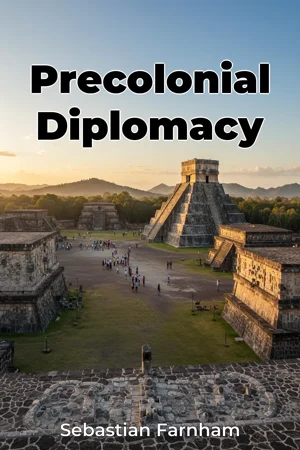
How did indigenous nations across the Americas govern themselves before European contact? *Precolonial Diplomacy* unveils the sophisticated political systems employed by indigenous societies to negotiate alliances, maintain peace, and resolve disputes. This book challenges the conventional narrative that often overlooks or diminishes the complex political structures of pre-Columbian civilizations, demonstrating their capacity for intricate diplomacy and governance. Two central topics drive the book's analysis: the diverse methods of alliance-building, ranging from kinship-based pacts to formalized treaties; and the mechanisms employed for conflict resolution, including mediation, arbitration, and ritualized warfare. These topics are vital because understanding precolonial political systems provides a more complete and accurate depiction of history, dismantling Eurocentric biases and offering valuable insights into alternative models of governance. To fully appreciate these indigenous political systems, it's crucial to understand the historical and social context in which they developed. Prior to 1492, the Americas were not a political vacuum. Diverse nations, each with its own unique culture, language, and social structure, had already established intricate systems of governance. A basic understanding of anthropological concepts like kinship, reciprocity, and social stratification is helpful for the reader. The central argument of *Precolonial Diplomacy* is that indigenous nations possessed sophisticated and effective political systems characterized by adaptability, resilience, and a deep understanding of human relationships. These systems were not simply rudimentary forms of governance, but rather nuanced and dynamic frameworks that allowed societies to thrive for centuries. The significance of this argument lies in its potential to reshape our understanding of history and to inform contemporary approaches to diplomacy and conflict resolution. The book progresses by first introducing the core concepts of indigenous diplomacy, focusing on key terminology and theoretical frameworks. Next, it delves into specific case studies, detailing the diplomatic practices of several significant indigenous nations in North, Central, and South America. These chapters explore alliance strategies, peace negotiations, and dispute resolution methods, highlighting the diversity and ingenuity of indigenous political thought. The argument culminates in a comparative analysis, drawing out common themes and highlighting the unique characteristics of different regional systems. Finally, the book examines the legacy of precolonial diplomacy and its relevance to contemporary global politics. Evidence is drawn from a variety of sources, including archaeological records, oral histories, early colonial accounts (analyzed critically for bias), and ethnohistorical studies. The research utilizes interdisciplinary methodologies that combine historical analysis with anthropological and political science perspectives. *Precolonial Diplomacy* connects to other fields by exploring the intersection of history and political science, examining the role of culture in shaping political institutions and offering a fresh perspective on international relations theory. It also connects to legal studies by analyzing concepts of indigenous law and treaty-making. This book offers a unique perspective by centering indigenous voices and knowledge, challenging colonial narratives, and presenting a nuanced understanding of precolonial political systems. It avoids romanticizing the past, instead offering a balanced and critical assessment of these complex societies. Written in an accessible yet scholarly tone, the book aims to engage both academic and general audiences. It is designed for students and scholars of history, political science, anthropology, and indigenous studies, as well as anyone interested in understanding the complexities of precolonial societies. As a work of history and political science, the book adheres to the genre conventions of rigorous sourcing, critical analysis, and balanced interpretation. However, it also incorporates narrative elements to bring the past to life and make the subject matter more engaging. The scope of the book is limited to the Americas before European colonization. While comparative examples from other parts of the world may be referenced, the primary focus is on the diverse range of indigenous nations across the Western Hemisphere. Readers can apply the insights from this book to contemporary challenges such as conflict resolution, treaty negotiations, and nation-building. Understanding the principles of indigenous diplomacy can inform more equitable and sustainable approaches to governance in the 21st century. The field of indigenous history is not without its controversies. This book addresses ongoing debates about the accuracy and interpretation of historical sources, acknowledging the complexities and biases inherent in the historical record. It also engages with debates about the legacy of colonialism and its impact on indigenous political systems.
How did indigenous nations across the Americas govern themselves before European contact? *Precolonial Diplomacy* unveils the sophisticated political systems employed by indigenous societies to negotiate alliances, maintain peace, and resolve disputes. This book challenges the conventional narrative that often overlooks or diminishes the complex political structures of pre-Columbian civilizations, demonstrating their capacity for intricate diplomacy and governance. Two central topics drive the book's analysis: the diverse methods of alliance-building, ranging from kinship-based pacts to formalized treaties; and the mechanisms employed for conflict resolution, including mediation, arbitration, and ritualized warfare. These topics are vital because understanding precolonial political systems provides a more complete and accurate depiction of history, dismantling Eurocentric biases and offering valuable insights into alternative models of governance. To fully appreciate these indigenous political systems, it's crucial to understand the historical and social context in which they developed. Prior to 1492, the Americas were not a political vacuum. Diverse nations, each with its own unique culture, language, and social structure, had already established intricate systems of governance. A basic understanding of anthropological concepts like kinship, reciprocity, and social stratification is helpful for the reader. The central argument of *Precolonial Diplomacy* is that indigenous nations possessed sophisticated and effective political systems characterized by adaptability, resilience, and a deep understanding of human relationships. These systems were not simply rudimentary forms of governance, but rather nuanced and dynamic frameworks that allowed societies to thrive for centuries. The significance of this argument lies in its potential to reshape our understanding of history and to inform contemporary approaches to diplomacy and conflict resolution. The book progresses by first introducing the core concepts of indigenous diplomacy, focusing on key terminology and theoretical frameworks. Next, it delves into specific case studies, detailing the diplomatic practices of several significant indigenous nations in North, Central, and South America. These chapters explore alliance strategies, peace negotiations, and dispute resolution methods, highlighting the diversity and ingenuity of indigenous political thought. The argument culminates in a comparative analysis, drawing out common themes and highlighting the unique characteristics of different regional systems. Finally, the book examines the legacy of precolonial diplomacy and its relevance to contemporary global politics. Evidence is drawn from a variety of sources, including archaeological records, oral histories, early colonial accounts (analyzed critically for bias), and ethnohistorical studies. The research utilizes interdisciplinary methodologies that combine historical analysis with anthropological and political science perspectives. *Precolonial Diplomacy* connects to other fields by exploring the intersection of history and political science, examining the role of culture in shaping political institutions and offering a fresh perspective on international relations theory. It also connects to legal studies by analyzing concepts of indigenous law and treaty-making. This book offers a unique perspective by centering indigenous voices and knowledge, challenging colonial narratives, and presenting a nuanced understanding of precolonial political systems. It avoids romanticizing the past, instead offering a balanced and critical assessment of these complex societies. Written in an accessible yet scholarly tone, the book aims to engage both academic and general audiences. It is designed for students and scholars of history, political science, anthropology, and indigenous studies, as well as anyone interested in understanding the complexities of precolonial societies. As a work of history and political science, the book adheres to the genre conventions of rigorous sourcing, critical analysis, and balanced interpretation. However, it also incorporates narrative elements to bring the past to life and make the subject matter more engaging. The scope of the book is limited to the Americas before European colonization. While comparative examples from other parts of the world may be referenced, the primary focus is on the diverse range of indigenous nations across the Western Hemisphere. Readers can apply the insights from this book to contemporary challenges such as conflict resolution, treaty negotiations, and nation-building. Understanding the principles of indigenous diplomacy can inform more equitable and sustainable approaches to governance in the 21st century. The field of indigenous history is not without its controversies. This book addresses ongoing debates about the accuracy and interpretation of historical sources, acknowledging the complexities and biases inherent in the historical record. It also engages with debates about the legacy of colonialism and its impact on indigenous political systems.
"Precolonial Diplomacy" explores the sophisticated political systems of Indigenous nations in the Americas before European contact. Challenging Eurocentric views, the book reveals intricate methods of alliance-building, from kinship-based pacts to formal treaties, and diverse mechanisms for conflict resolution, such as mediation and ritualized warfare. Understanding these pre-Columbian civilizations provides a more accurate depiction of history, highlighting their capacity for governance. The book argues that Indigenous nations possessed adaptable and resilient political systems rooted in a deep understanding of human relationships. For instance, precolonial diplomacy involved complex negotiations and strategies that maintained peace and order across vast territories. "Precolonial Diplomacy" progresses by first introducing core concepts and terminology, then delving into case studies of specific Indigenous nations in North, Central, and South America, and concludes with a comparative analysis and a discussion of the legacy of precolonial diplomacy.
Book Details
ISBN
9788235273857
Publisher
Publifye AS
Your Licenses
You don't own any licenses for this book
Purchase a license below to unlock this book and download the EPUB.
Purchase License
Select a tier to unlock this book
Need bulk licensing?
Contact us for enterprise agreements.