
About This Book
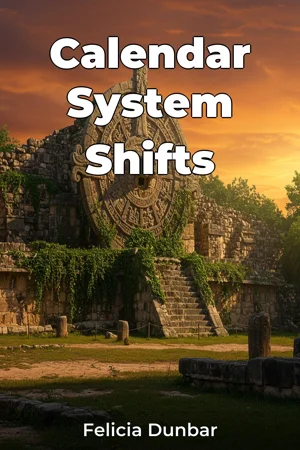
Have you ever considered how profoundly arbitrary, yet universally binding, our measurement of time truly is? "Calendar System Shifts" delves into the fascinating evolution of timekeeping, exploring how different civilizations have structured their calendars and the wide-ranging consequences of these choices. This book is important because it reveals that calendars are not merely neutral tools for tracking days, but rather systems deeply embedded in cultural, religious, and political power structures. The book examines two key topics: (1) the astronomical observations that formed the basis for early calendars and (2) the societal and political ramifications of calendar reforms. Understanding these intricacies illuminates how timekeeping has shaped everything from agricultural practices and religious observances to political legitimacy and international relations. To fully appreciate the complexities of calendar systems, we provide essential background on basic astronomy, including the cycles of the sun, moon, and stars. We also explore the historical development of mathematics and its impact on accurately measuring time. We highlight that calendars, while rooted in the natural world, are ultimately human constructs designed to serve specific purposes. The central argument of "Calendar System Shifts" is that calendar reforms are rarely, if ever, purely technical adjustments. Instead, they represent deliberate attempts to consolidate power, redefine social norms, or promote specific ideological agendas. This argument is vital because it challenges the often-unquestioned authority of our current timekeeping systems, revealing the human intentions behind their creation and perpetuation. The book is structured as follows: a) We begin by introducing fundamental astronomical concepts and the principles of early timekeeping. b) Next, we analyze several major calendar systems, including the Egyptian, Mayan, Julian, Gregorian, and French Republican calendars. For each, we examine their astronomical basis, their adoption and use, and the social and political contexts surrounding any reforms. c) The book culminates with a discussion of the implications of standardized global time and the challenges of reconciling cultural and scientific approaches to timekeeping. d) Finally, we explore practical applications of understanding calendar systems, such as predicting future calendar reforms and appreciating the diverse temporal perspectives of different cultures. Our analysis is supported by a wide range of evidence, including archaeological findings, historical documents, astronomical records, and comparative analyses of different calendar systems. We draw on original source materials, such as ancient astronomical texts and official decrees related to calendar reforms. "Calendar System Shifts" connects to several other fields of study. It intersects with astronomy, providing a historical perspective on the development of astronomical knowledge. It also relates to anthropology, exploring how different cultures perceive and structure time. Finally, it links to political science, examining the ways in which calendars have been used as tools of governance and social control. This book offers a unique perspective by viewing calendar reforms not simply as improvements in accuracy but as strategic decisions with profound social and political consequences. The tone of the book is academic yet accessible, aiming to engage both scholars and general readers interested in the history of science and culture. The target audience includes students and scholars in history, science, and anthropology, as well as anyone curious about the origins and implications of our modern timekeeping systems. This book will be valuable to them because it provides a comprehensive and interdisciplinary analysis of a topic that is often taken for granted. As a work of history and science, the book adheres to the conventions of scholarly research, including rigorous documentation, clear argumentation, and critical analysis of sources. The scope of the book is limited to major calendar systems that have significantly influenced world history. While acknowledging the existence of countless local and regional calendars, we focus on those that have had lasting impact and provide illustrative examples. Understanding the information in this book can be applied to appreciating cultural differences, analyzing political rhetoric, and critically evaluating the assumptions underlying our modern worldview. The book also addresses ongoing debates about the standardization of global time and the challenges of reconciling scientific and cultural perspectives on timekeeping, offering a nuanced and informed perspective on these complex issues. "Calendar System Shifts" aims to provide a comprehensive and insightful exploration of a fundamental yet often overlooked aspect of human civilization.
Have you ever considered how profoundly arbitrary, yet universally binding, our measurement of time truly is? "Calendar System Shifts" delves into the fascinating evolution of timekeeping, exploring how different civilizations have structured their calendars and the wide-ranging consequences of these choices. This book is important because it reveals that calendars are not merely neutral tools for tracking days, but rather systems deeply embedded in cultural, religious, and political power structures. The book examines two key topics: (1) the astronomical observations that formed the basis for early calendars and (2) the societal and political ramifications of calendar reforms. Understanding these intricacies illuminates how timekeeping has shaped everything from agricultural practices and religious observances to political legitimacy and international relations. To fully appreciate the complexities of calendar systems, we provide essential background on basic astronomy, including the cycles of the sun, moon, and stars. We also explore the historical development of mathematics and its impact on accurately measuring time. We highlight that calendars, while rooted in the natural world, are ultimately human constructs designed to serve specific purposes. The central argument of "Calendar System Shifts" is that calendar reforms are rarely, if ever, purely technical adjustments. Instead, they represent deliberate attempts to consolidate power, redefine social norms, or promote specific ideological agendas. This argument is vital because it challenges the often-unquestioned authority of our current timekeeping systems, revealing the human intentions behind their creation and perpetuation. The book is structured as follows: a) We begin by introducing fundamental astronomical concepts and the principles of early timekeeping. b) Next, we analyze several major calendar systems, including the Egyptian, Mayan, Julian, Gregorian, and French Republican calendars. For each, we examine their astronomical basis, their adoption and use, and the social and political contexts surrounding any reforms. c) The book culminates with a discussion of the implications of standardized global time and the challenges of reconciling cultural and scientific approaches to timekeeping. d) Finally, we explore practical applications of understanding calendar systems, such as predicting future calendar reforms and appreciating the diverse temporal perspectives of different cultures. Our analysis is supported by a wide range of evidence, including archaeological findings, historical documents, astronomical records, and comparative analyses of different calendar systems. We draw on original source materials, such as ancient astronomical texts and official decrees related to calendar reforms. "Calendar System Shifts" connects to several other fields of study. It intersects with astronomy, providing a historical perspective on the development of astronomical knowledge. It also relates to anthropology, exploring how different cultures perceive and structure time. Finally, it links to political science, examining the ways in which calendars have been used as tools of governance and social control. This book offers a unique perspective by viewing calendar reforms not simply as improvements in accuracy but as strategic decisions with profound social and political consequences. The tone of the book is academic yet accessible, aiming to engage both scholars and general readers interested in the history of science and culture. The target audience includes students and scholars in history, science, and anthropology, as well as anyone curious about the origins and implications of our modern timekeeping systems. This book will be valuable to them because it provides a comprehensive and interdisciplinary analysis of a topic that is often taken for granted. As a work of history and science, the book adheres to the conventions of scholarly research, including rigorous documentation, clear argumentation, and critical analysis of sources. The scope of the book is limited to major calendar systems that have significantly influenced world history. While acknowledging the existence of countless local and regional calendars, we focus on those that have had lasting impact and provide illustrative examples. Understanding the information in this book can be applied to appreciating cultural differences, analyzing political rhetoric, and critically evaluating the assumptions underlying our modern worldview. The book also addresses ongoing debates about the standardization of global time and the challenges of reconciling scientific and cultural perspectives on timekeeping, offering a nuanced and informed perspective on these complex issues. "Calendar System Shifts" aims to provide a comprehensive and insightful exploration of a fundamental yet often overlooked aspect of human civilization.
"Calendar System Shifts" explores the fascinating history of calendar systems, revealing how these methods of timekeeping are not simply neutral tools but are deeply intertwined with cultural, religious, and political power structures. Examining systems such as the Egyptian, Mayan, Julian, and Gregorian calendars, the book highlights how astronomical observations formed the basis for early calendars, influencing everything from agricultural practices to religious observances. Discover how calendar reforms often represent deliberate attempts to consolidate power or redefine social norms, challenging the authority of our current timekeeping methods. The book delves into the societal and political ramifications of calendar reforms, emphasizing that these shifts are rarely purely technical adjustments. By providing essential background on astronomy and the history of mathematics, "Calendar System Shifts" illustrates how calendars, while rooted in the natural world, are human constructs designed to serve specific purposes. The book progresses by introducing fundamental astronomical concepts, analyzing major calendar systems and their reforms, and culminating in a discussion of standardized global time and the challenges of reconciling cultural and scientific approaches to timekeeping. Through archaeological findings, historical documents, and astronomical records, the book offers a unique perspective by viewing calendar reforms as strategic decisions with profound social and political consequences. This interdisciplinary analysis connects to astronomy, anthropology, and political science, making it valuable for students, scholars, and anyone interested in the origins and implications of our modern timekeeping systems.
Book Details
ISBN
9788235273734
Publisher
Publifye AS
Your Licenses
You don't own any licenses for this book
Purchase a license below to unlock this book and download the EPUB.
Purchase License
Select a tier to unlock this book
Need bulk licensing?
Contact us for enterprise agreements.