
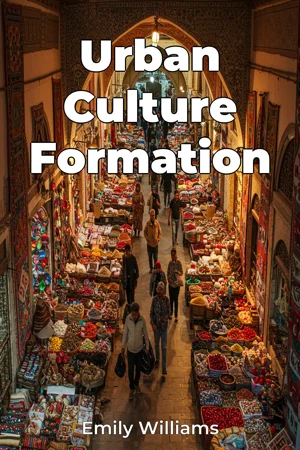
About This Book
How do movements of people transform the very fabric of our cities, creating new cultural landscapes and reshaping established social norms? "Urban Culture Formation" delves into the intricate relationship between migration and the evolution of urban identities. It examines the dynamic processes through which diverse cultures interact, adapt, and ultimately redefine the social, communal, and expressive character of urban environments. Understanding these processes is crucial in an increasingly globalized world, as cities become the primary sites of cultural mixing and innovation, yet also potential zones of social tension and inequality. This book addresses three core topics: the restructuring of social hierarchies in response to migration, the formation of new communities and social networks amongst migrant populations, and the transformation of cultural practices, including art, music, food, and language, within urban spaces. These topics are explored through the lens of historical and contemporary case studies, drawing from both qualitative and quantitative research methodologies. We begin by establishing a theoretical framework for understanding urban cultural dynamics, drawing upon sociological, anthropological, and historical perspectives. We explore key concepts such as assimilation, acculturation, hybridity, and transculturation, providing a nuanced understanding of how different cultures interact and influence one another. The historical context of migration patterns and urban development is also considered, examining how past waves of immigration have shaped the cultural landscape of cities over time. The central argument of this book is that migration is not simply a process of displacement and adaptation, but a powerful catalyst for cultural innovation and social transformation. It contends that the interaction between migrant and host cultures leads to the emergence of new hybrid forms of identity, community, and cultural expression that enrich the urban environment. This argument is vital because it challenges simplistic notions of cultural homogeneity and highlights the potential for diversity to foster creativity and progress. The book is structured in three main parts. Part I introduces the core concepts and theoretical frameworks. Part II examines the social dimensions of urban culture formation, focusing on the restructuring of social hierarchies, the formation of migrant communities, and the role of social networks in facilitating integration and cultural exchange. Part III explores the expressive dimensions of urban culture formation, examining the transformation of artistic, musical, culinary, and linguistic practices in urban spaces. The book culminates by considering the policy implications of these findings, offering insights into how cities can better manage diversity and promote inclusive urban development. The evidence presented in this book is drawn from a variety of sources, including historical archives, ethnographic fieldwork, surveys, and statistical data. We examine case studies of specific cities and migrant communities, providing in-depth analyses of the cultural dynamics at play. Unique data sources, such as oral histories and archival records of migrant organizations, are utilized to provide a rich and nuanced understanding of the lived experiences of migrants and their contributions to urban culture. This book connects to other fields of study, including sociology, anthropology, history, geography, urban planning, and cultural studies. It also draws upon insights from postcolonial theory and critical race theory to examine issues of power, inequality, and social justice in urban environments. These interdisciplinary connections enhance the book's argument by providing a more holistic and nuanced understanding of the complex processes of urban culture formation. A unique aspect of this book is its focus on the agency of migrants in shaping urban culture. It moves beyond traditional approaches that view migrants as passive recipients of dominant cultural norms, instead emphasizing their active role in creating new forms of identity, community, and cultural expression. The tone of this book is academic, but the writing style is accessible and engaging, making it suitable for a broad audience. The book is aimed at students, scholars, policymakers, and anyone interested in understanding the complex dynamics of urban culture and the role of migration in shaping our cities. It is particularly valuable for those working in fields such as urban planning, social work, and community development. As a work of social science and history, this book adheres to the conventions of academic research, including rigorous methodology, clear argumentation, and thorough documentation. The scope of the book is limited to the examination of urban culture formation in the context of migration, with a focus on the social and expressive dimensions of this process. The information presented in this book can be applied practically by urban planners, policymakers, and community organizations seeking to promote inclusive urban development and manage diversity effectively. It provides insights into how to foster social cohesion, support migrant integration, and celebrate the cultural contributions of diverse communities. The book addresses ongoing debates about the impact of migration on urban societies, including concerns about social fragmentation, cultural conflict, and the erosion of national identities. It offers a balanced and nuanced perspective on these issues, arguing that migration can be a source of both challenges and opportunities for urban environments.
How do movements of people transform the very fabric of our cities, creating new cultural landscapes and reshaping established social norms? "Urban Culture Formation" delves into the intricate relationship between migration and the evolution of urban identities. It examines the dynamic processes through which diverse cultures interact, adapt, and ultimately redefine the social, communal, and expressive character of urban environments. Understanding these processes is crucial in an increasingly globalized world, as cities become the primary sites of cultural mixing and innovation, yet also potential zones of social tension and inequality. This book addresses three core topics: the restructuring of social hierarchies in response to migration, the formation of new communities and social networks amongst migrant populations, and the transformation of cultural practices, including art, music, food, and language, within urban spaces. These topics are explored through the lens of historical and contemporary case studies, drawing from both qualitative and quantitative research methodologies. We begin by establishing a theoretical framework for understanding urban cultural dynamics, drawing upon sociological, anthropological, and historical perspectives. We explore key concepts such as assimilation, acculturation, hybridity, and transculturation, providing a nuanced understanding of how different cultures interact and influence one another. The historical context of migration patterns and urban development is also considered, examining how past waves of immigration have shaped the cultural landscape of cities over time. The central argument of this book is that migration is not simply a process of displacement and adaptation, but a powerful catalyst for cultural innovation and social transformation. It contends that the interaction between migrant and host cultures leads to the emergence of new hybrid forms of identity, community, and cultural expression that enrich the urban environment. This argument is vital because it challenges simplistic notions of cultural homogeneity and highlights the potential for diversity to foster creativity and progress. The book is structured in three main parts. Part I introduces the core concepts and theoretical frameworks. Part II examines the social dimensions of urban culture formation, focusing on the restructuring of social hierarchies, the formation of migrant communities, and the role of social networks in facilitating integration and cultural exchange. Part III explores the expressive dimensions of urban culture formation, examining the transformation of artistic, musical, culinary, and linguistic practices in urban spaces. The book culminates by considering the policy implications of these findings, offering insights into how cities can better manage diversity and promote inclusive urban development. The evidence presented in this book is drawn from a variety of sources, including historical archives, ethnographic fieldwork, surveys, and statistical data. We examine case studies of specific cities and migrant communities, providing in-depth analyses of the cultural dynamics at play. Unique data sources, such as oral histories and archival records of migrant organizations, are utilized to provide a rich and nuanced understanding of the lived experiences of migrants and their contributions to urban culture. This book connects to other fields of study, including sociology, anthropology, history, geography, urban planning, and cultural studies. It also draws upon insights from postcolonial theory and critical race theory to examine issues of power, inequality, and social justice in urban environments. These interdisciplinary connections enhance the book's argument by providing a more holistic and nuanced understanding of the complex processes of urban culture formation. A unique aspect of this book is its focus on the agency of migrants in shaping urban culture. It moves beyond traditional approaches that view migrants as passive recipients of dominant cultural norms, instead emphasizing their active role in creating new forms of identity, community, and cultural expression. The tone of this book is academic, but the writing style is accessible and engaging, making it suitable for a broad audience. The book is aimed at students, scholars, policymakers, and anyone interested in understanding the complex dynamics of urban culture and the role of migration in shaping our cities. It is particularly valuable for those working in fields such as urban planning, social work, and community development. As a work of social science and history, this book adheres to the conventions of academic research, including rigorous methodology, clear argumentation, and thorough documentation. The scope of the book is limited to the examination of urban culture formation in the context of migration, with a focus on the social and expressive dimensions of this process. The information presented in this book can be applied practically by urban planners, policymakers, and community organizations seeking to promote inclusive urban development and manage diversity effectively. It provides insights into how to foster social cohesion, support migrant integration, and celebrate the cultural contributions of diverse communities. The book addresses ongoing debates about the impact of migration on urban societies, including concerns about social fragmentation, cultural conflict, and the erosion of national identities. It offers a balanced and nuanced perspective on these issues, arguing that migration can be a source of both challenges and opportunities for urban environments.
"Urban Culture Formation" explores how migration reshapes cities, creating new cultural landscapes and influencing social norms. It examines the formation of urban identities through cultural interaction, adaptation, and the redefinition of social character. The book argues that migration is a catalyst for cultural innovation, leading to hybrid identities and expressions that enrich urban life. Did you know that migrant communities often restructure social hierarchies and establish new social networks, fundamentally altering the urban environment? The book's unique approach lies in emphasizing the agency of migrants in shaping urban culture, moving beyond traditional views of migrants as passive recipients. It is structured in three parts, starting with theoretical frameworks, then examining social dimensions like community formation, and finally exploring expressive dimensions such as art and language. Case studies and diverse data sources, including oral histories, support the analysis. This study is valuable for students, scholars, and policymakers interested in urban dynamics. It connects to sociology, anthropology, and history, among other fields. The book demonstrates how cities can better manage diversity and promote inclusive development by understanding the transformative power of migration.
Book Details
ISBN
9788235273659
Publisher
Publifye AS
Your Licenses
You don't own any licenses for this book
Purchase a license below to unlock this book and download the EPUB.
Purchase License
Select a tier to unlock this book
Need bulk licensing?
Contact us for enterprise agreements.