
About This Book
How can the survival strategies honed by nature's most resilient creatures revolutionize the way we approach insulation technology? *Bioinspired Insulation* delves into the fascinating world of biomimicry, exploring how the thermal regulation mechanisms of animals in extreme environments can inspire innovative and sustainable solutions for a wide range of applications. This book bridges the gap between biological research and engineering, offering a comprehensive overview of nature-inspired insulation materials and their potential to transform industries from construction and textiles to aerospace and medicine. The core topics investigated are the insulation strategies of polar animals, desert dwellers, and high-altitude species. These animals, facing relentless environmental pressures, have evolved sophisticated systems for retaining or dissipating heat. Understanding these natural designs provides insights into creating more efficient, adaptable, and eco-friendly insulation materials. The importance of these efforts lies in mitigating energy consumption, reducing carbon footprints, and developing technologies resilient to climate change. Throughout history, humans have sought inspiration from nature, but the systematic study and application of biological principles to insulation technology is a relatively recent development. The book will provide context by reviewing the history of insulation materials, from traditional methods like straw and animal hides to modern synthetics, highlighting their limitations and environmental impacts. Readers will benefit from a foundational understanding of thermodynamics and heat transfer principles. The central argument of *Bioinspired Insulation* is that a deeper understanding of natural insulation strategies offers a pathway to developing superior and sustainable insulation technologies. This argument's importance stems from the urgent need to address climate change and reduce reliance on non-renewable resources. Biomimicry presents a viable and often more efficient alternative to conventional engineering approaches. The book is structured to guide the reader through a logical progression of ideas. Part one introduces the concept of biomimicry and its application to material science, specifically focusing on insulation. Part two examines in detail the insulation strategies of various animals. Chapters will cover: a) Polar bear fur, exploring its unique structure and heat-trapping capabilities. b) Camel hair, analyzing its properties for desert survival and potential applications in arid climates. c) High-altitude animal adaptations, such as the dense plumage of mountain birds. Part three translates these biological insights into engineering principles. It discusses the design, fabrication, and testing of bioinspired insulation materials, including aerogels, bio-based foams, and smart textiles. The book culminates by exploring potential applications across various industries, addressing both the advantages and limitations of bioinspired insulation and considering future research directions. Evidence and research are drawn from diverse fields. The book presents data from biological studies on animal physiology, materials science research on the properties of natural and synthetic insulation, and engineering studies on the performance of bioinspired materials. Data sources will include peer-reviewed scientific articles, laboratory experiments, computer simulations, and field trials. Specifically, the book will reference thermal imaging analyses of animal coats and advanced microscopy of insulation structures. *Bioinspired Insulation* has interdisciplinary connections with several fields. It links to: a) Materials Science: Utilizing knowledge of material properties to replicate natural structures. b) Environmental Science: Emphasizing sustainability and reducing environmental impact. c) Engineering Design: Applying engineering principles to create practical insulation solutions. These connections enrich the book's argument by highlighting the multifaceted benefits of biomimicry. The book's unique approach lies in its emphasis on translating complex biological systems into tangible engineering designs. While existing literature often describes animal adaptations in isolation, this work integrates biological understanding with materials science and engineering to provide a practical guide for developing innovative insulation technologies. The tone is professional and informative, making complex scientific concepts accessible to a broad audience. The writing style combines clear explanations with engaging examples and illustrations. The target audience includes engineers, scientists, architects, designers, and students interested in biomimicry, materials science, and sustainable technologies. The book would be valuable to them as a comprehensive resource for understanding and applying bioinspired insulation principles. As a work in the genre of scientific non-fiction, it offers a rigorous and evidence-based exploration of its subject matter. The scope of the book is comprehensive, covering a wide range of animal insulation strategies and their potential applications. However, it focuses primarily on the scientific and engineering aspects of bioinspired insulation, with less emphasis on the economic or policy implications. The information can be applied in multiple ways. Readers can use the knowledge to: a) Design more efficient buildings and infrastructure. b) Develop advanced textiles for clothing and protective gear. c) Create innovative insulation solutions for aerospace and automotive industries. While the field of biomimicry is generally accepted, debates exist regarding the scalability and cost-effectiveness of bioinspired materials compared to traditional synthetics. The book acknowledges these debates, presenting a balanced perspective on the challenges and opportunities associated with bioinspired insulation.
How can the survival strategies honed by nature's most resilient creatures revolutionize the way we approach insulation technology? *Bioinspired Insulation* delves into the fascinating world of biomimicry, exploring how the thermal regulation mechanisms of animals in extreme environments can inspire innovative and sustainable solutions for a wide range of applications. This book bridges the gap between biological research and engineering, offering a comprehensive overview of nature-inspired insulation materials and their potential to transform industries from construction and textiles to aerospace and medicine. The core topics investigated are the insulation strategies of polar animals, desert dwellers, and high-altitude species. These animals, facing relentless environmental pressures, have evolved sophisticated systems for retaining or dissipating heat. Understanding these natural designs provides insights into creating more efficient, adaptable, and eco-friendly insulation materials. The importance of these efforts lies in mitigating energy consumption, reducing carbon footprints, and developing technologies resilient to climate change. Throughout history, humans have sought inspiration from nature, but the systematic study and application of biological principles to insulation technology is a relatively recent development. The book will provide context by reviewing the history of insulation materials, from traditional methods like straw and animal hides to modern synthetics, highlighting their limitations and environmental impacts. Readers will benefit from a foundational understanding of thermodynamics and heat transfer principles. The central argument of *Bioinspired Insulation* is that a deeper understanding of natural insulation strategies offers a pathway to developing superior and sustainable insulation technologies. This argument's importance stems from the urgent need to address climate change and reduce reliance on non-renewable resources. Biomimicry presents a viable and often more efficient alternative to conventional engineering approaches. The book is structured to guide the reader through a logical progression of ideas. Part one introduces the concept of biomimicry and its application to material science, specifically focusing on insulation. Part two examines in detail the insulation strategies of various animals. Chapters will cover: a) Polar bear fur, exploring its unique structure and heat-trapping capabilities. b) Camel hair, analyzing its properties for desert survival and potential applications in arid climates. c) High-altitude animal adaptations, such as the dense plumage of mountain birds. Part three translates these biological insights into engineering principles. It discusses the design, fabrication, and testing of bioinspired insulation materials, including aerogels, bio-based foams, and smart textiles. The book culminates by exploring potential applications across various industries, addressing both the advantages and limitations of bioinspired insulation and considering future research directions. Evidence and research are drawn from diverse fields. The book presents data from biological studies on animal physiology, materials science research on the properties of natural and synthetic insulation, and engineering studies on the performance of bioinspired materials. Data sources will include peer-reviewed scientific articles, laboratory experiments, computer simulations, and field trials. Specifically, the book will reference thermal imaging analyses of animal coats and advanced microscopy of insulation structures. *Bioinspired Insulation* has interdisciplinary connections with several fields. It links to: a) Materials Science: Utilizing knowledge of material properties to replicate natural structures. b) Environmental Science: Emphasizing sustainability and reducing environmental impact. c) Engineering Design: Applying engineering principles to create practical insulation solutions. These connections enrich the book's argument by highlighting the multifaceted benefits of biomimicry. The book's unique approach lies in its emphasis on translating complex biological systems into tangible engineering designs. While existing literature often describes animal adaptations in isolation, this work integrates biological understanding with materials science and engineering to provide a practical guide for developing innovative insulation technologies. The tone is professional and informative, making complex scientific concepts accessible to a broad audience. The writing style combines clear explanations with engaging examples and illustrations. The target audience includes engineers, scientists, architects, designers, and students interested in biomimicry, materials science, and sustainable technologies. The book would be valuable to them as a comprehensive resource for understanding and applying bioinspired insulation principles. As a work in the genre of scientific non-fiction, it offers a rigorous and evidence-based exploration of its subject matter. The scope of the book is comprehensive, covering a wide range of animal insulation strategies and their potential applications. However, it focuses primarily on the scientific and engineering aspects of bioinspired insulation, with less emphasis on the economic or policy implications. The information can be applied in multiple ways. Readers can use the knowledge to: a) Design more efficient buildings and infrastructure. b) Develop advanced textiles for clothing and protective gear. c) Create innovative insulation solutions for aerospace and automotive industries. While the field of biomimicry is generally accepted, debates exist regarding the scalability and cost-effectiveness of bioinspired materials compared to traditional synthetics. The book acknowledges these debates, presenting a balanced perspective on the challenges and opportunities associated with bioinspired insulation.
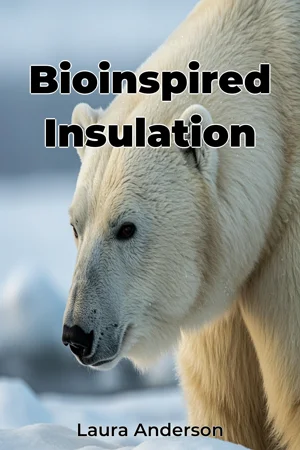
"Bioinspired Insulation" explores how nature's thermal regulation strategies, perfected by animals in extreme environments, can inspire innovative and sustainable insulation technologies. The book examines the unique adaptations of polar animals, desert dwellers, and high-altitude species, revealing insights into creating more efficient and eco-friendly materials. For example, the intricate structure of polar bear fur, with its remarkable heat-trapping capabilities, offers valuable lessons for designing advanced insulation. This book bridges biological research and engineering, presenting a comprehensive overview of nature-inspired insulation materials like aerogels and bio-based foams. It progresses from introducing biomimicry and its applications to detailing animal insulation strategies and translating these insights into engineering principles. By emphasizing the translation of complex biological systems into tangible designs, "Bioinspired Insulation" provides a practical guide for engineers, scientists, and designers interested in biomimicry and sustainable technologies.
Book Details
ISBN
9788235273451
Publisher
Publifye AS
Your Licenses
You don't own any licenses for this book
Purchase a license below to unlock this book and download the EPUB.
Purchase License
Select a tier to unlock this book
Need bulk licensing?
Contact us for enterprise agreements.