
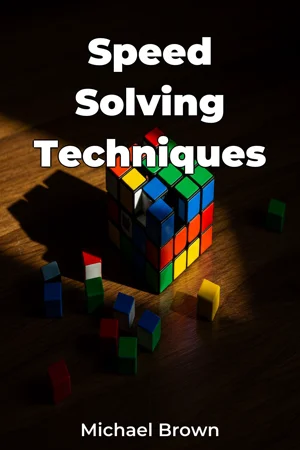
About This Book
Ever wondered how some individuals can solve seemingly complex puzzles in mere seconds? "Speed Solving Techniques" delves into the science and psychology behind competitive puzzle solving, offering a comprehensive guide to the methods, strategies, and mental processes that enable rapid problem-solving. This book is not just about solving puzzles faster; it’s about understanding how accelerated thinking can be applied to a wide range of challenges in both professional and personal contexts. The book focuses on three central themes. First, it examines the specific techniques employed by elite-level speed solvers, including pattern recognition, algorithmic approaches, and muscle memory development. Second, it explores the cognitive enhancements that arise from intensive puzzle training, such as improved spatial reasoning, attention span, and working memory. Finally, it investigates the psychological aspects of speed solving, including stress management, focus optimization, and the cultivation of a competitive mindset. These topics are critical because they reveal the underlying principles that drive efficient problem-solving and cognitive agility. Puzzle solving has a rich history, evolving from recreational activities to competitive sports with dedicated communities and global competitions. The book provides a historical overview of this evolution and highlights key figures who have shaped the field. No specific prerequisite knowledge is required other than a general interest in puzzles and problem-solving. The central argument of "Speed Solving Techniques" is that the skills honed through competitive puzzle solving are transferrable and can significantly enhance problem-solving abilities in various domains. We aim to demonstrate that by understanding and adopting the techniques used by speed solvers, readers can improve their cognitive performance and approach challenges with greater efficiency and confidence. The book is structured to guide the reader through a systematic exploration of speed solving. The introduction lays the groundwork by defining key concepts, introducing prominent figures, and outlining the history of competitive puzzle solving. The subsequent sections delve into specific problem-solving techniques, cognitive enhancements, and psychological strategies. Major sections include in-depth analyses of pattern recognition and algorithms, the development of spatial reasoning, and methods for managing stress and optimizing focus. The book culminates with a discussion of the practical applications of speed-solving techniques in fields such as engineering, computer science, and business management. The evidence presented relies on a combination of empirical research, case studies, and expert interviews. We will draw upon studies in cognitive psychology and neuroscience to explain the mental processes involved in speed solving. We supplement this with analyses of techniques employed by top-ranked solvers, along with interviews providing personal insights into their training regimens and mental strategies. "Speed Solving Techniques" connects to several other fields of study. It draws from cognitive psychology to understand the mental processes involved in problem-solving. It relates to neuroscience in its exploration of how intensive puzzle training can alter brain structure and function. It also has connections to sports psychology, given the competitive nature of speed solving and the focus on mental preparation and performance optimization. These interdisciplinary connections enrich the book’s analysis by providing a more holistic understanding of the topic. A unique aspect of this book is its focus on bridging the gap between academic research and practical application. While existing literature often explores cognitive processes in isolation, "Speed Solving Techniques" integrates these findings with real-world examples and actionable strategies, enabling readers to immediately apply what they learn. The book adopts a professional yet accessible tone, blending scientific rigor with engaging storytelling. Complex concepts are explained in clear, concise language, without sacrificing accuracy or depth. The writing style is designed to be informative and inspiring, motivating readers to explore the techniques and strategies presented. The target audience includes puzzle enthusiasts, students, educators, and professionals seeking to improve their problem-solving skills. It is also valuable for those interested in cognitive enhancement and the science of expertise. The goal is to provide readers with practical tools and actionable insights that can be applied to a wide range of contexts. As a book within the science and psychology genres, it maintains a focus on evidence-based explanations and empirical data. It also incorporates elements of self-help by offering practical advice and strategies for improving cognitive performance. The scope of the book is broad, covering a wide range of speed-solving techniques and cognitive enhancements. However, it is intentionally limited to puzzles that require cognitive skills rather than physical dexterity. This focus allows for a more in-depth exploration of the underlying mental processes involved. The information in this book can be applied to various real-world situations, from improving productivity at work to enhancing decision-making skills in daily life. For example, the pattern recognition techniques used by speed solvers can be applied to data analysis, while the stress management strategies can be used to improve performance under pressure. While there is a general consensus on the effectiveness of certain problem-solving techniques, there are ongoing debates about the relative importance of innate talent versus acquired skill. The book addresses these debates by presenting a balanced perspective, acknowledging the role of both factors and highlighting the potential for improvement through targeted training.
Ever wondered how some individuals can solve seemingly complex puzzles in mere seconds? "Speed Solving Techniques" delves into the science and psychology behind competitive puzzle solving, offering a comprehensive guide to the methods, strategies, and mental processes that enable rapid problem-solving. This book is not just about solving puzzles faster; it’s about understanding how accelerated thinking can be applied to a wide range of challenges in both professional and personal contexts. The book focuses on three central themes. First, it examines the specific techniques employed by elite-level speed solvers, including pattern recognition, algorithmic approaches, and muscle memory development. Second, it explores the cognitive enhancements that arise from intensive puzzle training, such as improved spatial reasoning, attention span, and working memory. Finally, it investigates the psychological aspects of speed solving, including stress management, focus optimization, and the cultivation of a competitive mindset. These topics are critical because they reveal the underlying principles that drive efficient problem-solving and cognitive agility. Puzzle solving has a rich history, evolving from recreational activities to competitive sports with dedicated communities and global competitions. The book provides a historical overview of this evolution and highlights key figures who have shaped the field. No specific prerequisite knowledge is required other than a general interest in puzzles and problem-solving. The central argument of "Speed Solving Techniques" is that the skills honed through competitive puzzle solving are transferrable and can significantly enhance problem-solving abilities in various domains. We aim to demonstrate that by understanding and adopting the techniques used by speed solvers, readers can improve their cognitive performance and approach challenges with greater efficiency and confidence. The book is structured to guide the reader through a systematic exploration of speed solving. The introduction lays the groundwork by defining key concepts, introducing prominent figures, and outlining the history of competitive puzzle solving. The subsequent sections delve into specific problem-solving techniques, cognitive enhancements, and psychological strategies. Major sections include in-depth analyses of pattern recognition and algorithms, the development of spatial reasoning, and methods for managing stress and optimizing focus. The book culminates with a discussion of the practical applications of speed-solving techniques in fields such as engineering, computer science, and business management. The evidence presented relies on a combination of empirical research, case studies, and expert interviews. We will draw upon studies in cognitive psychology and neuroscience to explain the mental processes involved in speed solving. We supplement this with analyses of techniques employed by top-ranked solvers, along with interviews providing personal insights into their training regimens and mental strategies. "Speed Solving Techniques" connects to several other fields of study. It draws from cognitive psychology to understand the mental processes involved in problem-solving. It relates to neuroscience in its exploration of how intensive puzzle training can alter brain structure and function. It also has connections to sports psychology, given the competitive nature of speed solving and the focus on mental preparation and performance optimization. These interdisciplinary connections enrich the book’s analysis by providing a more holistic understanding of the topic. A unique aspect of this book is its focus on bridging the gap between academic research and practical application. While existing literature often explores cognitive processes in isolation, "Speed Solving Techniques" integrates these findings with real-world examples and actionable strategies, enabling readers to immediately apply what they learn. The book adopts a professional yet accessible tone, blending scientific rigor with engaging storytelling. Complex concepts are explained in clear, concise language, without sacrificing accuracy or depth. The writing style is designed to be informative and inspiring, motivating readers to explore the techniques and strategies presented. The target audience includes puzzle enthusiasts, students, educators, and professionals seeking to improve their problem-solving skills. It is also valuable for those interested in cognitive enhancement and the science of expertise. The goal is to provide readers with practical tools and actionable insights that can be applied to a wide range of contexts. As a book within the science and psychology genres, it maintains a focus on evidence-based explanations and empirical data. It also incorporates elements of self-help by offering practical advice and strategies for improving cognitive performance. The scope of the book is broad, covering a wide range of speed-solving techniques and cognitive enhancements. However, it is intentionally limited to puzzles that require cognitive skills rather than physical dexterity. This focus allows for a more in-depth exploration of the underlying mental processes involved. The information in this book can be applied to various real-world situations, from improving productivity at work to enhancing decision-making skills in daily life. For example, the pattern recognition techniques used by speed solvers can be applied to data analysis, while the stress management strategies can be used to improve performance under pressure. While there is a general consensus on the effectiveness of certain problem-solving techniques, there are ongoing debates about the relative importance of innate talent versus acquired skill. The book addresses these debates by presenting a balanced perspective, acknowledging the role of both factors and highlighting the potential for improvement through targeted training.
"Speed Solving Techniques" explores the fascinating science and psychology behind rapid puzzle solving, demonstrating how the skills honed in competitive environments can enhance problem-solving abilities in various aspects of life. The book delves into specific techniques used by elite solvers, such as pattern recognition and algorithmic approaches, revealing how these methods improve spatial reasoning and working memory. Readers will discover that intensive puzzle training can lead to cognitive enhancements and a competitive mindset, improving their ability to manage stress and optimize focus. This book uniquely bridges academic research with practical application, offering real-world examples and actionable strategies. It examines how speed solvers develop muscle memory and improve their attention span, highlighting the transferrable nature of these skills. By understanding the mental processes involved, readers learn to approach challenges with greater efficiency and confidence. The book systematically guides readers through key concepts, starting with an introduction to the history of competitive puzzle solving and prominent figures in the field. Subsequent sections explore problem-solving techniques, cognitive enhancements, and psychological strategies, culminating in a discussion of practical applications in fields like engineering and business management.
Book Details
ISBN
9788235273253
Publisher
Publifye AS
Your Licenses
You don't own any licenses for this book
Purchase a license below to unlock this book and download the EPUB.
Purchase License
Select a tier to unlock this book
Need bulk licensing?
Contact us for enterprise agreements.