
About This Book
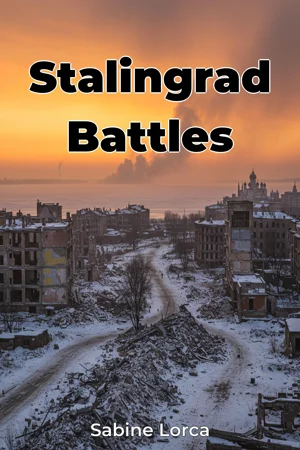
How did a single city become the focal point of a conflict that reshaped the course of World War II? "Stalingrad Battles" delves into one of the most brutal and decisive clashes in human history, examining not only the tactical and strategic decisions made by both the German and Soviet forces but also the profound impact of these battles on the war's ultimate outcome. This book will explore the key military strategies employed during the Battle of Stalingrad, analyze the critical decisions that determined the battle’s trajectory, and assess the far-reaching consequences of the Soviet victory. This book is important because Stalingrad represents a turning point in World War II, marking the beginning of the end for Nazi Germany. Understanding the intricacies of this campaign provides valuable insights into the nature of modern warfare, the resilience of the human spirit, and the strategic importance of logistics and political will. To fully grasp the significance of the Stalingrad Battles, it's necessary to understand the broader context of Operation Barbarossa, the German invasion of the Soviet Union in 1941, and the initial successes the Wehrmacht experienced. Readers should ideally have a rudimentary understanding of the Eastern Front and the ideological conflict between Nazi Germany and the Soviet Union. The central argument of "Stalingrad Battles" is that the Soviet victory was not solely a result of numerical superiority or harsh weather conditions, but a combination of strategic adaptation, effective urban warfare tactics, and unwavering determination that transformed a seemingly inevitable German victory into a catastrophic defeat. This examination challenges conventional narratives and emphasizes the vital role of Soviet resilience and strategic learning. The book is structured to provide a comprehensive understanding of the battle. The introduction will lay the groundwork by outlining the strategic context, objectives, and initial deployments of both sides. Following this, the book will explore the initial German advances and their bloody siege of the city, focusing on the close-quarters urban combat. A significant portion will be dedicated to analyzing the Soviet counter-offensives, Operation Uranus and Operation Little Saturn, which encircled and ultimately destroyed the German 6th Army. Finally, the book will assess the battle's strategic and geopolitical consequences, including its impact on morale, resource allocation, and the subsequent course of the war. To support these arguments, "Stalingrad Battles" draws upon a wide range of sources including military archives from both Germany and Russia, firsthand accounts from soldiers and civilians, and analyses from leading military historians. It incorporates previously untapped data, offering a fresh perspective on the battle's key events and strategic decisions. This book explores several interdisciplinary connections. Firstly, by examining the psychological impact of the battle on soldiers and civilians, it connects to the field of psychology. Secondly, by analyzing the role of propaganda and political ideology, it relates to the study of political science and communication. Thirdly, by exploring the economic factors that influenced resource allocation and industrial production, it connects to the field of economics. "Stalingrad Battles" stands out due to its focus on the adaptive strategies employed by both sides, particularly the Soviet shift from conventional warfare to effective urban combat tactics. The book also offers a unique perspective by integrating a wide range of primary source material to provide a granular understanding of the battle. The tone is factual and analytical, aiming to provide a clear and objective account of the battle. The writing style is accessible to a broad audience while maintaining academic rigor. The book is targeted towards military history enthusiasts, students of World War II, and general readers interested in learning about pivotal moments in history. It will appeal to those seeking a comprehensive and nuanced understanding of the Battle of Stalingrad and its impact. As a work of military history, this book adheres to the genre's conventions by providing detailed accounts of military operations, strategic decision-making, and the experiences of soldiers. It also offers a balanced analysis of the strengths and weaknesses of both sides. The scope is deliberately focused on the Battle of Stalingrad and its immediate aftermath. While it acknowledges the broader context of World War II, it does not attempt to provide a comprehensive overview of the entire conflict. This focus allows for a deeper, more detailed examination of the battle. The lessons learned from the Battle of Stalingrad are applicable to contemporary military strategy and urban warfare. Understanding the challenges of logistics, communication, and adaptation in a complex urban environment remains relevant for military planners today. The book addresses ongoing debates in the field, such as the relative importance of different factors in determining the Soviet victory, including the role of leadership, logistics, and popular support. By presenting new evidence and offering fresh perspectives, the book contributes to the ongoing scholarly conversation about the Battle of Stalingrad.
How did a single city become the focal point of a conflict that reshaped the course of World War II? "Stalingrad Battles" delves into one of the most brutal and decisive clashes in human history, examining not only the tactical and strategic decisions made by both the German and Soviet forces but also the profound impact of these battles on the war's ultimate outcome. This book will explore the key military strategies employed during the Battle of Stalingrad, analyze the critical decisions that determined the battle’s trajectory, and assess the far-reaching consequences of the Soviet victory. This book is important because Stalingrad represents a turning point in World War II, marking the beginning of the end for Nazi Germany. Understanding the intricacies of this campaign provides valuable insights into the nature of modern warfare, the resilience of the human spirit, and the strategic importance of logistics and political will. To fully grasp the significance of the Stalingrad Battles, it's necessary to understand the broader context of Operation Barbarossa, the German invasion of the Soviet Union in 1941, and the initial successes the Wehrmacht experienced. Readers should ideally have a rudimentary understanding of the Eastern Front and the ideological conflict between Nazi Germany and the Soviet Union. The central argument of "Stalingrad Battles" is that the Soviet victory was not solely a result of numerical superiority or harsh weather conditions, but a combination of strategic adaptation, effective urban warfare tactics, and unwavering determination that transformed a seemingly inevitable German victory into a catastrophic defeat. This examination challenges conventional narratives and emphasizes the vital role of Soviet resilience and strategic learning. The book is structured to provide a comprehensive understanding of the battle. The introduction will lay the groundwork by outlining the strategic context, objectives, and initial deployments of both sides. Following this, the book will explore the initial German advances and their bloody siege of the city, focusing on the close-quarters urban combat. A significant portion will be dedicated to analyzing the Soviet counter-offensives, Operation Uranus and Operation Little Saturn, which encircled and ultimately destroyed the German 6th Army. Finally, the book will assess the battle's strategic and geopolitical consequences, including its impact on morale, resource allocation, and the subsequent course of the war. To support these arguments, "Stalingrad Battles" draws upon a wide range of sources including military archives from both Germany and Russia, firsthand accounts from soldiers and civilians, and analyses from leading military historians. It incorporates previously untapped data, offering a fresh perspective on the battle's key events and strategic decisions. This book explores several interdisciplinary connections. Firstly, by examining the psychological impact of the battle on soldiers and civilians, it connects to the field of psychology. Secondly, by analyzing the role of propaganda and political ideology, it relates to the study of political science and communication. Thirdly, by exploring the economic factors that influenced resource allocation and industrial production, it connects to the field of economics. "Stalingrad Battles" stands out due to its focus on the adaptive strategies employed by both sides, particularly the Soviet shift from conventional warfare to effective urban combat tactics. The book also offers a unique perspective by integrating a wide range of primary source material to provide a granular understanding of the battle. The tone is factual and analytical, aiming to provide a clear and objective account of the battle. The writing style is accessible to a broad audience while maintaining academic rigor. The book is targeted towards military history enthusiasts, students of World War II, and general readers interested in learning about pivotal moments in history. It will appeal to those seeking a comprehensive and nuanced understanding of the Battle of Stalingrad and its impact. As a work of military history, this book adheres to the genre's conventions by providing detailed accounts of military operations, strategic decision-making, and the experiences of soldiers. It also offers a balanced analysis of the strengths and weaknesses of both sides. The scope is deliberately focused on the Battle of Stalingrad and its immediate aftermath. While it acknowledges the broader context of World War II, it does not attempt to provide a comprehensive overview of the entire conflict. This focus allows for a deeper, more detailed examination of the battle. The lessons learned from the Battle of Stalingrad are applicable to contemporary military strategy and urban warfare. Understanding the challenges of logistics, communication, and adaptation in a complex urban environment remains relevant for military planners today. The book addresses ongoing debates in the field, such as the relative importance of different factors in determining the Soviet victory, including the role of leadership, logistics, and popular support. By presenting new evidence and offering fresh perspectives, the book contributes to the ongoing scholarly conversation about the Battle of Stalingrad.
"Stalingrad Battles" explores the pivotal World War II clash that reshaped the conflict's trajectory. It examines the brutal fighting between German and Soviet forces in the city, highlighting the strategic decisions and far-reaching consequences of the Soviet victory. The book underscores Stalingrad as a crucial turning point, marking the beginning of the end for Nazi Germany, while also providing insights into modern warfare and the resilience of the human spirit. One intriguing aspect is the analysis of how the Soviets adapted their strategies for effective urban combat, transforming a seemingly inevitable German victory into a catastrophic defeat. The book delves into the context of Operation Barbarossa and the initial German advances, then progresses through the bloody siege of the city and the Soviet counter-offensives, Operation Uranus and Operation Little Saturn. It draws upon military archives and firsthand accounts to offer a fresh perspective on the battle's key events. Unique to this account is its focus on adaptive strategies and its integration of primary source material, providing a granular understanding of the battle. The book's strength lies in its accessible yet rigorous approach, making it invaluable for military history enthusiasts and students of World War II.
Book Details
ISBN
9788235273109
Publisher
Publifye AS
Your Licenses
You don't own any licenses for this book
Purchase a license below to unlock this book and download the EPUB.
Purchase License
Select a tier to unlock this book
Need bulk licensing?
Contact us for enterprise agreements.