
About This Book
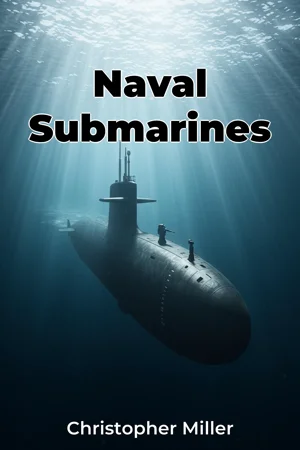
Can a silent weapon truly reshape naval power? "Naval Submarines" explores the gripping evolution of underwater warfare, charting its course from the earliest experimental submersibles to the sophisticated nuclear-powered submarines that patrol the ocean depths today. This book delves into the transformative impact of submarines on naval strategy, a story of technological innovation intertwined with geopolitical shifts and the ever-present pressures of military competition. Two key topics drive the narrative: Firstly, the technological advancements that have propelled submarine development. From the initial concepts of enclosed oar-powered vessels to the advent of diesel-electric propulsion and ultimately, nuclear power, each breakthrough has redefined the capabilities and operational parameters of submarines. Secondly, the strategic doctrine surrounding submarine deployment and utilization. This includes their roles in anti-surface warfare, anti-submarine warfare, intelligence gathering, and nuclear deterrence. Understanding these two elements is vital to grasping the profound impact submarines have had on naval dominance and international relations. To fully appreciate the submarine's journey, some historical and scientific context is indispensable. The book examines the late 19th and early 20th-century naval arms race, the impact of two World Wars, and the Cold War's nuclear standoff. Foundational knowledge of basic physics relating to buoyancy, hydrodynamics, and propulsion is beneficial but not required, as these concepts are explained in an accessible manner. The central argument of "Naval Submarines" asserts that the submarine, initially viewed as a marginal weapon, has risen to become a decisive element in naval power projection and a critical component of national security strategies. This ascent is not simply a matter of technological progress, but also a reflection of evolving strategic thinking and the adaptation of naval forces to meet new challenges. Such an understanding challenges conventional narratives surrounding surface-centric naval dominance. The book's structure unfolds systematically. It begins by introducing early submarine concepts and their limitations, progressing through the technological leaps of the late 19th and early 20th centuries. Major chapters then address the submarine's crucial roles in both World Wars, highlighting pivotal engagements and strategic impacts. The book further explores the Cold War era, focusing on the development and deployment of nuclear-powered submarines and their role in the strategic balance between superpowers. Ultimately, the book assesses the contemporary role of submarines in modern naval operations, including their use in asymmetric warfare and their continuing importance in nuclear deterrence. The arguments presented are supported by a wide range of evidence. Primary source materials include naval archives, technical manuals, and declassified documents. Secondary sources encompass scholarly articles, naval histories, and technological analyses. The book also draws upon case studies of specific submarine operations and technological developments, offering detailed insights into their impacts. "Naval Submarines" connects to several other fields of study. Firstly, it links to political science through its exploration of the relationship between naval power and international relations. Secondly, it connects to technological innovation and engineering, examining how technological advancements have been driven by military requirements. Thirdly, it intersects with economic history, analyzing the resource allocation and industrial capabilities required to develop and maintain submarine fleets. This book distinguishes itself through its comprehensive scope, covering the full spectrum of submarine development and deployment. It combines technical analysis with strategic assessments, providing a holistic understanding of the submarine's role in naval warfare. The book adopts a balanced tone, avoiding both excessive technical jargon and overly sensationalized accounts. This book is aimed at a broad audience, including naval enthusiasts, military historians, students of technology and international relations, and anyone interested in the evolution of warfare. It provides valuable insights into the technological, strategic, and political aspects of submarine warfare. "Naval Submarines" adheres to the conventions of military history and technology writing by providing accurate, well-researched information presented in a clear and engaging manner. The book's scope is broad, covering the global history of submarine warfare, but focuses primarily on the technological and strategic aspects. The information contained within "Naval Submarines" offers several real-world applications. It can inform current debates about naval strategy and defense spending, provide historical context for understanding contemporary naval power dynamics, and offer valuable insights for naval professionals. While the book explores the history of submarine warfare, it also touches upon ongoing debates surrounding the future of naval warfare. The rise of unmanned underwater vehicles, the development of new anti-submarine technologies, and the evolving nature of maritime conflict are discussed in the context of the submarine's continuing role.
Can a silent weapon truly reshape naval power? "Naval Submarines" explores the gripping evolution of underwater warfare, charting its course from the earliest experimental submersibles to the sophisticated nuclear-powered submarines that patrol the ocean depths today. This book delves into the transformative impact of submarines on naval strategy, a story of technological innovation intertwined with geopolitical shifts and the ever-present pressures of military competition. Two key topics drive the narrative: Firstly, the technological advancements that have propelled submarine development. From the initial concepts of enclosed oar-powered vessels to the advent of diesel-electric propulsion and ultimately, nuclear power, each breakthrough has redefined the capabilities and operational parameters of submarines. Secondly, the strategic doctrine surrounding submarine deployment and utilization. This includes their roles in anti-surface warfare, anti-submarine warfare, intelligence gathering, and nuclear deterrence. Understanding these two elements is vital to grasping the profound impact submarines have had on naval dominance and international relations. To fully appreciate the submarine's journey, some historical and scientific context is indispensable. The book examines the late 19th and early 20th-century naval arms race, the impact of two World Wars, and the Cold War's nuclear standoff. Foundational knowledge of basic physics relating to buoyancy, hydrodynamics, and propulsion is beneficial but not required, as these concepts are explained in an accessible manner. The central argument of "Naval Submarines" asserts that the submarine, initially viewed as a marginal weapon, has risen to become a decisive element in naval power projection and a critical component of national security strategies. This ascent is not simply a matter of technological progress, but also a reflection of evolving strategic thinking and the adaptation of naval forces to meet new challenges. Such an understanding challenges conventional narratives surrounding surface-centric naval dominance. The book's structure unfolds systematically. It begins by introducing early submarine concepts and their limitations, progressing through the technological leaps of the late 19th and early 20th centuries. Major chapters then address the submarine's crucial roles in both World Wars, highlighting pivotal engagements and strategic impacts. The book further explores the Cold War era, focusing on the development and deployment of nuclear-powered submarines and their role in the strategic balance between superpowers. Ultimately, the book assesses the contemporary role of submarines in modern naval operations, including their use in asymmetric warfare and their continuing importance in nuclear deterrence. The arguments presented are supported by a wide range of evidence. Primary source materials include naval archives, technical manuals, and declassified documents. Secondary sources encompass scholarly articles, naval histories, and technological analyses. The book also draws upon case studies of specific submarine operations and technological developments, offering detailed insights into their impacts. "Naval Submarines" connects to several other fields of study. Firstly, it links to political science through its exploration of the relationship between naval power and international relations. Secondly, it connects to technological innovation and engineering, examining how technological advancements have been driven by military requirements. Thirdly, it intersects with economic history, analyzing the resource allocation and industrial capabilities required to develop and maintain submarine fleets. This book distinguishes itself through its comprehensive scope, covering the full spectrum of submarine development and deployment. It combines technical analysis with strategic assessments, providing a holistic understanding of the submarine's role in naval warfare. The book adopts a balanced tone, avoiding both excessive technical jargon and overly sensationalized accounts. This book is aimed at a broad audience, including naval enthusiasts, military historians, students of technology and international relations, and anyone interested in the evolution of warfare. It provides valuable insights into the technological, strategic, and political aspects of submarine warfare. "Naval Submarines" adheres to the conventions of military history and technology writing by providing accurate, well-researched information presented in a clear and engaging manner. The book's scope is broad, covering the global history of submarine warfare, but focuses primarily on the technological and strategic aspects. The information contained within "Naval Submarines" offers several real-world applications. It can inform current debates about naval strategy and defense spending, provide historical context for understanding contemporary naval power dynamics, and offer valuable insights for naval professionals. While the book explores the history of submarine warfare, it also touches upon ongoing debates surrounding the future of naval warfare. The rise of unmanned underwater vehicles, the development of new anti-submarine technologies, and the evolving nature of maritime conflict are discussed in the context of the submarine's continuing role.
"Naval Submarines" explores the captivating history of underwater warfare, from rudimentary submersibles to today's advanced nuclear submarines. The book highlights how the submarine evolved from a marginal weapon into a critical element of naval power projection, significantly impacting naval strategy and international relations. Early submarines, for example, were initially viewed with skepticism, but their potential for stealth attacks and intelligence gathering gradually reshaped naval doctrine. Another key aspect explored is the technological race, with advancements like diesel-electric propulsion and nuclear power revolutionizing submarine capabilities. The book traces the evolution of submarines through key historical periods, including their roles in both World Wars and the Cold War's nuclear standoff. It examines how submarines have been used in anti-surface warfare, anti-submarine warfare, and nuclear deterrence. The narrative unfolds systematically, starting with early submarine designs and progressing through technological breakthroughs and strategic shifts. It emphasizes the interplay between technological innovation and evolving military strategies, offering a comprehensive understanding of the submarine's impact on naval history and modern naval operations.
Book Details
ISBN
9788235273079
Publisher
Publifye AS
Your Licenses
You don't own any licenses for this book
Purchase a license below to unlock this book and download the EPUB.
Purchase License
Select a tier to unlock this book
Need bulk licensing?
Contact us for enterprise agreements.