
About This Book
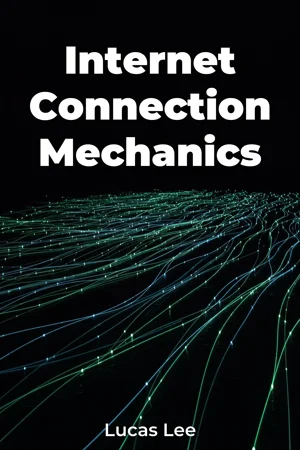
Have you ever wondered how a simple click can connect you to a server halfway across the globe? "Internet Connection Mechanics" delves into the intricate and often invisible infrastructure that underpins our hyper-connected world, exploring not just the 'how' but also the 'why' of its profound global impact. This book examines the core technologies enabling internet connectivity and analyzes their far-reaching societal, economic, and political consequences. We address two fundamental pillars: the technical architectures constituting the internet and the resulting global transformations. Understanding the underlying protocols and hardware—from undersea cables to routing algorithms—is crucial. Equally important is grasping how these technologies have reshaped communication, commerce, and even international relations. The reader needs a basic familiarity with computer networking concepts. We don't assume expert-level knowledge; instead, we build a foundation for understanding more complex systems. The central argument of "Internet Connection Mechanics" is that the internet’s architecture, while designed for resilience and decentralization, has inadvertently created new forms of centralization and control, impacting everything from data privacy to geopolitical power dynamics. This argument is vital because it challenges conventional narratives about the internet as a purely democratizing force, highlighting its inherent complexities and potential for both progress and peril. The book unfolds in three major sections. First, we introduce the core concepts: packet switching, the TCP/IP protocol suite, the Domain Name System (DNS), and the physical infrastructure that supports it all. This section emphasizes the evolution of these technologies and their design principles. Second, we delve into the development of these ideas by exploring major points that involve current challenges like network neutrality, cybersecurity threats, and the digital divide. This part includes case studies of different countries and regions to illustrate the varied impacts of internet connectivity. Finally, we examine the policy implications, focusing on issues like content regulation, data sovereignty, and the future of internet governance. The book culminates by exploring practical policy recommendations and innovative solutions for fostering a more equitable and secure digital future. The evidence presented is drawn from a combination of technical specifications, industry reports, academic research, and real-world case studies. We analyze data from sources like the Internet Society, the International Telecommunication Union (ITU), and various academic databases. Unique methodologies include network traffic analysis and comparative policy analysis, offering a multilayered perspective. "Internet Connection Mechanics" connects to several other fields. Firstly, it intersects with economics, particularly in its analysis of e-commerce and the digital economy. Secondly, it engages with political science, examining issues of internet governance and cybersecurity. Finally, it touches upon sociology, exploring the impact of social media and online communities on social structures. These connections enrich the book's argument by providing a holistic understanding of the internet’s influence. This book stands out by offering a balanced viewpoint that combines technical depth with social and political awareness. We adopt an objective tone that informs but also inspires critical thinking. Our target audience includes students, policymakers, tech professionals, and anyone interested in understanding the internet's mechanics and its global implications. This book is valuable because it provides a comprehensive, accessible, and up-to-date analysis of a technology that has become indispensable. As a work of computer technology and technology studies, the book adheres to standards of accuracy, technical precision, and balanced analysis. The book's scope is broad, encompassing the technical, economic, social, and political dimensions of internet connectivity. However, it does not delve into the specific coding details of internet protocols. The information can be applied practically by policymakers seeking to regulate the internet, by businesses developing online strategies, and by individuals seeking to understand their digital rights and responsibilities. The book addresses ongoing debates about net neutrality, data privacy, and the role of internet intermediaries. It presents different perspectives on these issues, encouraging readers to form their own informed opinions.
Have you ever wondered how a simple click can connect you to a server halfway across the globe? "Internet Connection Mechanics" delves into the intricate and often invisible infrastructure that underpins our hyper-connected world, exploring not just the 'how' but also the 'why' of its profound global impact. This book examines the core technologies enabling internet connectivity and analyzes their far-reaching societal, economic, and political consequences. We address two fundamental pillars: the technical architectures constituting the internet and the resulting global transformations. Understanding the underlying protocols and hardware—from undersea cables to routing algorithms—is crucial. Equally important is grasping how these technologies have reshaped communication, commerce, and even international relations. The reader needs a basic familiarity with computer networking concepts. We don't assume expert-level knowledge; instead, we build a foundation for understanding more complex systems. The central argument of "Internet Connection Mechanics" is that the internet’s architecture, while designed for resilience and decentralization, has inadvertently created new forms of centralization and control, impacting everything from data privacy to geopolitical power dynamics. This argument is vital because it challenges conventional narratives about the internet as a purely democratizing force, highlighting its inherent complexities and potential for both progress and peril. The book unfolds in three major sections. First, we introduce the core concepts: packet switching, the TCP/IP protocol suite, the Domain Name System (DNS), and the physical infrastructure that supports it all. This section emphasizes the evolution of these technologies and their design principles. Second, we delve into the development of these ideas by exploring major points that involve current challenges like network neutrality, cybersecurity threats, and the digital divide. This part includes case studies of different countries and regions to illustrate the varied impacts of internet connectivity. Finally, we examine the policy implications, focusing on issues like content regulation, data sovereignty, and the future of internet governance. The book culminates by exploring practical policy recommendations and innovative solutions for fostering a more equitable and secure digital future. The evidence presented is drawn from a combination of technical specifications, industry reports, academic research, and real-world case studies. We analyze data from sources like the Internet Society, the International Telecommunication Union (ITU), and various academic databases. Unique methodologies include network traffic analysis and comparative policy analysis, offering a multilayered perspective. "Internet Connection Mechanics" connects to several other fields. Firstly, it intersects with economics, particularly in its analysis of e-commerce and the digital economy. Secondly, it engages with political science, examining issues of internet governance and cybersecurity. Finally, it touches upon sociology, exploring the impact of social media and online communities on social structures. These connections enrich the book's argument by providing a holistic understanding of the internet’s influence. This book stands out by offering a balanced viewpoint that combines technical depth with social and political awareness. We adopt an objective tone that informs but also inspires critical thinking. Our target audience includes students, policymakers, tech professionals, and anyone interested in understanding the internet's mechanics and its global implications. This book is valuable because it provides a comprehensive, accessible, and up-to-date analysis of a technology that has become indispensable. As a work of computer technology and technology studies, the book adheres to standards of accuracy, technical precision, and balanced analysis. The book's scope is broad, encompassing the technical, economic, social, and political dimensions of internet connectivity. However, it does not delve into the specific coding details of internet protocols. The information can be applied practically by policymakers seeking to regulate the internet, by businesses developing online strategies, and by individuals seeking to understand their digital rights and responsibilities. The book addresses ongoing debates about net neutrality, data privacy, and the role of internet intermediaries. It presents different perspectives on these issues, encouraging readers to form their own informed opinions.
"Internet Connection Mechanics" explores the intricate infrastructure behind our hyper-connected world, examining both the technology and its societal impacts. It delves into the core components that enable internet connectivity, such as packet switching and the TCP/IP protocol suite, while also analyzing how these technologies have reshaped communication, commerce, and international relations. For example, the book highlights how the architecture of the Internet, initially designed for decentralization, has inadvertently led to new forms of centralization and control. The book unfolds in three sections, beginning with the core technical concepts and their evolution. It then progresses to current challenges like network neutrality and cybersecurity, using case studies to illustrate diverse impacts. Finally, it addresses policy implications, offering recommendations for a more equitable digital future. By combining technical depth with social and political awareness, "Internet Connection Mechanics" provides a balanced and accessible analysis for students, policymakers, tech professionals, and anyone interested in understanding the Internet's mechanics and global implications.
Book Details
ISBN
9788235273031
Publisher
Publifye AS
Your Licenses
You don't own any licenses for this book
Purchase a license below to unlock this book and download the EPUB.
Purchase License
Select a tier to unlock this book
Need bulk licensing?
Contact us for enterprise agreements.