
About This Book
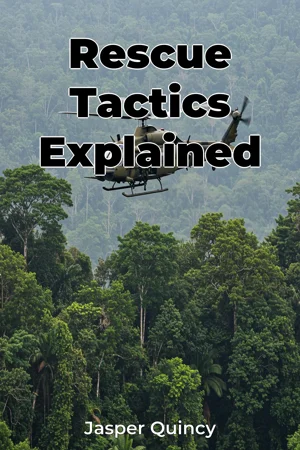
Have you ever wondered what it takes to extract personnel from the heart of a raging conflict or navigate treacherous terrain to save a life? "Rescue Tactics Explained" delves into the complex world of coordinated rescue operations, offering a detailed examination of the strategies, technologies, and human factors that determine success or failure in high-stakes scenarios. This book navigates the multifaceted aspects of planning and executing rescue missions across diverse and challenging environments, making it an essential resource for understanding the intricacies involved. This book primarily focuses on two pivotal areas: tactical entry and communication protocols. Tactical entry examines the methodologies employed to gain access to a target location while minimizing risk to both the rescue team and the individual being rescued. Communication protocols delves into how communication is maintained between team members and external organizations throughout a mission in an environment where failure to communicate effectively could have catastrophic consequences. These elements are critical because they form the foundation of any successful rescue operation, influencing everything from mission timing to resource allocation. Contextually, the book draws upon historical military operations, incidents involving natural disasters, and case studies from search and rescue teams worldwide. While no prior military experience is required, a general understanding of geographic concepts, such as terrain features and map reading, will enhance the reader’s comprehension. The central argument of "Rescue Tactics Explained" is that effective rescue operations are not solely dependent on individual bravery or chance but on the meticulous application of proven tactics, clear communication, and adaptable decision-making processes. This argument is important because it challenges the romanticized view of rescue missions, emphasizing the critical role of planning, technique, and teamwork. The book is structured to provide a comprehensive understanding of rescue operations. First, it introduces fundamental concepts such as risk management, threat assessment, and team dynamics. Second, it develops these ideas through detailed chapters on specific tactics, including aerial insertion techniques, ground-based approaches, and maritime rescue strategies. A section is dedicated to the tools and technologies used in rescue operations, from advanced communication systems to specialized medical equipment. Finally, the book culminates in an analysis of real-world case studies, highlighting both successes and failures, and outlining crucial lessons learned. It further explores the ethical considerations involved in rescue operations, particularly in situations where resources are limited or risks are exceptionally high. The conclusion presents practical applications of the discussed principles, applicable not only to professional rescue teams but also to individuals and organizations involved in emergency preparedness and disaster response. Evidence is drawn from a variety of sources, including official military reports, after-action reviews from civilian rescue organizations, interviews with personnel, and technical manuals. Unique data sources include analyses of communication logs from actual rescue missions and statistical models of mission success rates based on various tactical approaches. The book connects to other fields such as military history by analyzing past operations, disaster management for providing insights into effective response strategies, and communication studies by examining the impact of clear and concise communication on mission outcomes. These connections enrich the book's argument by illustrating the interdisciplinary nature of rescue operations. "Rescue Tactics Explained" stands out by offering a balanced perspective that considers both the technical and human elements of rescue operations. It combines rigorous analysis with accessible language, making complex concepts understandable to a broad audience. The writing style is informative and direct, avoiding jargon while maintaining technical accuracy. The tone is serious and respectful, reflecting the high stakes involved in rescue operations. The target audience includes military personnel, first responders, search and rescue teams, emergency management professionals, and anyone interested in the strategic and tactical aspects of rescue operations. The book would be valuable to them because it provides a comprehensive and practical guide to understanding and improving rescue effectiveness. As a work in the genres of Military History, History Military, and Adventure, the book presents factual accounts, historical context, and analytical examinations expected of serious studies. The book's scope includes a wide range of rescue scenarios, from combat zones to natural disasters, but it is limited to tactical and strategic considerations. It does not delve into the psychological impact of rescue operations on either the rescuers or the rescued, which could be a topic for future research. The information in the book can be applied to improve training programs, refine operational procedures, and enhance decision-making in real-world rescue scenarios. By understanding the principles outlined in "Rescue Tactics Explained," readers can contribute to saving lives and improving the effectiveness of rescue operations worldwide.
Have you ever wondered what it takes to extract personnel from the heart of a raging conflict or navigate treacherous terrain to save a life? "Rescue Tactics Explained" delves into the complex world of coordinated rescue operations, offering a detailed examination of the strategies, technologies, and human factors that determine success or failure in high-stakes scenarios. This book navigates the multifaceted aspects of planning and executing rescue missions across diverse and challenging environments, making it an essential resource for understanding the intricacies involved. This book primarily focuses on two pivotal areas: tactical entry and communication protocols. Tactical entry examines the methodologies employed to gain access to a target location while minimizing risk to both the rescue team and the individual being rescued. Communication protocols delves into how communication is maintained between team members and external organizations throughout a mission in an environment where failure to communicate effectively could have catastrophic consequences. These elements are critical because they form the foundation of any successful rescue operation, influencing everything from mission timing to resource allocation. Contextually, the book draws upon historical military operations, incidents involving natural disasters, and case studies from search and rescue teams worldwide. While no prior military experience is required, a general understanding of geographic concepts, such as terrain features and map reading, will enhance the reader’s comprehension. The central argument of "Rescue Tactics Explained" is that effective rescue operations are not solely dependent on individual bravery or chance but on the meticulous application of proven tactics, clear communication, and adaptable decision-making processes. This argument is important because it challenges the romanticized view of rescue missions, emphasizing the critical role of planning, technique, and teamwork. The book is structured to provide a comprehensive understanding of rescue operations. First, it introduces fundamental concepts such as risk management, threat assessment, and team dynamics. Second, it develops these ideas through detailed chapters on specific tactics, including aerial insertion techniques, ground-based approaches, and maritime rescue strategies. A section is dedicated to the tools and technologies used in rescue operations, from advanced communication systems to specialized medical equipment. Finally, the book culminates in an analysis of real-world case studies, highlighting both successes and failures, and outlining crucial lessons learned. It further explores the ethical considerations involved in rescue operations, particularly in situations where resources are limited or risks are exceptionally high. The conclusion presents practical applications of the discussed principles, applicable not only to professional rescue teams but also to individuals and organizations involved in emergency preparedness and disaster response. Evidence is drawn from a variety of sources, including official military reports, after-action reviews from civilian rescue organizations, interviews with personnel, and technical manuals. Unique data sources include analyses of communication logs from actual rescue missions and statistical models of mission success rates based on various tactical approaches. The book connects to other fields such as military history by analyzing past operations, disaster management for providing insights into effective response strategies, and communication studies by examining the impact of clear and concise communication on mission outcomes. These connections enrich the book's argument by illustrating the interdisciplinary nature of rescue operations. "Rescue Tactics Explained" stands out by offering a balanced perspective that considers both the technical and human elements of rescue operations. It combines rigorous analysis with accessible language, making complex concepts understandable to a broad audience. The writing style is informative and direct, avoiding jargon while maintaining technical accuracy. The tone is serious and respectful, reflecting the high stakes involved in rescue operations. The target audience includes military personnel, first responders, search and rescue teams, emergency management professionals, and anyone interested in the strategic and tactical aspects of rescue operations. The book would be valuable to them because it provides a comprehensive and practical guide to understanding and improving rescue effectiveness. As a work in the genres of Military History, History Military, and Adventure, the book presents factual accounts, historical context, and analytical examinations expected of serious studies. The book's scope includes a wide range of rescue scenarios, from combat zones to natural disasters, but it is limited to tactical and strategic considerations. It does not delve into the psychological impact of rescue operations on either the rescuers or the rescued, which could be a topic for future research. The information in the book can be applied to improve training programs, refine operational procedures, and enhance decision-making in real-world rescue scenarios. By understanding the principles outlined in "Rescue Tactics Explained," readers can contribute to saving lives and improving the effectiveness of rescue operations worldwide.
"Rescue Tactics Explained" explores the intricate world of rescue operations, detailing the strategies, technologies, and human elements crucial for success in high-stakes environments. The book emphasizes that successful rescue missions depend on meticulous planning, proven tactics, and clear communication protocols, drawing from military history, natural disaster incidents, and global search and rescue case studies. It highlights the importance of team dynamics and adaptability in the face of unpredictable challenges. The book focuses on tactical entry methodologies to minimize risks and communication protocols to ensure seamless coordination between team members and external organizations. It challenges the romanticized view of rescue missions by emphasizing the critical role of technique and teamwork. The book is structured to introduce fundamental concepts like risk management and threat assessment, then progresses through specific tactics, including aerial insertion and maritime rescue strategies, before analyzing real-world case studies. This book uniquely balances technical analysis with accessible language, making complex concepts understandable to a broad audience interested in improving rescue effectiveness. It provides a comprehensive guide applicable to military personnel, first responders, and anyone involved in emergency preparedness and disaster response, offering insights to refine operational procedures and enhance decision-making in real-world scenarios.
Book Details
ISBN
9788235272966
Publisher
Publifye AS
Your Licenses
You don't own any licenses for this book
Purchase a license below to unlock this book and download the EPUB.
Purchase License
Select a tier to unlock this book
Need bulk licensing?
Contact us for enterprise agreements.