
About This Book
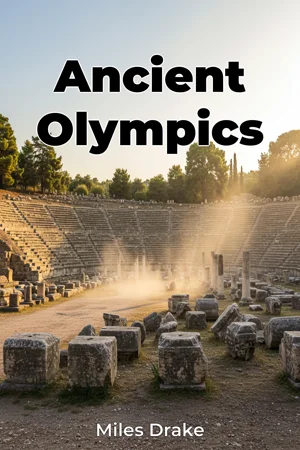
Did you know that athletes in the original Olympic Games competed naked, and the only prize was an olive wreath? "Ancient Olympics" delves into the captivating origins and evolution of the world's most celebrated sporting event. This book explores the historical roots of the Games in ancient Greece, examines the peculiar events that defined the early competitions, and traces their transformation into the modern global spectacle we know today. These topics are significant because understanding the Olympics' past provides valuable insight into the cultural values, social structures, and political landscapes of both ancient Greece and the modern world. To fully appreciate the significance of the Ancient Olympics, it's essential to understand the religious, social, and political context of ancient Greece. The Games were intrinsically linked to religious festivals honoring Zeus, and athletic prowess was considered a demonstration of piety and divine favor. Knowledge of ancient Greek city-state rivalries is also helpful in understanding the competitive spirit and political maneuvering that influenced the Games. The central argument of "Ancient Olympics" is that the Games were not simply sporting events but rather a complex reflection of ancient Greek society, evolving over centuries to mirror changing cultural values and political realities. Understanding this evolution provides a unique lens through which to view the enduring power of sport as a unifying and expressive force. This book is structured to provide a comprehensive exploration of the topic. It begins by introducing the mythical origins of the Games and their connection to religious practices. It then moves into developing key aspects of the ancient Olympics: first, the specific events, rules, and rituals that characterized the competitions; second, the social and political significance of the Games within ancient Greek society, including the role of athletes, spectators, and city-states; and third, the gradual decline of the Games under Roman rule. The book culminates with an examination of the revival of the Olympics in the modern era and its enduring legacy. The evidence presented in "Ancient Olympics" is drawn from a variety of sources, including primary texts from ancient Greek historians, poets, and philosophers, as well as archaeological findings from the site of Olympia. Inscriptions, statues, and architectural remains provide valuable insights into the organization, rituals, and cultural significance of the Games. "Ancient Olympics" also connects to other fields of study, such as religious studies by exploring the Games' connection to Zeus and ancient Greek religious practices. It connects to political science by examining the role of the Games in fostering both competition and unity among the Greek city-states; and sociology by considering impact the Games had on the social structure of ancient Greek society. This book offers a unique perspective by examining the Ancient Games as a dynamic institution shaped by the interplay of religious beliefs, political rivalries, and social values. Rather than simply cataloging events and athletes, it delves into the deeper cultural meanings embedded within the Olympic Games. The tone of "Ancient Olympics" is informative and accessible, aiming to engage both casual readers and serious students of history and sports. The writing style is clear and concise, presenting complex information in an easily digestible manner. The target audience includes anyone interested in the history of sports, ancient Greece, or the Olympic Games in general. It would be valuable to students, history buffs, and sports enthusiasts seeking a deeper understanding of the origins of this global phenomenon. As a work of non-fiction, "Ancient Olympics" adheres to principles of accuracy, objectivity, and evidence-based analysis. It presents a balanced account of the Games, acknowledging both their positive contributions and their limitations. The scope is intentionally focused on the Ancient Olympic Games, exploring their origins, evolution, and eventual decline. While the book touches upon the revival of the Olympics in the modern era, it does not provide an exhaustive account to keep the focus on the ancient history. Understanding the values and practices of the Ancient Olympics can offer insights into our own attitudes toward sports, competition, and international relations. It encourages reflection on the ethical considerations surrounding athletic competition and the role of sports in promoting cultural understanding. While the Ancient Olympics are often idealized, there were also controversies and debates surrounding issues such as amateurism, corruption, and the exclusion of women. "Ancient Olympics" addresses these issues head-on, providing a nuanced and critical perspective on the Games.
Did you know that athletes in the original Olympic Games competed naked, and the only prize was an olive wreath? "Ancient Olympics" delves into the captivating origins and evolution of the world's most celebrated sporting event. This book explores the historical roots of the Games in ancient Greece, examines the peculiar events that defined the early competitions, and traces their transformation into the modern global spectacle we know today. These topics are significant because understanding the Olympics' past provides valuable insight into the cultural values, social structures, and political landscapes of both ancient Greece and the modern world. To fully appreciate the significance of the Ancient Olympics, it's essential to understand the religious, social, and political context of ancient Greece. The Games were intrinsically linked to religious festivals honoring Zeus, and athletic prowess was considered a demonstration of piety and divine favor. Knowledge of ancient Greek city-state rivalries is also helpful in understanding the competitive spirit and political maneuvering that influenced the Games. The central argument of "Ancient Olympics" is that the Games were not simply sporting events but rather a complex reflection of ancient Greek society, evolving over centuries to mirror changing cultural values and political realities. Understanding this evolution provides a unique lens through which to view the enduring power of sport as a unifying and expressive force. This book is structured to provide a comprehensive exploration of the topic. It begins by introducing the mythical origins of the Games and their connection to religious practices. It then moves into developing key aspects of the ancient Olympics: first, the specific events, rules, and rituals that characterized the competitions; second, the social and political significance of the Games within ancient Greek society, including the role of athletes, spectators, and city-states; and third, the gradual decline of the Games under Roman rule. The book culminates with an examination of the revival of the Olympics in the modern era and its enduring legacy. The evidence presented in "Ancient Olympics" is drawn from a variety of sources, including primary texts from ancient Greek historians, poets, and philosophers, as well as archaeological findings from the site of Olympia. Inscriptions, statues, and architectural remains provide valuable insights into the organization, rituals, and cultural significance of the Games. "Ancient Olympics" also connects to other fields of study, such as religious studies by exploring the Games' connection to Zeus and ancient Greek religious practices. It connects to political science by examining the role of the Games in fostering both competition and unity among the Greek city-states; and sociology by considering impact the Games had on the social structure of ancient Greek society. This book offers a unique perspective by examining the Ancient Games as a dynamic institution shaped by the interplay of religious beliefs, political rivalries, and social values. Rather than simply cataloging events and athletes, it delves into the deeper cultural meanings embedded within the Olympic Games. The tone of "Ancient Olympics" is informative and accessible, aiming to engage both casual readers and serious students of history and sports. The writing style is clear and concise, presenting complex information in an easily digestible manner. The target audience includes anyone interested in the history of sports, ancient Greece, or the Olympic Games in general. It would be valuable to students, history buffs, and sports enthusiasts seeking a deeper understanding of the origins of this global phenomenon. As a work of non-fiction, "Ancient Olympics" adheres to principles of accuracy, objectivity, and evidence-based analysis. It presents a balanced account of the Games, acknowledging both their positive contributions and their limitations. The scope is intentionally focused on the Ancient Olympic Games, exploring their origins, evolution, and eventual decline. While the book touches upon the revival of the Olympics in the modern era, it does not provide an exhaustive account to keep the focus on the ancient history. Understanding the values and practices of the Ancient Olympics can offer insights into our own attitudes toward sports, competition, and international relations. It encourages reflection on the ethical considerations surrounding athletic competition and the role of sports in promoting cultural understanding. While the Ancient Olympics are often idealized, there were also controversies and debates surrounding issues such as amateurism, corruption, and the exclusion of women. "Ancient Olympics" addresses these issues head-on, providing a nuanced and critical perspective on the Games.
"Ancient Olympics" explores the captivating history of the Olympic Games in ancient Greece, revealing how these events were deeply intertwined with religious festivals honoring Zeus and the complex political landscape of the era. Far from being simply sporting contests, the Games reflected the cultural values and social structures of ancient Greek society. For instance, athletes competed naked, and victors were awarded only an olive wreath, highlighting a focus on honor and piety rather than material gain. The book examines the specific events, rules, and rituals that defined the ancient competitions, alongside the social and political significance of the Games, and the role of athletes and city-states. It investigates the Games' gradual decline under Roman rule and their subsequent revival in the modern era. Through primary texts and archaeological findings from Olympia, "Ancient Olympics" offers a unique perspective on how religious beliefs, political rivalries, and social values shaped this dynamic institution. The book begins by introducing the mythical origins of the Games and their connection to religious practices. It then moves into key aspects of the ancient Olympics: first, the specific events, rules, and rituals that characterized the competitions; second, the social and political significance of the Games within ancient Greek society, including the role of athletes, spectators, and city-states; and third, the gradual decline of the Games under Roman rule. The book culminates with an examination of the revival of the Olympics in the modern era and its enduring legacy.
Book Details
ISBN
9788235272935
Publisher
Publifye AS
Your Licenses
You don't own any licenses for this book
Purchase a license below to unlock this book and download the EPUB.
Purchase License
Select a tier to unlock this book
Need bulk licensing?
Contact us for enterprise agreements.