
About This Book
Have you ever wondered what a swastika meant before the Second World War, or how the image of a serpent became associated with both healing and evil? "Sacred Symbols" delves into the intricate world of religious and mythological symbols, exploring their diverse interpretations and factual usage throughout history and across cultures. This book is essential for anyone seeking to understand the profound influence symbols have wielded in shaping human beliefs, societies, and artistic expressions. At its core, "Sacred Symbols" explores three key topics: the origins and evolution of prominent symbols, their contextual significance within specific religious and mythological systems, and the ways in which these symbols have been appropriated and reinterpreted over time. Understanding these elements is critical because religious and mythological symbols are not static representations; their meanings are fluid and deeply intertwined with the social, political, and cultural landscapes in which they exist. To fully appreciate the power and complexity of these symbols, it is important to understand the historical and cultural contexts in which they arose. This book provides a comprehensive background, examining the development of early religious practices, the rise of complex mythological systems, and the interactions between different cultures that led to the cross-pollination of symbolic ideas. Knowledge of basic world history and an interest in comparative religion will enhance the reader's experience, although all necessary information is provided within the text. The central argument of "Sacred Symbols" is that a factual, historically grounded understanding of religious and mythological symbols is essential for fostering interfaith dialogue, promoting cultural sensitivity, and deciphering the symbolic language that permeates art, literature, and contemporary society. The book is structured to guide the reader through a logical progression of ideas. It begins with an introduction to the fundamental principles of semiotics and symbolic interpretation, establishing a framework for understanding how symbols function. The main body of the book is divided into thematic sections, each focusing on a specific category of symbols, such as those related to creation myths, deities, the afterlife, or moral principles. Each section explores the historical origins of these symbols, tracing their evolution and adaptation across different cultures and time periods. Case studies drawn from ancient Egypt, Greece, Rome, Mesopotamia, and various Eastern traditions illustrate the diverse ways in which these symbols have been employed. The book culminates in a discussion of the contemporary relevance of religious and mythological symbols, examining their presence in art, literature, film, and popular culture, and their potential for promoting understanding or misunderstanding in a globalized world. "Sacred Symbols" draws upon a wide range of evidence and research, including archaeological findings, ancient texts, iconographic analysis, and comparative religious studies. Primary source materials, such as excerpts from religious scriptures and mythological narratives, are carefully analyzed to reveal the original meanings and intended uses of different symbols. It also incorporates insights from anthropology, sociology, and art history to provide a holistic understanding of the cultural forces that have shaped symbolic expression. This book makes interdisciplinary connections to art history, anthropology, and cultural studies. The analysis of visual representations of symbols links the book to art history, while the exploration of cultural variations in symbolic meaning connects it to anthropology. Furthermore, by examining the ways in which symbols are used to construct and reinforce social identities, "Sacred Symbols" contributes to the field of cultural studies. "Sacred Symbols" adopts a fact-based and analytical, while still being accessible to a general audience. The book avoids speculative or subjective interpretations, focusing instead on verifiable historical data and established scholarly consensus. The target audience includes students of history, religion, and cultural studies, as well as general readers with an interest in mythology, comparative religion, and symbolic systems. It will be valuable to anyone seeking a deeper understanding of the symbolic language that shapes our world. As a work of history and religion, "Sacred Symbols" maintains a commitment to accuracy, objectivity, and respect for diverse cultural traditions. While the book covers a wide range of symbols from various religious and mythological systems, it does not attempt to be exhaustive. The focus is on providing a representative overview of the major themes and trends in the historical usage and interpretation of sacred symbols. The knowledge gained from "Sacred Symbols" can be applied in various practical ways, such as enhancing cross-cultural communication, interpreting art and literature, and understanding the symbolic dimensions of political discourse. The interpretation of religious and mythological symbols is often subject to debate, particularly when dealing with controversial topics such as the appropriation of symbols by extremist groups or the representation of sacred figures in art. "Sacred Symbols" acknowledges these controversies, presenting different perspectives and encouraging readers to critically evaluate the evidence and arguments presented.
Have you ever wondered what a swastika meant before the Second World War, or how the image of a serpent became associated with both healing and evil? "Sacred Symbols" delves into the intricate world of religious and mythological symbols, exploring their diverse interpretations and factual usage throughout history and across cultures. This book is essential for anyone seeking to understand the profound influence symbols have wielded in shaping human beliefs, societies, and artistic expressions. At its core, "Sacred Symbols" explores three key topics: the origins and evolution of prominent symbols, their contextual significance within specific religious and mythological systems, and the ways in which these symbols have been appropriated and reinterpreted over time. Understanding these elements is critical because religious and mythological symbols are not static representations; their meanings are fluid and deeply intertwined with the social, political, and cultural landscapes in which they exist. To fully appreciate the power and complexity of these symbols, it is important to understand the historical and cultural contexts in which they arose. This book provides a comprehensive background, examining the development of early religious practices, the rise of complex mythological systems, and the interactions between different cultures that led to the cross-pollination of symbolic ideas. Knowledge of basic world history and an interest in comparative religion will enhance the reader's experience, although all necessary information is provided within the text. The central argument of "Sacred Symbols" is that a factual, historically grounded understanding of religious and mythological symbols is essential for fostering interfaith dialogue, promoting cultural sensitivity, and deciphering the symbolic language that permeates art, literature, and contemporary society. The book is structured to guide the reader through a logical progression of ideas. It begins with an introduction to the fundamental principles of semiotics and symbolic interpretation, establishing a framework for understanding how symbols function. The main body of the book is divided into thematic sections, each focusing on a specific category of symbols, such as those related to creation myths, deities, the afterlife, or moral principles. Each section explores the historical origins of these symbols, tracing their evolution and adaptation across different cultures and time periods. Case studies drawn from ancient Egypt, Greece, Rome, Mesopotamia, and various Eastern traditions illustrate the diverse ways in which these symbols have been employed. The book culminates in a discussion of the contemporary relevance of religious and mythological symbols, examining their presence in art, literature, film, and popular culture, and their potential for promoting understanding or misunderstanding in a globalized world. "Sacred Symbols" draws upon a wide range of evidence and research, including archaeological findings, ancient texts, iconographic analysis, and comparative religious studies. Primary source materials, such as excerpts from religious scriptures and mythological narratives, are carefully analyzed to reveal the original meanings and intended uses of different symbols. It also incorporates insights from anthropology, sociology, and art history to provide a holistic understanding of the cultural forces that have shaped symbolic expression. This book makes interdisciplinary connections to art history, anthropology, and cultural studies. The analysis of visual representations of symbols links the book to art history, while the exploration of cultural variations in symbolic meaning connects it to anthropology. Furthermore, by examining the ways in which symbols are used to construct and reinforce social identities, "Sacred Symbols" contributes to the field of cultural studies. "Sacred Symbols" adopts a fact-based and analytical, while still being accessible to a general audience. The book avoids speculative or subjective interpretations, focusing instead on verifiable historical data and established scholarly consensus. The target audience includes students of history, religion, and cultural studies, as well as general readers with an interest in mythology, comparative religion, and symbolic systems. It will be valuable to anyone seeking a deeper understanding of the symbolic language that shapes our world. As a work of history and religion, "Sacred Symbols" maintains a commitment to accuracy, objectivity, and respect for diverse cultural traditions. While the book covers a wide range of symbols from various religious and mythological systems, it does not attempt to be exhaustive. The focus is on providing a representative overview of the major themes and trends in the historical usage and interpretation of sacred symbols. The knowledge gained from "Sacred Symbols" can be applied in various practical ways, such as enhancing cross-cultural communication, interpreting art and literature, and understanding the symbolic dimensions of political discourse. The interpretation of religious and mythological symbols is often subject to debate, particularly when dealing with controversial topics such as the appropriation of symbols by extremist groups or the representation of sacred figures in art. "Sacred Symbols" acknowledges these controversies, presenting different perspectives and encouraging readers to critically evaluate the evidence and arguments presented.
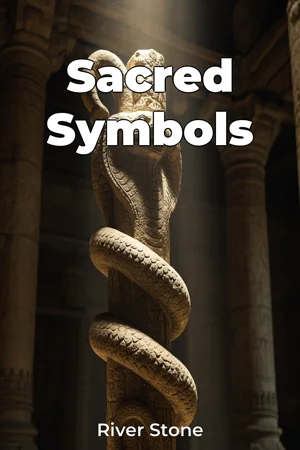
"Sacred Symbols" explores the pervasive influence of religious and mythological symbols throughout history and across cultures. This exploration provides essential insights into how these symbols have shaped human beliefs, societies, and artistic expressions. The book emphasizes the origins, evolution, and contextual significance of symbols, revealing their fluid meanings intertwined with social, political, and cultural landscapes. For example, the swastika, once a symbol of well-being, dramatically shifted in meaning. Similarly, the serpent embodies both healing and evil in different contexts, highlighting the diverse interpretations explored within. The book adopts a fact-based and analytical approach, avoiding speculative interpretations while remaining accessible to a general audience. It examines the development of early religious practices and the rise of complex mythological systems, incorporating case studies from ancient Egypt, Greece, Rome, Mesopotamia, and Eastern traditions. "Sacred Symbols" progresses through thematic sections, starting with semiotics and symbolic interpretation, then delving into categories like creation myths and deities, culminating in the contemporary relevance of symbols in art, literature, and popular culture. Understanding these symbols promotes interfaith dialogue and cultural sensitivity, enabling a deeper appreciation of symbolic language.
Book Details
ISBN
9788235272904
Publisher
Publifye AS
Your Licenses
You don't own any licenses for this book
Purchase a license below to unlock this book and download the EPUB.
Purchase License
Select a tier to unlock this book
Need bulk licensing?
Contact us for enterprise agreements.