
About This Book
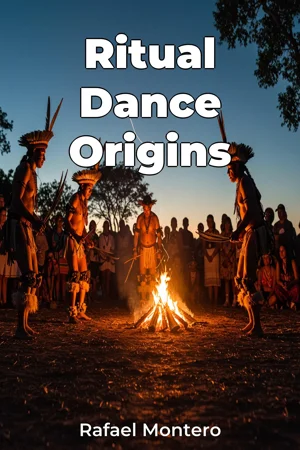
Can the stories of a people be etched not in stone, but in the very movements of their bodies? "Ritual Dance Origins" delves into the profound role of dance within indigenous cultures worldwide, exploring how it served as a vibrant repository of history, a sacred act of ancestor veneration, and a cornerstone of ceremonial and spiritual life. This book unveils the intricate ways in which dance functioned beyond mere entertainment, acting as a crucial mechanism for cultural transmission and social cohesion. "Ritual Dance Origins" investigates three central themes: dance as historical record, dance as spiritual practice, and dance as a social framework. Firstly, it examines how indigenous dances encode and transmit historical narratives, genealogies, and significant events across generations, often in the absence of written language. Secondly, it explores the spiritual dimensions of dance, illuminating its power to connect individuals with the spirit world, honor ancestors, and invoke blessings. Thirdly, the book analyzes dance as a vital component of social structure, reinforcing community bonds, defining roles, and regulating behavior. Understanding the significance of dance within indigenous societies requires a grasp of the historical context of colonization, cultural suppression, and revitalization movements. The book addresses the impact of these forces on indigenous dance traditions, highlighting both the resilience and the transformation of these art forms. A basic understanding of anthropology, ethnomusicology, and religious studies will add depth to the reader's comprehension. The central argument of "Ritual Dance Origins" is that indigenous dance practices are sophisticated systems of knowledge and cultural expression that hold invaluable insights into the history, beliefs, and social structures of these communities. Understanding these dances is crucial for appreciating the depth and complexity of indigenous cultures, and for fostering intercultural understanding and respect. The book begins by introducing the core concepts of ritual dance, indigenous knowledge, and cultural transmission. It then unfolds in three major sections. The first section explores specific case studies of dances that function as historical narratives, detailing how movements, costumes, and musical accompaniment work together to convey historical information. The second section examines the diverse ways in which dance is used in spiritual practices, from healing rituals to ceremonies honoring ancestral spirits. The third section analyzes the social functions of dance, illustrating how it reinforces social hierarchies, promotes community solidarity, and marks important life cycle events. The concluding chapter synthesizes these themes, offering insights into the enduring significance of ritual dance in contemporary indigenous societies and its potential for cultural preservation and revitalization. The evidence presented throughout the book draws upon a wide range of sources, including ethnographic studies, historical accounts, interviews with indigenous dancers and elders, and analyses of dance movements and musical scores. Photographs and illustrations will further enrich the reader's understanding. "Ritual Dance Origins" bridges the fields of history, performing arts, anthropology, religious studies, and ethnomusicology. By examining dance through these diverse lenses, the book offers a holistic and nuanced understanding of its role in indigenous cultures. Its interdisciplinary approach emphasizes the importance of considering cultural phenomena from multiple perspectives. This book distinguishes itself by prioritizing indigenous voices and perspectives. It challenges conventional Western interpretations of dance as mere entertainment, instead presenting it as a complex and meaningful form of cultural expression. The book adopts a respectful and collaborative approach, working in partnership with indigenous communities to document and interpret their dance traditions. Written in an accessible and engaging style, "Ritual Dance Origins" is aimed at students, researchers, and anyone interested in indigenous cultures, dance, history, and spirituality. The book is meticulously researched and academically sound, while remaining accessible to a general audience. As a nonfiction work within the genres of history and performing arts, "Ritual Dance Origins" provides comprehensive, well-documented information while also engaging readers with compelling narratives and visual materials. The book focuses primarily on the cultural roles of indigenous dance, with a deliberate limitation of scope regarding the technical aspects of dance choreography. The knowledge gained from "Ritual Dance Origins" can be applied to promote cultural awareness, support indigenous rights, and foster intercultural dialogue. Understanding the significance of dance within indigenous cultures can inform educational programs, museum exhibits, and cultural exchange initiatives. "Ritual Dance Origins" addresses debates surrounding cultural appropriation and the representation of indigenous cultures. It promotes ethical research practices, emphasizing the importance of obtaining informed consent and respecting indigenous protocols.
Can the stories of a people be etched not in stone, but in the very movements of their bodies? "Ritual Dance Origins" delves into the profound role of dance within indigenous cultures worldwide, exploring how it served as a vibrant repository of history, a sacred act of ancestor veneration, and a cornerstone of ceremonial and spiritual life. This book unveils the intricate ways in which dance functioned beyond mere entertainment, acting as a crucial mechanism for cultural transmission and social cohesion. "Ritual Dance Origins" investigates three central themes: dance as historical record, dance as spiritual practice, and dance as a social framework. Firstly, it examines how indigenous dances encode and transmit historical narratives, genealogies, and significant events across generations, often in the absence of written language. Secondly, it explores the spiritual dimensions of dance, illuminating its power to connect individuals with the spirit world, honor ancestors, and invoke blessings. Thirdly, the book analyzes dance as a vital component of social structure, reinforcing community bonds, defining roles, and regulating behavior. Understanding the significance of dance within indigenous societies requires a grasp of the historical context of colonization, cultural suppression, and revitalization movements. The book addresses the impact of these forces on indigenous dance traditions, highlighting both the resilience and the transformation of these art forms. A basic understanding of anthropology, ethnomusicology, and religious studies will add depth to the reader's comprehension. The central argument of "Ritual Dance Origins" is that indigenous dance practices are sophisticated systems of knowledge and cultural expression that hold invaluable insights into the history, beliefs, and social structures of these communities. Understanding these dances is crucial for appreciating the depth and complexity of indigenous cultures, and for fostering intercultural understanding and respect. The book begins by introducing the core concepts of ritual dance, indigenous knowledge, and cultural transmission. It then unfolds in three major sections. The first section explores specific case studies of dances that function as historical narratives, detailing how movements, costumes, and musical accompaniment work together to convey historical information. The second section examines the diverse ways in which dance is used in spiritual practices, from healing rituals to ceremonies honoring ancestral spirits. The third section analyzes the social functions of dance, illustrating how it reinforces social hierarchies, promotes community solidarity, and marks important life cycle events. The concluding chapter synthesizes these themes, offering insights into the enduring significance of ritual dance in contemporary indigenous societies and its potential for cultural preservation and revitalization. The evidence presented throughout the book draws upon a wide range of sources, including ethnographic studies, historical accounts, interviews with indigenous dancers and elders, and analyses of dance movements and musical scores. Photographs and illustrations will further enrich the reader's understanding. "Ritual Dance Origins" bridges the fields of history, performing arts, anthropology, religious studies, and ethnomusicology. By examining dance through these diverse lenses, the book offers a holistic and nuanced understanding of its role in indigenous cultures. Its interdisciplinary approach emphasizes the importance of considering cultural phenomena from multiple perspectives. This book distinguishes itself by prioritizing indigenous voices and perspectives. It challenges conventional Western interpretations of dance as mere entertainment, instead presenting it as a complex and meaningful form of cultural expression. The book adopts a respectful and collaborative approach, working in partnership with indigenous communities to document and interpret their dance traditions. Written in an accessible and engaging style, "Ritual Dance Origins" is aimed at students, researchers, and anyone interested in indigenous cultures, dance, history, and spirituality. The book is meticulously researched and academically sound, while remaining accessible to a general audience. As a nonfiction work within the genres of history and performing arts, "Ritual Dance Origins" provides comprehensive, well-documented information while also engaging readers with compelling narratives and visual materials. The book focuses primarily on the cultural roles of indigenous dance, with a deliberate limitation of scope regarding the technical aspects of dance choreography. The knowledge gained from "Ritual Dance Origins" can be applied to promote cultural awareness, support indigenous rights, and foster intercultural dialogue. Understanding the significance of dance within indigenous cultures can inform educational programs, museum exhibits, and cultural exchange initiatives. "Ritual Dance Origins" addresses debates surrounding cultural appropriation and the representation of indigenous cultures. It promotes ethical research practices, emphasizing the importance of obtaining informed consent and respecting indigenous protocols.
"Ritual Dance Origins" explores the vital role of dance within indigenous cultures, revealing how movement embodies history, spirituality, and social structure. More than mere entertainment, these dances serve as a powerful means of cultural transmission, preserving historical narratives and genealogies across generations. The book highlights how dance connects individuals to the spirit world and ancestors, reinforcing community bonds and defining social roles. The book progresses by examining dance as historical record, spiritual practice, and social framework, using case studies and diverse sources to illustrate these themes. Colonization and cultural suppression have significantly impacted these traditions, yet resilience and revitalization efforts persist. "Ritual Dance Origins" emphasizes indigenous perspectives, challenging Western interpretations and presenting dance as a complex and meaningful form of cultural expression. The book begins with core concepts and unfolds across three sections, culminating in insights into the enduring significance of ritual dance in contemporary indigenous societies. This study bridges history, performing arts, anthropology, religious studies, and ethnomusicology, offering a nuanced and holistic understanding. By prioritizing indigenous voices, the book provides a valuable resource for fostering intercultural understanding and promoting cultural awareness, making it an invaluable read for anyone interested in the performing arts and history.
Book Details
ISBN
9788235272645
Publisher
Publifye AS
Your Licenses
You don't own any licenses for this book
Purchase a license below to unlock this book and download the EPUB.
Purchase License
Select a tier to unlock this book
Need bulk licensing?
Contact us for enterprise agreements.