
About This Book
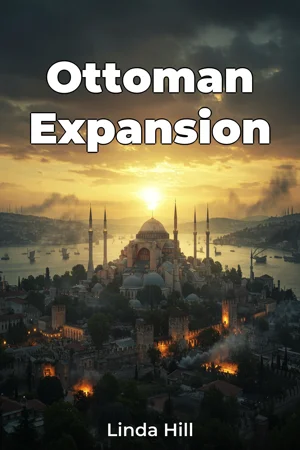
How did a small principality in Anatolia rise to challenge the established powers of Europe, shaping the continent’s political, cultural, and religious landscape for centuries? "Ottoman Expansion" delves into the dynamic and often turbulent history of the Ottoman Empire's advance into Europe, examining its military campaigns, its complex relationships with European states, and its enduring legacy. This book is crucial for understanding the historical forces that have shaped modern Europe and the ongoing interactions between East and West. This study provides a comprehensive analysis of the Ottoman Empire’s expansion, focusing on three key areas: the initial incursions and conquests, the period of intense conflict and consolidation, and the long-term impact of Ottoman rule on European societies. Understanding these phases is vital to grasping the full scope of Ottoman influence and its lasting effects on political boundaries, cultural exchange, and religious dynamics in Europe. The book begins by establishing the historical context of the Ottoman Empire's emergence and early expansion, tracing its roots from a small Turkish principality to a major power in the Eastern Mediterranean. Knowledge of basic medieval and early modern European history is helpful but not crucial, as essential background information is provided. "Ottoman Expansion" argues that the Ottoman Empire's interactions with Europe were not simply a series of military clashes, but a complex interplay of political maneuvering, economic competition, and cultural exchange that fundamentally reshaped both the Ottoman and European identities. This argument challenges simplistic narratives of East-West conflict and highlights the nuanced nature of their relationship. The book is structured chronologically and thematically. First, it introduces the origins of the Ottoman Empire and its initial expansion into the Balkans, including the pivotal conquest of Constantinople in 1453. Second, it examines the major conflicts with European powers, such as the Habsburgs, the Venetian Republic, and Poland, analyzing the strategies, key battles, and treaties that defined these relationships. Third, the book explores the social, cultural, and economic impact of Ottoman rule on the regions it controlled, as well as the reciprocal influences that shaped Ottoman society. Finally, it concludes by assessing the lasting legacy of Ottoman expansion on modern Europe, considering its effects on political boundaries, religious demographics, and cultural identities. Primary sources, including Ottoman chronicles, European diplomatic records, and travel accounts, will be extensively used to support the arguments presented. The analysis also incorporates secondary scholarship from historians, political scientists, and cultural studies experts, providing a balanced and comprehensive perspective. The book connects to several other fields, including political science (examining the dynamics of empire-building and international relations), religious studies (analyzing the impact of religious differences and coexistence), and cultural studies (exploring the exchange of ideas and practices between different societies). These interdisciplinary connections enrich the analysis and provide a broader understanding of the Ottoman Empire's role in world history. This book offers a fresh perspective by examining Ottoman expansion not as an isolated phenomenon, but as an integral part of European history. It challenges Eurocentric narratives and highlights the agency of both Ottoman and European actors in shaping their shared destiny. Written in a clear and accessible style, "Ottoman Expansion" is aimed at students, scholars, and general readers interested in European history, world history, and the history of the Ottoman Empire. It provides a valuable resource for anyone seeking a deeper understanding of the complex relationship between the Ottoman Empire and Europe. As a work of world history, the book adheres to the genre's conventions of providing a broad, comparative perspective, examining global connections, and challenging traditional narratives. While the book covers the major events and themes of Ottoman expansion into Europe, it does not delve into the internal dynamics of the Ottoman Empire in exhaustive detail, focusing instead on its interactions with European states. The insights gained from this book can be applied to understanding contemporary issues of cultural exchange, religious conflict, and international relations. By examining the historical roots of these issues, the book provides a valuable framework for analyzing current events. The book also addresses ongoing debates among historians regarding the nature of Ottoman rule, the impact of Ottoman institutions on European societies, and the legacy of Ottoman expansion in the Balkans. By presenting different perspectives and engaging with the existing scholarship, the book encourages critical thinking and further research.
How did a small principality in Anatolia rise to challenge the established powers of Europe, shaping the continent’s political, cultural, and religious landscape for centuries? "Ottoman Expansion" delves into the dynamic and often turbulent history of the Ottoman Empire's advance into Europe, examining its military campaigns, its complex relationships with European states, and its enduring legacy. This book is crucial for understanding the historical forces that have shaped modern Europe and the ongoing interactions between East and West. This study provides a comprehensive analysis of the Ottoman Empire’s expansion, focusing on three key areas: the initial incursions and conquests, the period of intense conflict and consolidation, and the long-term impact of Ottoman rule on European societies. Understanding these phases is vital to grasping the full scope of Ottoman influence and its lasting effects on political boundaries, cultural exchange, and religious dynamics in Europe. The book begins by establishing the historical context of the Ottoman Empire's emergence and early expansion, tracing its roots from a small Turkish principality to a major power in the Eastern Mediterranean. Knowledge of basic medieval and early modern European history is helpful but not crucial, as essential background information is provided. "Ottoman Expansion" argues that the Ottoman Empire's interactions with Europe were not simply a series of military clashes, but a complex interplay of political maneuvering, economic competition, and cultural exchange that fundamentally reshaped both the Ottoman and European identities. This argument challenges simplistic narratives of East-West conflict and highlights the nuanced nature of their relationship. The book is structured chronologically and thematically. First, it introduces the origins of the Ottoman Empire and its initial expansion into the Balkans, including the pivotal conquest of Constantinople in 1453. Second, it examines the major conflicts with European powers, such as the Habsburgs, the Venetian Republic, and Poland, analyzing the strategies, key battles, and treaties that defined these relationships. Third, the book explores the social, cultural, and economic impact of Ottoman rule on the regions it controlled, as well as the reciprocal influences that shaped Ottoman society. Finally, it concludes by assessing the lasting legacy of Ottoman expansion on modern Europe, considering its effects on political boundaries, religious demographics, and cultural identities. Primary sources, including Ottoman chronicles, European diplomatic records, and travel accounts, will be extensively used to support the arguments presented. The analysis also incorporates secondary scholarship from historians, political scientists, and cultural studies experts, providing a balanced and comprehensive perspective. The book connects to several other fields, including political science (examining the dynamics of empire-building and international relations), religious studies (analyzing the impact of religious differences and coexistence), and cultural studies (exploring the exchange of ideas and practices between different societies). These interdisciplinary connections enrich the analysis and provide a broader understanding of the Ottoman Empire's role in world history. This book offers a fresh perspective by examining Ottoman expansion not as an isolated phenomenon, but as an integral part of European history. It challenges Eurocentric narratives and highlights the agency of both Ottoman and European actors in shaping their shared destiny. Written in a clear and accessible style, "Ottoman Expansion" is aimed at students, scholars, and general readers interested in European history, world history, and the history of the Ottoman Empire. It provides a valuable resource for anyone seeking a deeper understanding of the complex relationship between the Ottoman Empire and Europe. As a work of world history, the book adheres to the genre's conventions of providing a broad, comparative perspective, examining global connections, and challenging traditional narratives. While the book covers the major events and themes of Ottoman expansion into Europe, it does not delve into the internal dynamics of the Ottoman Empire in exhaustive detail, focusing instead on its interactions with European states. The insights gained from this book can be applied to understanding contemporary issues of cultural exchange, religious conflict, and international relations. By examining the historical roots of these issues, the book provides a valuable framework for analyzing current events. The book also addresses ongoing debates among historians regarding the nature of Ottoman rule, the impact of Ottoman institutions on European societies, and the legacy of Ottoman expansion in the Balkans. By presenting different perspectives and engaging with the existing scholarship, the book encourages critical thinking and further research.
"Ottoman Expansion" explores how a small principality transformed into a major empire, significantly impacting Europe's political, cultural, and religious landscape. This book offers a comprehensive analysis of the Ottoman Empire's advance into Europe by examining its military campaigns, relationships with European states, and enduring legacy. The study challenges simplistic narratives of East-West conflict by highlighting the nuanced interplay of political maneuvering, economic competition, and cultural exchange. For example, the conquest of Constantinople in 1453 marked a pivotal moment, while interactions with powers like the Habsburgs and the Venetian Republic shaped international relations. The book is structured chronologically and thematically, beginning with the empire's origins and initial expansion into the Balkans. It then examines major conflicts with European powers, analyzing strategies, key battles, and treaties. Furthermore, it explores the social, cultural, and economic impacts of Ottoman rule, considering reciprocal influences that shaped both Ottoman and European societies. The Ottoman Empire's interactions with Europe were not merely military clashes but involved complex political and cultural exchanges, fundamentally reshaping both identities. The book concludes by assessing the lasting legacy of Ottoman expansion on modern Europe, making it a valuable resource for understanding the complex relationship between the Ottoman Empire and Europe.
Book Details
ISBN
9788235272607
Publisher
Publifye AS
Your Licenses
You don't own any licenses for this book
Purchase a license below to unlock this book and download the EPUB.
Purchase License
Select a tier to unlock this book
Need bulk licensing?
Contact us for enterprise agreements.