
About This Book
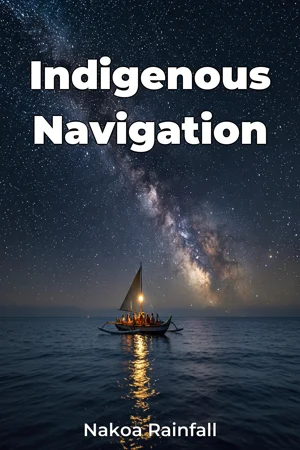
How did ancient mariners navigate vast oceans and track subtle environmental changes long before modern technology? "Indigenous Navigation" unveils the sophisticated systems employed by indigenous explorers across the globe, revealing a deep understanding of astronomy, environmental cues, and oral traditions that allowed them to traverse immense landscapes and open waters. This book explores the interconnectedness of knowledge systems within indigenous communities and their significance in shaping our understanding of Earth sciences, geography, and history. This exploration centers on three pivotal concepts: celestial navigation, environmental interpretation, and oral cartography. Celestial navigation, the art of using stars, planets, and other celestial bodies for guidance, formed a cornerstone of long-distance voyaging. Environmental interpretation involved a keen awareness of natural indicators such as wind patterns, ocean currents, animal migrations, and plant life cycles. Oral cartography, the transmission of geographic knowledge through stories, songs, and rituals, provided crucial contextual information for successful navigation. These topics are important because they challenge conventional narratives of exploration dominated by Western perspectives, highlighting the intellectual achievements and ingenuity of indigenous peoples. Historically, Western scientific traditions have often marginalized or dismissed indigenous knowledge. This book seeks to rectify this imbalance by providing a contextualized understanding of indigenous navigational techniques. It builds on existing scholarship in ethnography, archaeoastronomy, and environmental history, assuming a basic understanding of geography and historical timelines. The central argument is that indigenous navigation systems represent a complex and holistic form of knowledge that is both scientifically valid and culturally significant. Its importance lies in demonstrating the inherent value and sophistication of indigenous intellectual traditions, advocating for their preservation, and promoting a more inclusive and accurate understanding of human history. The book begins by introducing the core components of indigenous navigation systems, delineating the astronomical knowledge, environmental awareness, and mnemonic devices employed by various cultures. It then develops these ideas through detailed explorations of specific geographical regions, such as the Pacific Islands, the Arctic, and the Amazon rainforest. Each region provides a case study demonstrating how indigenous populations successfully navigated their environments using local resources and knowledge. The culmination of the argument underscores the global prevalence and enduring relevance of indigenous navigation, emphasizing its potential contribution to contemporary challenges such as climate change adaptation and sustainable resource management. Evidence presented includes ethnographic accounts, archaeological findings, linguistic analysis, and comparative studies of different indigenous cultures. Unique data sources include traditional oral histories, indigenous-authored texts (where available), and collaborative research projects involving indigenous communities. Methodologies incorporate interdisciplinary approaches, blending historical analysis with scientific investigation and cultural interpretation. "Indigenous Navigation" connects to other fields such as anthropology, environmental science, and cognitive psychology. Anthropology provides insights into the cultural contexts of navigation; environmental science offers a framework for understanding the ecological knowledge embedded in indigenous practices; and cognitive psychology sheds light on the mental processes involved in spatial reasoning and memory. These connections enrich the book's argument by providing a multi-faceted perspective. This book distinguishes itself through its emphasis on the holistic and integrated nature of indigenous knowledge systems. It moves beyond a purely technical description of navigational methods to explore the cultural values, social practices, and spiritual beliefs that underpin them. The tone is scholarly yet accessible, aiming to engage both academic and general audiences. The writing style balances rigorous analysis with compelling storytelling, drawing the reader into the world of indigenous explorers. The target audience includes students, researchers, and anyone interested in history, geography, anthropology, and indigenous studies. The book also appeals to those seeking a deeper understanding of environmental sustainability and cultural diversity. As a work of non-fiction within the genres of History, Earth Sciences, and Geography, "Indigenous Navigation" adheres to the conventions of scholarly rigor, presenting well-researched and documented information. It acknowledges the limitations of available data and avoids making unsubstantiated claims. The scope of this book encompasses diverse indigenous cultures across various geographical regions, focusing primarily on pre-colonial and early colonial periods. It intentionally limits its coverage to traditional navigational techniques, setting aside modern adaptations or technologies. The information within this book serves applications for contemporary society, such as the emphasis on promoting indigenous knowledge as valuable and applicable to modern-day navigational skills, understanding environmental changes, and cultural heritage preservation. While this book champions indigenous navigation, it acknowledges the ongoing debates surrounding the interpretation and application of indigenous knowledge. The book aims to address controversies surrounding cultural appropriation, intellectual property rights, and the potential for misrepresenting or romanticizing indigenous practices.
How did ancient mariners navigate vast oceans and track subtle environmental changes long before modern technology? "Indigenous Navigation" unveils the sophisticated systems employed by indigenous explorers across the globe, revealing a deep understanding of astronomy, environmental cues, and oral traditions that allowed them to traverse immense landscapes and open waters. This book explores the interconnectedness of knowledge systems within indigenous communities and their significance in shaping our understanding of Earth sciences, geography, and history. This exploration centers on three pivotal concepts: celestial navigation, environmental interpretation, and oral cartography. Celestial navigation, the art of using stars, planets, and other celestial bodies for guidance, formed a cornerstone of long-distance voyaging. Environmental interpretation involved a keen awareness of natural indicators such as wind patterns, ocean currents, animal migrations, and plant life cycles. Oral cartography, the transmission of geographic knowledge through stories, songs, and rituals, provided crucial contextual information for successful navigation. These topics are important because they challenge conventional narratives of exploration dominated by Western perspectives, highlighting the intellectual achievements and ingenuity of indigenous peoples. Historically, Western scientific traditions have often marginalized or dismissed indigenous knowledge. This book seeks to rectify this imbalance by providing a contextualized understanding of indigenous navigational techniques. It builds on existing scholarship in ethnography, archaeoastronomy, and environmental history, assuming a basic understanding of geography and historical timelines. The central argument is that indigenous navigation systems represent a complex and holistic form of knowledge that is both scientifically valid and culturally significant. Its importance lies in demonstrating the inherent value and sophistication of indigenous intellectual traditions, advocating for their preservation, and promoting a more inclusive and accurate understanding of human history. The book begins by introducing the core components of indigenous navigation systems, delineating the astronomical knowledge, environmental awareness, and mnemonic devices employed by various cultures. It then develops these ideas through detailed explorations of specific geographical regions, such as the Pacific Islands, the Arctic, and the Amazon rainforest. Each region provides a case study demonstrating how indigenous populations successfully navigated their environments using local resources and knowledge. The culmination of the argument underscores the global prevalence and enduring relevance of indigenous navigation, emphasizing its potential contribution to contemporary challenges such as climate change adaptation and sustainable resource management. Evidence presented includes ethnographic accounts, archaeological findings, linguistic analysis, and comparative studies of different indigenous cultures. Unique data sources include traditional oral histories, indigenous-authored texts (where available), and collaborative research projects involving indigenous communities. Methodologies incorporate interdisciplinary approaches, blending historical analysis with scientific investigation and cultural interpretation. "Indigenous Navigation" connects to other fields such as anthropology, environmental science, and cognitive psychology. Anthropology provides insights into the cultural contexts of navigation; environmental science offers a framework for understanding the ecological knowledge embedded in indigenous practices; and cognitive psychology sheds light on the mental processes involved in spatial reasoning and memory. These connections enrich the book's argument by providing a multi-faceted perspective. This book distinguishes itself through its emphasis on the holistic and integrated nature of indigenous knowledge systems. It moves beyond a purely technical description of navigational methods to explore the cultural values, social practices, and spiritual beliefs that underpin them. The tone is scholarly yet accessible, aiming to engage both academic and general audiences. The writing style balances rigorous analysis with compelling storytelling, drawing the reader into the world of indigenous explorers. The target audience includes students, researchers, and anyone interested in history, geography, anthropology, and indigenous studies. The book also appeals to those seeking a deeper understanding of environmental sustainability and cultural diversity. As a work of non-fiction within the genres of History, Earth Sciences, and Geography, "Indigenous Navigation" adheres to the conventions of scholarly rigor, presenting well-researched and documented information. It acknowledges the limitations of available data and avoids making unsubstantiated claims. The scope of this book encompasses diverse indigenous cultures across various geographical regions, focusing primarily on pre-colonial and early colonial periods. It intentionally limits its coverage to traditional navigational techniques, setting aside modern adaptations or technologies. The information within this book serves applications for contemporary society, such as the emphasis on promoting indigenous knowledge as valuable and applicable to modern-day navigational skills, understanding environmental changes, and cultural heritage preservation. While this book champions indigenous navigation, it acknowledges the ongoing debates surrounding the interpretation and application of indigenous knowledge. The book aims to address controversies surrounding cultural appropriation, intellectual property rights, and the potential for misrepresenting or romanticizing indigenous practices.
"Indigenous Navigation" illuminates the sophisticated, often overlooked navigational systems developed by indigenous cultures worldwide. Challenging conventional narratives, the book highlights the profound understanding of celestial navigation, environmental interpretation, and oral cartography that enabled remarkable feats of exploration. Consider how ancient mariners used subtle cues like wind patterns and animal migrations, combined with knowledge of stars, to traverse vast oceans. Or, how oral traditions served as living maps, passing down crucial geographic information across generations. This book explores how these systems represent a holistic knowledge base, deeply intertwined with cultural values and spiritual beliefs. Moving beyond mere technical descriptions, it examines specific geographical regions, such as the Pacific Islands and the Arctic, showcasing how indigenous populations ingeniously utilized local resources and knowledge. By emphasizing the interconnectedness of indigenous knowledge with Earth sciences, geography, and history, the book demonstrates its enduring relevance. The book progresses from introducing core components of indigenous navigation to detailed regional explorations, culminating in an argument for its global prevalence and potential contribution to contemporary challenges. "Indigenous Navigation" is valuable for anyone interested in history, geography, or anthropology, and seeks to promote a more inclusive and accurate understanding of human history, environmental sustainability, and cultural diversity.
Book Details
ISBN
9788235272409
Publisher
Publifye AS
Your Licenses
You don't own any licenses for this book
Purchase a license below to unlock this book and download the EPUB.
Purchase License
Select a tier to unlock this book
Need bulk licensing?
Contact us for enterprise agreements.