
About This Book
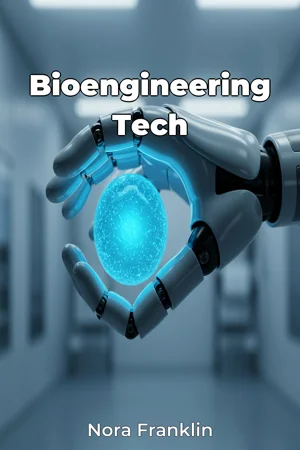
How close are we to truly merging biology and technology to enhance human capabilities and address critical medical needs? "Bioengineering Tech" delves into the rapidly evolving world of bioengineering, exploring how innovative technologies are revolutionizing medicine and reshaping our understanding of the human body. This book focuses on the transformative potential of artificial limbs, robotic hands, and advanced medical devices, illustrating their profound impact on improving lives and pushing the boundaries of human potential. This book is significant because it examines core aspects of bioengineering that are poised to define the future of healthcare. Two primary topics include the design and functionality of advanced prosthetics, which are becoming increasingly sophisticated, offering users unprecedented control and sensory feedback; and innovative medical devices that are revolutionizing diagnostics, treatment, and patient care. The book also explores the ethical and societal implications of these advancements. To fully appreciate the advancements in bioengineering, it’s important to understand relevant biological and technological foundations. These include basic biomechanics, materials science used in biocompatible implants, and control systems used in robotics. The book provides a comprehensive overview, making these formerly complex topics accessible. The central argument of "Bioengineering Tech" is that bioengineering is not merely about creating advanced tools; it represents a fundamental shift in how we approach healthcare, moving towards personalized, regenerative, and preventative strategies. This paradigm shift is crucial because it promises to address some of the most pressing health challenges facing society, from aging populations to the increasing prevalence of chronic diseases. The book begins by introducing foundational concepts in bioengineering, outlining the history and evolution of the field. We then explore the development of advanced artificial limbs, examining the integration of sensors, actuators, and neural interfaces that allow for more natural and intuitive control. A detailed discussion of robotic hands follows, analyzing their design, functionality, and applications in rehabilitation and assistance for individuals with disabilities. Later chapters focus on innovative medical devices, such as implantable sensors for continuous monitoring of vital signs, microfluidic devices for rapid diagnostics, and tissue-engineered scaffolds for regenerative medicine. The book culminates by evaluating the ethical and societal implications, discussing issues of accessibility, affordability, and potential risks associated with these technologies. Practical applications and future directions are emphasized throughout. The analysis presented relies on diverse research, including clinical studies, engineering reports, and case studies of patients who have benefited from bioengineering technologies. It references data from leading research institutions and medical centers, as well as insights from bioengineers, clinicians, and ethicists working at the forefront of the field. "Bioengineering Tech" connects to several other disciplines, including materials science, robotics, computer science, and ethics. The combination of these various fields illustrates the interdisciplinary nature of bioengineering and highlight how collaborations across these areas are driving innovation. A unique aspect of this book is its focus on translating complex scientific and engineering concepts into understandable terms for a broad audience. It avoids technical jargon and uses real-world examples to illustrate key ideas. The book maintains an informative, accessible and authoritative style, making it ideal for both professionals and those new to the field. This book targets anyone interested in the future of medicine and technology, including students, healthcare professionals, engineers, policymakers, and informed members of the public. It offers valuable insights for those seeking to understand the potential of bioengineering to transform healthcare and improve lives. The book aligns with the expectations of the biotechnology and technology genres by providing up-to-date information, evidence-based analysis, and real-world applications. The scope of "Bioengineering Tech" is intentionally broad, covering a wide range of bioengineering applications. It acknowledges limitations by focusing primarily on established and emerging technologies, and offers a forward-looking perspective on future developments. The knowledge in this book can be directly applied in various settings, from designing better medical devices to informing healthcare policy and investment decisions. It also prompts readers to think critically about the ethical and societal implications of bioengineering, encouraging informed discussions and responsible innovation. "Bioengineering Tech" addresses debates surrounding the equitable access to advanced bioengineering technologies, the potential for misuse, and the long-term effects on human health and society. By exploring these controversies, the book encourages a nuanced and informed perspective on the future of bioengineering.
How close are we to truly merging biology and technology to enhance human capabilities and address critical medical needs? "Bioengineering Tech" delves into the rapidly evolving world of bioengineering, exploring how innovative technologies are revolutionizing medicine and reshaping our understanding of the human body. This book focuses on the transformative potential of artificial limbs, robotic hands, and advanced medical devices, illustrating their profound impact on improving lives and pushing the boundaries of human potential. This book is significant because it examines core aspects of bioengineering that are poised to define the future of healthcare. Two primary topics include the design and functionality of advanced prosthetics, which are becoming increasingly sophisticated, offering users unprecedented control and sensory feedback; and innovative medical devices that are revolutionizing diagnostics, treatment, and patient care. The book also explores the ethical and societal implications of these advancements. To fully appreciate the advancements in bioengineering, it’s important to understand relevant biological and technological foundations. These include basic biomechanics, materials science used in biocompatible implants, and control systems used in robotics. The book provides a comprehensive overview, making these formerly complex topics accessible. The central argument of "Bioengineering Tech" is that bioengineering is not merely about creating advanced tools; it represents a fundamental shift in how we approach healthcare, moving towards personalized, regenerative, and preventative strategies. This paradigm shift is crucial because it promises to address some of the most pressing health challenges facing society, from aging populations to the increasing prevalence of chronic diseases. The book begins by introducing foundational concepts in bioengineering, outlining the history and evolution of the field. We then explore the development of advanced artificial limbs, examining the integration of sensors, actuators, and neural interfaces that allow for more natural and intuitive control. A detailed discussion of robotic hands follows, analyzing their design, functionality, and applications in rehabilitation and assistance for individuals with disabilities. Later chapters focus on innovative medical devices, such as implantable sensors for continuous monitoring of vital signs, microfluidic devices for rapid diagnostics, and tissue-engineered scaffolds for regenerative medicine. The book culminates by evaluating the ethical and societal implications, discussing issues of accessibility, affordability, and potential risks associated with these technologies. Practical applications and future directions are emphasized throughout. The analysis presented relies on diverse research, including clinical studies, engineering reports, and case studies of patients who have benefited from bioengineering technologies. It references data from leading research institutions and medical centers, as well as insights from bioengineers, clinicians, and ethicists working at the forefront of the field. "Bioengineering Tech" connects to several other disciplines, including materials science, robotics, computer science, and ethics. The combination of these various fields illustrates the interdisciplinary nature of bioengineering and highlight how collaborations across these areas are driving innovation. A unique aspect of this book is its focus on translating complex scientific and engineering concepts into understandable terms for a broad audience. It avoids technical jargon and uses real-world examples to illustrate key ideas. The book maintains an informative, accessible and authoritative style, making it ideal for both professionals and those new to the field. This book targets anyone interested in the future of medicine and technology, including students, healthcare professionals, engineers, policymakers, and informed members of the public. It offers valuable insights for those seeking to understand the potential of bioengineering to transform healthcare and improve lives. The book aligns with the expectations of the biotechnology and technology genres by providing up-to-date information, evidence-based analysis, and real-world applications. The scope of "Bioengineering Tech" is intentionally broad, covering a wide range of bioengineering applications. It acknowledges limitations by focusing primarily on established and emerging technologies, and offers a forward-looking perspective on future developments. The knowledge in this book can be directly applied in various settings, from designing better medical devices to informing healthcare policy and investment decisions. It also prompts readers to think critically about the ethical and societal implications of bioengineering, encouraging informed discussions and responsible innovation. "Bioengineering Tech" addresses debates surrounding the equitable access to advanced bioengineering technologies, the potential for misuse, and the long-term effects on human health and society. By exploring these controversies, the book encourages a nuanced and informed perspective on the future of bioengineering.
"Bioengineering Tech" explores the cutting-edge intersection of biology and technology, revealing how bioengineering is transforming healthcare. This book highlights the advancements in artificial limbs, robotic hands, and medical devices, showcasing how these innovations enhance human capabilities and address critical medical needs. Did you know that advanced prosthetics now offer unprecedented control and sensory feedback, allowing users to experience more natural movements? Or that innovative medical devices are revolutionizing diagnostics, treatment, and patient care through continuous monitoring using implantable sensors? The book begins with foundational concepts and traces the evolution of bioengineering. It progresses through the development of advanced artificial limbs and robotic hands, and then explores innovative medical devices. Each chapter builds upon the previous, providing a comprehensive understanding of this complex field. By translating complicated scientific and engineering concepts into accessible language, "Bioengineering Tech" offers a unique and valuable perspective for anyone interested in the future of biotechnology and technology. The book culminates by evaluating the ethical and societal implications, discussing issues of accessibility, affordability, and potential risks associated with these technologies.
Book Details
ISBN
9788235272188
Publisher
Publifye AS
Your Licenses
You don't own any licenses for this book
Purchase a license below to unlock this book and download the EPUB.
Purchase License
Select a tier to unlock this book
Need bulk licensing?
Contact us for enterprise agreements.